President Lee: "Preparing Plan to Reduce Refiners' Mandatory Domestic Supply and Expand Exports"
"Production capacity recovers, diesel consumption declines... We will increase export volumes"
"Domestic oil prices managed at reasonable levels... Government to cover refiners' losses"
President Lee Jaemyung said on October 21 that the government would work to reduce refineries’ mandatory domestic supply volumes and increase export volumes in response to high oil prices caused by the Middle East war. The plan is to maintain price and supply controls on domestic petroleum products to stabilize people’s livelihoods while easing export restrictions on refiners as supply-and-demand conditions improve. The aim is to achieve two goals at once: stabilizing domestic oil prices and securing the export competitiveness of refiners.

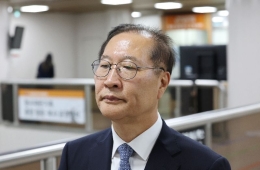
President Lee Jaemyung speaks at a Cabinet meeting held at Cheong Wa Dae on October 20, 2026. Yonhap News
View original imageIn a post on X (formerly Twitter) that day titled “Don’t Worry About Oil Price Management and Refinery Exports,” President Lee said, “With refinery production capacity recovering recently and domestic diesel consumption declining, we are preparing to appropriately reduce mandatory domestic supply volumes and allow refiners to increase exports.”
President Lee also stressed the need for the petroleum product price and supply management measures currently in effect. “As an emergency measure in response to the Middle East war, we have set maximum domestic supply prices for refiners and issued administrative orders requiring them to maintain domestic supply volumes,” he said. “The government will cover the refiners’ losses.” He added, “As a result, domestic retail prices for diesel and gasoline have been maintained and managed very effectively at reasonable levels.”
After international oil prices surged due to the Middle East war, the government introduced a price cap on petroleum products to limit the prices refiners can charge for domestic supply. On October 16, the Ministry of Trade, Industry and Energy froze the 11th price cap at the previous level. Accordingly, for four weeks starting October 17, the cap on refiners’ supply prices will remain at 1,784 won per liter for gasoline, 1,773 won per liter for diesel and 1,380 won per liter for kerosene.
However, refiners have called for the restrictions to be eased, as export volumes remain limited despite declining domestic consumption. According to the Ministry of Trade, Industry and Energy, combined domestic sales of gasoline and diesel in September fell 3.7% from the same period a year earlier. In particular, cumulative diesel sales from the second week of March, after the price cap took effect, through the second week of October were down 7.6% from the same period a year earlier. The government also said on October 16 that it would consider ways to manage export volumes, provided domestic supply and demand were not disrupted.
President Lee also cautioned that lifting export restrictions all at once could lead to domestic supply shortages. “If we control only the maximum price without controlling export volumes, domestic supply could fall short, potentially leading to long lines at gas stations,” he said. His point was that, with domestic sale prices capped, refiners could focus supplies on overseas markets where they can fetch relatively higher prices, creating a supply-and-demand imbalance in the domestic market. “We will carefully adjust the system so that appropriate quantities are supplied domestically at reasonable prices while refiners can also export larger volumes at higher prices,” he stressed.
Hot Picks Today
 "Why Is the Amount in My Account So Low?"... Why Pension Savings Subscribers Were Surprised
- As Kim Jong Un Death Rumors Spread... "It's Not Loading Again": North Korean State Media Sites Face Outages
- "3 Million Won for First Child, 10 Million for Third"... Taean County Raises Childbirth Incentives Fivefold
- "After Sleeping Well with Strangers"... Who Is the 24-Year-Old Woman Who Won 19 Million Won?
- "I wanted her to feel my passionate love"... Wife collapses after husband's overly tight hug, diagnosed with broken ribs
President Lee added, “We are doing our utmost to ensure that the public does not suffer because of oil prices and that related industries are not harmed, so I ask everyone not to worry.”
© The Asia Business Daily. All rights reserved. Unauthorized AI training and use prohibited.