Productivity Up 8% After Adopting a 4.5-Day Workweek... Busan SMEs' Experiment
Cases have emerged of small and medium-sized enterprises in Busan that have increased productivity while reducing working hours. A shoe insole manufacturer boosted productivity by 8% through one paid day off per month and improvements to its production process, while an information technology (IT) company maintained its previous service levels after adopting a 35-hour workweek through work automation and additional hiring.
The Korea Labor Foundation said on October 21 that it had visited two companies in Busan and held the third steering committee meeting for the "Work-Life Balance + 4.5 Project," where the companies shared cases of reducing working hours while improving productivity.

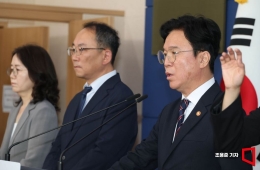
The Work-Life Balance + 4.5 Project Steering Committee poses for a commemorative photo after a meeting on the 21st during a visit to Youngchang Eco Co., Ltd. in Sasang-gu, Busan, a participating company recognized for improving productivity. Korea Labor Foundation
View original imageYoungchang Eco, a shoe insole manufacturer in Sasang-gu, Busan, reduced the average weekly working hours of its 31 employees by two hours by designating the third Friday of each month as a paid day off. The company, which supplies shoe insoles to global sports brands, joined the project to address longer working hours during peak seasons and retain skilled employees.
While reducing working hours, the company also improved its production process. It reviewed production plans for each order in advance to reduce the number of mold changes and assigned multi-skilled workers who could handle several processes to bottleneck operations. It introduced systems to manage product planning and production (ERP and MES) and consolidated its inventory management files. As a result, the time required to produce 10,000 pairs of insoles fell from 50 hours to 46 hours, an 8% reduction in production time. Taking into account operational characteristics such as the time needed to preheat equipment, the company opted for one day off per month instead of making small daily reductions to working hours.
DI&C, an IT infrastructure maintenance company in Haeundae-gu, Busan, replaced its 40-hour workweek with a 35-hour workweek without reducing wages. It cut employees' daily working hours by one hour and extended their lunch break by 15 minutes. The changes were intended to improve a work environment where overtime and holiday work were frequent due to night shifts and urgent responses to service disruptions, and to prevent young talent from leaving the company.
To reduce work disruptions caused by shorter hours, the company introduced an in-house work automation program and an electronic approval system. It also revamped its working-hours management and recruitment policies and hired three additional employees to prevent work from piling up on particular staff members. The changes led to shorter task completion times. The time required to prepare supporting documents for monthly reports submitted to public institutions fell by 75%, from eight hours to two hours per report. Approval time was also cut from 2.5 days to 0.5 days. The company maintained its previous maintenance service levels after reducing working hours.
The two companies' cases show that work practices and production processes must be improved together to prevent shorter working hours from disrupting production or lowering service quality. Rather than simply reducing time spent at work, the companies increased efficiency by automating repetitive tasks or reallocating staff.
At the steering committee meeting, participants discussed the trial and error, difficulties, and responses the companies encountered as they worked to improve productivity. They agreed that productivity gains are a prerequisite for sustaining shorter working hours and discussed ways to extend these successful practices to other regions and industries.
Hot Picks Today
 "Why Is the Amount in My Account So Low?"... Why Pension Savings Subscribers Were Surprised
- As Kim Jong Un Death Rumors Spread... "It's Not Loading Again": North Korean State Media Sites Face Outages
- [Breaking] Shark 'Bukangi' exits channel... operation to guide it ends
- "After Sleeping Well with Strangers"... Who Is the 24-Year-Old Woman Who Won 19 Million Won?
- "I wanted her to feel my passionate love"... Wife collapses after husband's overly tight hug, diagnosed with broken ribs
Park Jongpil, secretary-general of the Korea Labor Foundation, said, "The cases of the two Busan companies show that changes in work practices and technological innovation can improve both corporate productivity and workers' quality of life. We will encourage more companies to join efforts to reduce working hours and create an environment in which they can sustain these changes through productivity gains."
© The Asia Business Daily. All rights reserved. Unauthorized AI training and use prohibited.