'Daejang-dong Lobbying' Former Special Prosecutor Park Youngsoo Sentenced to 6 Years in Appeal Trial
Sentence reduced by one year from first trial; fined and ordered to forfeit 200 million won each
Former Assistant Special Prosecutor Yang Jaesik sentenced to five years in prison and fined 200 million won
Former special prosecutor Park Young-soo, who was indicted on charges of receiving campaign funds for the Korean Bar Association president election from private developers involved in the Daejang-dong development project, was sentenced to six years in prison in an appellate court ruling.

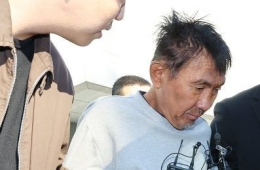
Former special prosecutor Park Young-soo, who was indicted in connection with the so-called "50 billion won club," appears at an appellate court sentencing hearing at the Seoul High Court in Seocho-gu, Seoul, on the 21st. Yonhap News
View original imageThe Seoul High Court’s Criminal Division 15-2, comprising High Court Judges Lee Hee-jun, Seong Eon-ju and Won Ik-seon, sentenced Park to six years in prison and a fine of KRW 200 million on October 21. Park was indicted on charges including receiving bribes under the Act on the Aggravated Punishment, etc. of Specific Economic Crimes. The court also ordered him to forfeit KRW 200 million. Former special prosecutor’s aide Yang Jae-sik, who was indicted alongside Park, was sentenced to five years in prison and a fine of KRW 200 million.
The court overturned the guilty portions of the first-instance ruling and reached a new decision. The lower court had found both men guilty of receiving all KRW 300 million in campaign funds from lawyer Nam Wook. The appeals court found only the KRW 200 million handed over in late December 2014 to be proven guilty, and acquitted them of two other payments of KRW 50 million each.
The court found that Nam and other private developers had asked Woori Bank to join the Daejang-dong project consortium. It ruled that Park, who was then an outside director and chairman of Woori Bank’s board, had authority related to his position that could influence the matter. Accordingly, it found a connection between his official duties and his receipt of campaign funds. As in the first-instance ruling, the court also found Yang to have acted as a co-principal offender.
The court said Nam’s testimony about the two KRW 50 million payments was difficult to believe. Regarding Nam’s testimony that he handed over the money in the parking lot of a resort in Yangpyeong, the court noted that Yang left after a dinner gathering at a restaurant in Seocho-gu, Seoul, after 10 p.m. and would therefore have arrived at the resort after 11 p.m., while Nam appeared to have left before then. The court also cited Nam’s inconsistent accounts of where the money was handed over during the investigation and at trial, and the fact that he could not remember whom he was supposed to meet.
The court also found that Nam’s testimony about KRW 50 million allegedly provided for a campaign office’s rental deposit was inconsistent and contradicted testimony from other campaign staff members.
By contrast, the court found Nam’s testimony about the KRW 200 million to be specific and consistent with the circumstances surrounding the fund-raising. Regarding parts of Nam’s testimony that were not factual, the court said, “Rather than being intentional false testimony, this appears to have resulted from a mistake in recalling events from long ago.” It found that the full KRW 200 million had been delivered to Park as campaign funds and ordered Park alone to forfeit that amount. The first-instance court had ordered each of the two men to forfeit KRW 150 million.
The court upheld the first-instance ruling on the remaining charges, finding them either not guilty or dismissing them from prosecution. It acquitted Park of charges that he had received a promise of KRW 5 billion from Kim Man-bae and KRW 500 million in exchange for soliciting the issuance of a letter of intent for Woori Bank to provide loans. The court said Park did not qualify as an executive or employee of a financial company under the relevant special act when he received the KRW 500 million. It also found it difficult to establish either the promise of KRW 5 billion or the alleged solicitation for the letter of intent that was a prerequisite for it.
The court also upheld Park’s acquittal on charges of violating the Improper Solicitation and Graft Act by conspiring with his daughter, identified only by her surname, Park, to receive KRW 1.1 billion from Hwacheon Daeyu. The court said the two could not be considered an economic unit, given that his daughter was an adult who had moved out and established an independent household, and had performed actual work at Hwacheon Daeyu.
The court, as in the first-instance ruling, dismissed from prosecution the charge that Park had received promises from the private developers of KRW 20 billion, a plot for a detached house and two houses, ruling that the statute of limitations had expired. It added that it was difficult to conclude either that the promised money and benefits had been finalized at KRW 20 billion or that the parties had reached an agreement to provide a detached house.
In determining the sentences, the court said of Park, “He committed the offense despite having worked as a prosecutor for a long time and knowing that financial institution employees are subject to strict duties,” adding that “he undermined public confidence in fairness, and the offense merits considerable criticism.” In Yang’s case, the court took into account that he had no prior criminal record and appeared to have used the money he received only for Park’s campaign funds, without gaining any personal benefit.
The two men had been detained in court after the first-instance ruling, but were released on bail in July 2025 during the appeal proceedings. Although the court sentenced them to prison on October 21, it found no grounds to revoke their bail and did not detain them again.
Hot Picks Today
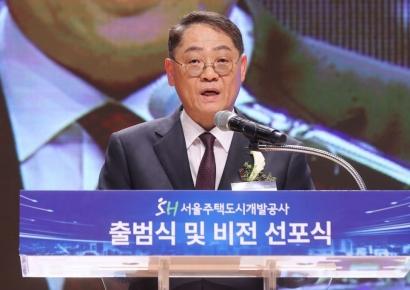 "Losing 400 Billion Won Every Year" With Seoul Land Sales Stalled and Rental Housing Business Flashing Red, SH Faces First Deficit in 14 Years
- "Shares Hit Daily Limit on 56 Billion Won News"... Marubeni Launches Tender Offer for K-Beauty Firm of 'Chae Sira's Husband' Kim Taewook
- "Let's Give Unemployment Benefits to Those Who Find Jobs Quickly and Stay Long-Term"... Petition Takes Aim at Compensation for 'Voluntary Resignations'
- China's Wang Yi: "International norms for deep sea, space and AI must be established"... criticizes America-first policy
- "Even a sashimi restaurant grossing KRW 400 million a month has little left"... Business owners falling behind on loan payments and struggling with labor costs
Park and Yang were indicted in August 2023 on charges of receiving a total of KRW 1.9 billion from private developers involved in the Daejang-dong project. The first-instance court sentenced Park to seven years in prison and fined him KRW 500 million, and sentenced Yang to five years in prison and fined him KRW 300 million.
© The Asia Business Daily. All rights reserved. Unauthorized AI training and use prohibited.