"Public Sector Network Separation Barriers Set to Come Down"... Security Firms Eye New Business Opportunities
N2SF Transition Gains Momentum; Public-Sector Adoption Projects Increase
Demand for Access Control and Data Protection Expands
Importance of Zero-Trust Security Comes to the Fore
As the government moves to replace the existing one-size-fits-all network separation system with the National Network Security Framework (N2SF), which applies different levels of security according to data importance, domestic and foreign security companies are facing new business opportunities.

According to the Public Procurement Service's KONEPS procurement system on October 21, the Korea Institute of Fusion Energy has announced a project to develop consulting measures for responding to changes in the N2SF security paradigm and is accepting proposals. The Korea Internet & Security Agency is also supporting six public institutions in applying the new security framework to their actual work environments through a 4.5 billion won N2SF adoption support program this year.
N2SF is a framework under which institutions classify their work-related data into Confidential, Sensitive, and Open (CSO) categories and set access permissions and security levels according to the importance of the information. Until now, South Korea's public sector has maintained a closed security model that physically separates internal work networks from the external internet to restrict outside access.
The transition means a shift toward allowing access and data transfers at different levels according to the importance of information, as the public sector makes greater use of generative AI and cloud services. It is expected to bring policy in line with that of major countries such as the United States, which has expanded zero-trust security frameworks that continuously verify users, identities, and access permissions, and to bring South Korea closer to global security standards. As cyberattacks using artificial intelligence (AI) become more sophisticated, the transition could also create an environment that strengthens public institutions' AI-enabled cybersecurity capabilities.
The security industry expects the redesign of public institutions' security frameworks in response to the N2SF transition to create new business opportunities. The transition could generate demand for a range of security solutions, from initial consulting and information asset classification to system implementation.
AhnLab plans to complete its N2SF implementation for the National Research Foundation of Korea by the end of November. It has established an environment that allows users to access generative AI and the internet from work networks by combining user authentication, web isolation, and data protection technologies, and has implemented 97 security control measures. Since September, Hancom With has also begun developing AI technology that analyzes document contents and automatically classifies security levels, enabling institutions to categorize their work-related data according to importance ahead of N2SF adoption.
Foreign security companies are also stepping up their efforts to gain ground in the South Korean market by adjusting their product portfolios. U.S. security company OPSWAT has unveiled a security platform that centrally manages software supply chain security, file transfers, and data transfers between networks, in preparation for more frequent data transfers between external networks and other systems.
Hot Picks Today
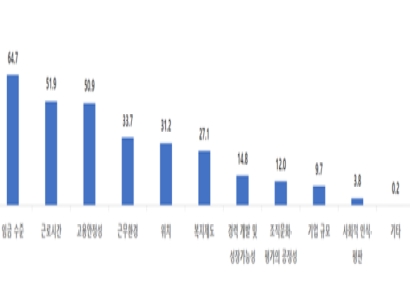 "Please Pay Me at Least 3 Million Won a Month": More Than Half of Young People Today Prioritize "Working Conditions" Over Company Size
- Selling Like Crazy Every Year... 30-Year-Old Hetbahn Takes on a New Challenge: Tastes Better Than "Mom's Home Cooking" [On-Site Report]
- "Americans Would Be Amazed If They Came": Wide-Eyed at a Sight They've Never Seen Before... Foreigners Also Fall for K-Baseball [K-Holic]
- "Hey, Lady, Teach Your Kids to Behave!" ... 300,000 Won in Cash and a Bodily Injury Claim Demanded Over Child's Door Ding
- Beachgoer Finds 'Plastic' That Turns Out to Be Perfume Ingredient Worth More Than Twice as Much as Gold
Yeom Heung-yeol, a professor in the Department of Information Security at Soonchunhyang University, said, "As the adoption of N2SF increases the number of external connection points for public networks, demand for enhanced security products and services is expected to grow. This could be an opportunity for domestic security companies to strengthen their technological competitiveness based on their public-sector implementation track records and pursue overseas expansion."
© The Asia Business Daily. All rights reserved. Unauthorized AI training and use prohibited.