Culture Ministry Awards 40 Employees for Work on "Lumiere Partnership" and "Gukjungbak Makeup Play"
KRW 71 Million to Be Awarded for 11 Achievements
For Contributions to the Global Spread of K-Culture and Expanded Public Access to Culture
The Ministry of Culture, Sports and Tourism will present special achievement awards to 40 employees, including those who led the launch of the “Lumiere Partnership,” a KRW 1.6 trillion investment partnership between Korea and France in the film and audiovisual industries, and those who expanded the National Museum of Korea’s “Gukjungbak Makeup Play” into a nationwide event.
The ministry said Minister Choi Hwi-young would award a total of KRW 71 million to 40 employees on Wednesday for their contributions to the global spread of K-culture, expanding public access to culture, and improving systems. This is the fifth round of special achievement awards, following those in March, April, June and September. A total of 11 achievements were selected.
The largest awards will go to employees who helped Korea participate as a co-chairing country at the “Lumiere Summit” and launch the “Lumiere Partnership.” Employees from related departments, including Kim Jihee, director of the Audiovisual Content Industry Division, worked on planning the program and adopting a joint declaration for the international film and audiovisual summit, held to mark the 140th anniversary of diplomatic relations between Korea and France. The event drew 274 participants from 58 countries, including culture ministers, film and audiovisual industry figures, and creators.

In particular, they led the launch of the “Lumiere Partnership,” under which Korea and France will each invest 500 million euros in their domestic film and audiovisual industries over the next five years, for a total of 1 billion euros (about KRW 1.6 trillion). They also advanced cooperation between private-sector and institutional partners through a Korea-led film and audiovisual roundtable. Employees who contributed to these achievements will receive a total of KRW 21 million in “Timely Hit Award” bonuses.
Employees who expanded the National Museum of Korea’s “Gukjungbak Makeup Play” into a nationwide event will also receive a total of KRW 21 million in awards. They expanded the event, previously centered on the National Museum of Korea, to four regions—Jeonju, Daegu, Gongju and Chuncheon—and established a format consisting of online preliminaries, regional finals and a final round. This year’s event drew 643 participants across 275 teams, and about 36,000 people visited the event venue.
Employees from the Hallyu Support and Cooperation Division who organized the largest-ever interagency K-Expo in Mexico are also among the award recipients. They were recognized for expanding opportunities to enter the Latin American market by linking events featuring content such as K-pop with exhibitions of related industries, including food and beauty. Employees who planned the “Youth K-Culture Global Frontier” program to expand overseas opportunities for young people will also be recognized. The program received 3,171 applications this year, with 728 people selected. The government’s budget proposal for next year allocates KRW 14.2 billion, a substantial increase from this year’s KRW 5 billion.
In the sports sector, award recipients include employees who developed a “lightweight national sports center” model with a total project cost of up to KRW 15 billion and helped gradually raise central government funding for construction of national sports centers to KRW 5 billion per center, from KRW 3 billion, where it had remained for about 30 years. Employees from the International Sports Division were also selected for supporting Korea’s participation in the 2026 Aichi-Nagoya Asian Games by operating five local integrated situation rooms to address the dispersal of competition venues and athletes’ villages.
Employees from the Cultural Technology Division will be recognized for launching the “Cultural Technology Alliance,” bringing together large, medium-sized and small companies, independent creators, academic institutions and others. Kim Nahyeon, an administrative officer at the National Hangeul Museum, was selected for independently developing an automated cultural heritage registration form generator using generative artificial intelligence (AI), without a separate budget or outsourced development. Park Uiwoo, an administrative officer at the Korean Policy Broadcasting Service, was recognized for introducing an AI anchor for the first time in government policy broadcasting and automating the production process from scriptwriting and voice synthesis to video generation and subtitles.
Hot Picks Today
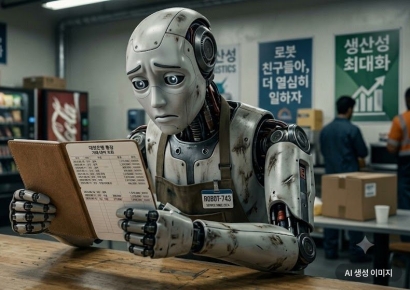 "Once Worth 4 Million Won a Day, Now Going for Chicken Money"... Chinese Robots' Humiliating Fall to 'Bargain-Bin' Prices in Just One Year
- 'I Thought I'd Make a Fortune on KOSDAQ'... Investors Still on Edge After Listing [VCs Now]
- [Practical Investing] Volatility in Semiconductor Stocks... Which Non-Semiconductor Sectors Are Worth Watching?
- It's Hard to Buy a Home, Yet "We Won't Take It Even If You Leave It to Us"... Why People Avoid Inheriting Their Parents' Homes
- "It Wasn't Jeju or Busan"... 'Santorini of Korea' Draws Crowds of Travelers in Their 20s and 30s Lately
Minister Choi Hwi-young said, “I am grateful for the passion and dedication of our employees, who are enhancing K-culture’s global competitiveness and enriching people’s lives through culture. I hope they will continue to deliver policy outcomes that people can feel in their daily lives through creative ideas and a proactive approach.”
© The Asia Business Daily. All rights reserved. Unauthorized AI training and use prohibited.