Swinging Exchange Rates, Firms Watching Rivals on Prices... No Respite for Food Industry
Price-fixing probe continues from ingredients to finished processed foods
Scrutiny tightens on everyday food staples
Consumer groups criticize price hikes, citing profitability
Overseas business helps offset weak domestic demand... raw material burden persists
Food companies that have stood out in overseas markets thanks to the popularity of K-Food are taking a beating in the domestic market. Government scrutiny over price-fixing allegations continues, while consumer groups are also calling for product prices to be stabilized whenever external factors, such as fluctuations in international raw material prices, arise.
According to the government and industry sources on October 20, the Fair Trade Commission’s Focused Investigation Planning Group, launched early this month, is looking into whether major food companies, including CJ CheilJedang, Ottogi and Daesang, colluded on prices for finished processed food products such as kimchi, tofu, oils and fats, gift sets, instant rice and fermented soybean products. The group began on-site inspections on October 14 for a week and is reportedly expected to continue its investigation after gathering relevant materials, in order to substantiate specific allegations.

Consumers look over products at the processed food section of a large supermarket in Seoul. Yonhap News Agency
View original image“As I understand it, the investigation is checking for collusive practices, including whether the manufacturers shared information over the years when setting the timing of consumer price increases,” an industry official said. “The investigation into possible price-fixing for materials such as sugar, flour, starch and starch syrup, which began last year, has now moved into the processed-food sector.” Another industry official added, “Food prices are of great interest to consumers, and these are everyday necessities, so the impact of the investigation’s findings could be substantial while opposition would inevitably be limited. That may be why the authorities appear to be closely examining how food companies set prices.”
When deteriorating profitability becomes unavoidable due to rising raw material prices, food companies may resort to raising product prices. In the past, they have typically announced increases while watching what their competitors do. Companies engage in this wait-and-see competition because raising prices first can draw criticism from the government or politicians and attract public attention.

This year, as the fallout from the war in the Middle East involving the United States and Iran drove up the prices of imported raw materials, including packaging materials, a series of price-increase announcements began in late June with Lotte Chilsung Beverage. In July, Ottogi, CJ CheilJedang and CJ Foodville announced increases; in August, Nongshim, Coca-Cola, Sajo, Pulmuone and Paris Baguette did so; in September, Samlip, Dongwon F&B, Paldo and Ottogi followed; and this month, Haitai Confectionery and Woongjin Foods raised product prices.
Consumer groups have continued to oppose the increases, questioning whether they are justified. The Korea National Council of Consumer Organizations argues that manufacturers have weak grounds for raising prices, citing improved results at companies that raised prices and falling prices for raw materials needed to produce their goods. For example, based on figures for the second quarter of this year, before Nongshim and Pulmuone Foods raised their product prices, their cost-of-sales ratios were lower than in the same period last year, while their sales and operating profits had increased. The council questioned whether “product price increases were necessary despite improvements in profitability indicators.”

As forecasts point to a rebound in results at major food companies in the third quarter, this public sentiment could flare up again. According to the securities industry’s third-quarter earnings consensus, combined sales at 10 food companies—CJ CheilJedang, Daesang, Dongwon Industries, Pulmuone, Orion, Nongshim, Lotte Wellfood, Lotte Chilsung Beverage, Samyang Foods and Binggrae—are expected to reach about 17.8 trillion won, up 4% from the same period last year. Their operating profits are forecast to rise 11.9% to about 1.26 trillion won.
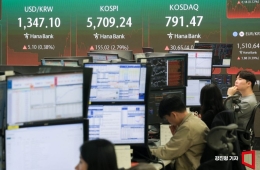
Major food companies said the results reflected efforts to offset the limits of weak domestic demand through overseas businesses and improve efficiency by cutting costs. “With exchange-rate volatility high, it is difficult to gauge profits and losses, and import prices remain high,” an industry official said. “Except for some companies with a large overseas presence, most food companies still have operating margins in the single digits.”
Hot Picks Today
 "Once Worth 4 Million Won a Day, Now Going for Chicken Money"... Chinese Robots' Humiliating Fall to 'Bargain-Bin' Prices in Just One Year
- Short-Form Dramas Keep Popping Up... No Wonder: "1,519 Churned Out a Day"—Half of China's AI Tokens Go to Dramas
- "151 km/h Without Brakes"... Skateboarder in His 20s Sets Guinness World Record
- "1.9 Million Won in 5 Days? Easy Money"... What Happened After They Jumped Into a "Profitable Business" They Saw on Social Media
- "It Wasn't Jeju or Busan"... 'Santorini of Korea' Draws Crowds of Travelers in Their 20s and 30s Lately
According to the Bank of Korea’s Economic Statistics System, the average won-dollar exchange rate in the third quarter of this year was 1,418 won, down 84 won from the second quarter, when it had risen as high as 1,502 won. In contrast, the import price index in won terms was up 24.8% year over year in May and continued to rise by around 20% from June through September, adding to manufacturers’ cost burden.
© The Asia Business Daily. All rights reserved. Unauthorized AI training and use prohibited.