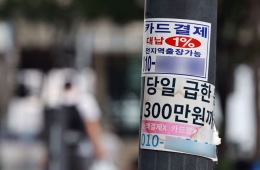
Online Scalpers Caught Spoiling 'Fall Baseball'; Police Launch Probe
Suspected illegal ticket resale on secondhand trading platforms
Police, the Ministry of Culture, Sports and Tourism, and the KBO have also conducted joint on-site crackdowns since October 14.
Police have launched a preliminary investigation into suspected illegal resale of professional baseball postseason tickets on online platforms. They also plan to investigate whether buyers used macros or engaged in other illegal activity when purchasing the tickets.
The Korean National Police Agency said on October 20 that it had begun preliminary investigations into people suspected of illegally reselling professional baseball postseason tickets on secondhand trading platforms and elsewhere, after receiving a request for an investigation from the Korea Sports Promotion Foundation, the reporting agency designated by the Ministry of Culture, Sports and Tourism. Earlier that day, the ministry announced that it had requested investigations into 31 people suspected of illegally reselling postseason tickets. The suspected resale volume is estimated at approximately 730 million won.

Police plan to quickly investigate the cases referred to them, focusing on the cybercrime investigation units of provincial and metropolitan police agencies. They will also check for other possible offenses, including the use of macro programs or other people's accounts to make illicit purchases and obstruction of business. Police said they would consider seeking arrest warrants in light of the scale and methods of the alleged crimes and the risk of flight or evidence destruction, and would seek to preserve criminal proceeds for confiscation or collection before indictment.
Since October 14, the Korean National Police Agency has conducted joint crackdowns with the Ministry of Culture, Sports and Tourism, the Korea Baseball Organization (KBO) and other relevant agencies on scalping around postseason venues. Before and after games, plainclothes officers and joint patrol teams have been deployed near ticket booths, subway exits and along routes taken by baseball fans. The scope of investigations is expanding from efforts to curb organized in-person resale to online activity.
Penalties have also been strengthened. Previously, even when ticket scalping was caught, the only penalty was a 160,000-won fine under the Minor Offenses Act. However, following the implementation in August this year of amendments to the National Sports Promotion Act, those found to have engaged in habitual or commercial resale can face up to one year in prison or a fine of up to 10 million won.
For example, in June this year, the Gyeonggi Northern Provincial Police Agency arrested a professional ticket scalper who had used macro programs and other people's accounts to secure large numbers of concert tickets and resold them on secondhand trading platforms over an eight-year period for a total of 2.4 billion won. Police also secured a pre-indictment preservation order covering approximately 1.2 billion won. In August, the Ulsan Metropolitan Police Agency also arrested a scalper who had illegally obtained concert tickets using macro programs and other people's accounts, then sold tickets worth approximately 800 million won over 11 months.
Hot Picks Today
 "Kim Jong Un Dies of Brain Hemorrhage, Body Secretly Transferred": Death Rumors Rock World... North Korea's Photos Tell a Different Story
- "It Wasn't Jeju or Busan"... 'Santorini of Korea' Draws Crowds of Travelers in Their 20s and 30s Lately
- "A Home in the Countryside? No Thanks, I Won't Inherit It"... Japan Sees Renunciations Top 320,000 a Year, Up 70% in 10 Years
- “I Thought It Was Just Inflammation”: 70 Men Have Died of Breast Cancer in This Country in 5 Years
- "Korean Beef for Dinner Tonight" - Drawn in by Half-Price Deals, but... "What Else Is There to Buy?" at 'Empty' Homeplus
A police official said, "Under the amended law, reselling tickets at inflated prices without the seller's consent is punishable even if no macro program is used. We urge the public to exercise particular caution."
© The Asia Business Daily. All rights reserved. Unauthorized AI training and use prohibited.