Kwon Daeyeong: "Virtual Asset Taxation to Be Carefully Reviewed, Taking Market Changes into Account"
With calls for a delay growing ahead of the scheduled introduction of virtual asset taxation in January next year, the government said it would carefully review whether to proceed, taking market changes into account.
The Ministry of Finance and Economy said it held a field meeting on virtual asset taxation at the Seoul Regional Public Procurement Service on the morning of the 20th, chaired by First Vice Minister Kwon Daeyeong. Attendees included operators of virtual asset exchanges such as Dunamu, Bithumb, Digital X, Coinone and Streami; the Digital Asset eXchange Alliance (DAXA); and Tiger Research. Government officials included Kim Geonyeong, Director General for Income and Corporate Tax Policy, and Yoo Youngjun, Director General for Digital Finance Policy at the Financial Services Commission.

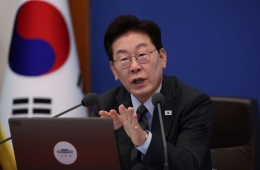
Kwon Daeyoung, Vice Minister of Finance and Economy, delivers opening remarks at an on-site meeting on virtual asset taxation, which he chaired at the Seoul Regional Public Procurement Service in Seocho-gu, Seoul, on the 20th. Ministry of Finance and Economy
View original imageIn his opening remarks, Kwon said, "As technology advances, new virtual asset transactions and services are emerging rapidly, and cross-border transactions are becoming more active." He added, "The tax system, along with its underlying principles, needs to be carefully designed and operated with full consideration of market changes and the characteristics of transactions."
Experts attending the meeting said, "It is important to establish fair and reasonable tax standards that taxpayers can understand and accept." They also noted that "market and institutional conditions have changed significantly since the virtual asset tax system was legislated in late 2020, and it is particularly important to consider institutional changes resulting from the Digital Asset Basic Act, which is currently under discussion."
They also advised that the government clarify tax standards for different types of transactions, including staking, and consider improvements to the system, such as allowing loss carryforwards and making tax filing more convenient.
Park Hoon, a professor at the University of Seoul, gave a presentation titled "Key Issues in the Taxation of Virtual Asset Income." He outlined major issues related to virtual asset taxation, overseas cases and information exchange between countries, and presented factors to consider for each position on implementing or delaying the tax.
Professor Park said, "Major economies such as the United States, the United Kingdom and Japan already tax virtual assets, while South Korea has postponed implementation three times since introducing the tax system in 2020." He added, "We need to consider a comprehensive road map for implementing a reasonable tax system and ensuring it takes hold."
Industry representatives at the meeting reportedly called for clear tax standards to eliminate uncertainty for taxpayers and businesses, as transaction methods are becoming more diverse and complex as the virtual asset market develops.
The Ministry of Finance and Economy said they also asked the government to take a comprehensive view of domestic market conditions and the global policy environment, including the time businesses need to build and test systems for submitting tax data and tax fairness for users of overseas exchanges.
Hot Picks Today
 One Facial Photo, and You're Told '90 Days to Live'... A Modern-Day Grim Reaper?
- "A Home in the Countryside? No Thanks, I Won't Inherit It"... Japan Sees Renunciations Top 320,000 a Year, Up 70% in 10 Years
- "Kim Jong Un Dies of Brain Hemorrhage, Body Secretly Transferred": Death Rumors Rock World... North Korea's Photos Tell a Different Story
- Daughter in Her 30s Ate Tteokbokki Alone... 34-kg Father Dies of Malnutrition
- "See You Next Year, Baby": The Netherlands' First LGBTQ Prime Minister to Welcome a Child Through Surrogacy Next Year
Vice Minister Kwon stressed, "The principle that 'income is taxed where it is earned' must be respected, and tax infrastructure and a market regulatory framework must be established together for that principle to take root properly in the market." He added that the government would "conduct a comprehensive review of preparations, including conditions for information exchange between countries, tax standards for different types of transactions, and the convenience of filing," and would carefully consider the views raised at the meeting and closely consult with relevant ministries.
© The Asia Business Daily. All rights reserved. Unauthorized AI training and use prohibited.