Lee on First Pension Support Program: "Welfare That Assumes Some Won't Apply Deceives the Public"
Puts the brakes on application-based support for young people’s first National Pension premiums
"Only those who are quick to catch on and diligent will benefit"
Health Ministry says it considered young people’s right to choose... Heated debate over
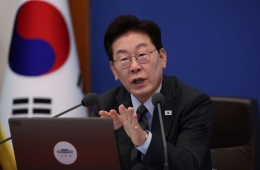
On the 20th, President Lee Jaemyung raised concerns about the application-based system for the “First National Pension Premium Support Program for Young Adults,” which will take effect next year, and proposed discussions on improving it. He said it amounted to “substantive inequality” if only young people who know about the program have the opportunity to increase their future pension benefits. Lee said, “The system is being operated on the assumption that some people will give up or be unable to apply,” and discussed alternatives, including automatic enrollment at age 18 and adjusting the age limit for making retroactive payments.

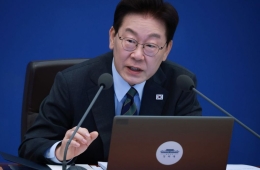
President Lee Jaemyung speaks during a Cabinet meeting at the Blue House on Oct. 20, 2026. Yonhap News.
View original imageAt the 45th Cabinet meeting, which he chaired at the Blue House that day, Lee received a briefing on the program from Jeong Eun-kyeong, Minister of Health and Welfare, and said, “Why is it only provided to people who apply? Why is it not provided to those who do not apply?”
The First National Pension Premium Support Program, set to be introduced next year, is a scheme under which the government pays the first month’s premium for young people with no history of National Pension contributions. About 450,000 people born in 2009 are the first group eligible for support. They can apply by age 26 even if they are unable to apply at age 18. The support is expected to amount to about 42,000 won. Once they have a record of their first contribution, they can make retroactive payments for up to 119 months during which they were unable to pay premiums because of school or military service, helping increase their future pension benefits. Applications have been accepted since the 1st, and 4,361 people had applied as of the 16th.
Lee focused his questions on how benefits differ depending on whether someone applies. He also recounted an experience from his time as mayor of Seongnam, when an employee of the National Pension Service told him that the agency’s employees and people around them enrolled their children in advance to secure the opportunity to make retroactive payments.
“Only people who are quick-witted, diligent, and have the time will do it,” Lee said. “If the system is operated on the assumption that some people will be unable to apply because of the financial burden, isn’t the government deceiving the public? Is this really an ethical country?” He also mentioned that, when he was governor of Gyeonggi Province, an effort to provide all young people with support for their first pension premium had fallen through amid criticism that it would burden pension finances.
Minister Jeong explained that the government had considered automatically enrolling 18-year-olds but designed the program around applications out of consideration for young people’s right to choose. Lee responded that the proposal was not to force young people without income to pay premiums, but to give them the right to make retroactive payments for past periods of nonpayment once they have income in the future.
“Wouldn’t starting at age 18 be beneficial to the public? Why didn’t you do it?” Lee pressed. “It’s because of the financial issue, isn’t it? Why make it sound so complicated? Be honest.” He argued that even if the financial burden were significant, it would be more reasonable to guarantee all young people equal opportunities, even if the age limit for retroactive payments had to be adjusted. Minister Jeong replied that the government was studying fundamental reforms to the retroactive payment system and would further examine the issue of fairness.
Other Cabinet members also proposed alternatives during the discussion. Cho Won-cheol, Minister of Government Legislation, suggested that the government pay the first premium for everyone at age 18, with individuals deciding afterward whether to make retroactive payments. Kim Sung-hwan, Minister of Climate, Energy and Environment, called for expanded government financial support to reduce gaps in retirement income for young people with long periods of temporary employment or unemployment. Bae Kyunghoon, Minister of Science and ICT, proposed using artificial intelligence (AI) agents to identify welfare benefits suited to individuals and apply for them on their behalf. Lee said that gaps caused by application-based systems exist not only in the National Pension but also in other welfare policies, and stressed the need to shift to a system in which the government proactively provides benefits to eligible citizens.
Hot Picks Today
 "Kim Jong Un Dies of Brain Hemorrhage, Body Secretly Transferred": Death Rumors Rock World... North Korea's Photos Tell a Different Story
- "It Wasn't Jeju or Busan"... 'Santorini of Korea' Draws Crowds of Travelers in Their 20s and 30s Lately
- South Korea-Ukraine Ties in "Downward Spiral"... Government Withdraws Half of Embassy Staff (Comprehensive)
- "Vehicle Charged at Her Twice, Deliberately"... Australia in Shock as Sitting Female MP Loses Leg
- "Korean Beef for Dinner Tonight" - Drawn in by Half-Price Deals, but... "What Else Is There to Buy?" at 'Empty' Homeplus
Lee also called for action concerning existing recipients amid controversy over foreigners’ use of the system to receive retroactive National Pension payments and the basic pension. On the 1st, the National Assembly passed amendments to apply the principle of reciprocity to retroactive payments by foreigners and strengthen the domestic residency requirements for the basic pension. Lee said, “Some might think that benefits must be paid because they made retroactive payments before the system changed, but isn’t the outcome unequal?” He added, “Shouldn’t we also make adjustments for people who are already benefiting by exploiting loopholes?”
© The Asia Business Daily. All rights reserved. Unauthorized AI training and use prohibited.