"Is Jang Yungi's Life Sentence Justified?"... Sharp Criticism at Gwangju Court Audit
Lawmakers from both parties call for life imprisonment without parole in Jang Yungi case verdict
At the National Assembly Legislation and Judiciary Committee’s audit of courts in the Gwangju area, lawmakers from both the ruling and opposition parties issued sharp criticism over the first-trial sentence in the case of Jang Yungi, 23, who brutally murdered a teenage high school girl, and questioned the effectiveness of the system.

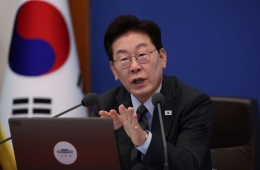
A parliamentary audit by the National Assembly’s Legislation and Judiciary Committee is underway on the 20th at Gwangju High Court in Dong-gu, Jeonnam-Gwangju Integrated Special City. The audit covers Daejeon High Court, Gwangju High Court, the Patent Court, Daejeon District Court, Cheongju District Court, Gwangju District Court, Jeonju District Court and Jeju District Court. Yonhap News
View original imageAt the committee’s audit on the 20th of Gwangju High Court and Gwangju, Jeonju and Jeju District Courts, among others, held at Gwangju District Court in Dong-gu, Jeonnam-Gwangju, the practical force of the life sentence handed down in the Jang Yungi case and the judiciary’s lenient sentencing standards emerged as key issues.
Yoon Sang-hyun of the People Power Party said, “Although prosecutors sought the death penalty, the first-trial court sentenced him to life imprisonment, saying it would ‘keep him incarcerated for the rest of his life without parole to console the bereaved family.’ But even if that intent is stated in the ruling, doesn’t the current Criminal Act make him eligible for parole review after 20 years? It is nothing more than a declaration with no legally binding force.” Article 72 of the current Criminal Act stipulates that a person serving a life sentence may be released on parole after serving 20 years if they have shown clear remorse and maintained good conduct.
In response, Jang Yonggi, chief judge of Gwangju District Court, acknowledged that “the statement in the ruling that parole would not be granted has no binding force,” adding, “Since decisions on parole fall under the administrative authority of the Minister of Justice, the court’s remarks are merely declaratory.”
Lawmakers from both the ruling and opposition parties conveyed the grief of the victim’s family and the public’s sense of justice, and strongly called for a harsher sentence on appeal and improvements to the system.
Park Jiwon of the Democratic Party of Korea said, “100,000 people signed a petition calling for severe punishment for Jang Yungi. Do you think the victim’s family is satisfied with the first-trial ruling?” He added, “The appeals court must take this public outrage deeply into account and impose the maximum sentence permitted by law.”
Seo Youngkyo, chair of the National Assembly Legislation and Judiciary Committee, also stressed, “Given the victim, permanent separation from society is essential, and Jang Yungi should have been sentenced to death,” adding, “The National Assembly will also accelerate discussions on introducing life imprisonment without parole.”
Hot Picks Today
 "Kim Jong Un Dies of Brain Hemorrhage, Body Secretly Transferred": Death Rumors Rock World... North Korea's Photos Tell a Different Story
- "It Wasn't Jeju or Busan"... 'Santorini of Korea' Draws Crowds of Travelers in Their 20s and 30s Lately
- “I Thought It Was Just Inflammation”: 70 Men Have Died of Breast Cancer in This Country in 5 Years
- "Korean Beef for Dinner Tonight" - Drawn in by Half-Price Deals, but... "What Else Is There to Buy?" at 'Empty' Homeplus
Kwak Gyutaek of the People Power Party said, “I saw the victim’s mother collapse in tears in a heartbreaking scene immediately after the first-trial sentence was handed down.” He noted, “The police referred the case to prosecutors as an ordinary murder, but after a supplementary investigation, prosecutors indicted him on charges of rape and murder. I question whether the bereaved family’s testimony was sufficiently taken into account in sentencing during the trial.”
© The Asia Business Daily. All rights reserved. Unauthorized AI training and use prohibited.