Ruling Party to Introduce Ultra-Wide-Area Special Zones Act; Labor Ministry: "Social Dialogue on Special Labor Provisions Without a Deadline"
As the Democratic Party of Korea moves to introduce two bills—one on special zones for ultra-wide-area regions that includes special labor provisions, and a separate bill that excludes them—the Ministry of Employment and Labor has said it will develop a reasonable plan through social dialogue between labor and management. With labor and management still at odds over exceptions to the 52-hour workweek and easing restrictions on fixed-term employment, the ministry plans to allow for sufficient deliberation and discussion without setting a deadline.
On Oct. 20, the Ministry of Employment and Labor said it would develop a plan that takes into account both strengthening the competitiveness of advanced industries and protecting workers, following sufficient deliberation and discussion on special labor provisions. Park Sanghyuk, the ruling party's secretary on the National Assembly's Political Affairs Committee, is expected to sponsor that day the "Special Act on the Designation and Operation of Special Zones for Strategic Industries in Ultra-Wide-Area Regions to Promote Region-Led Growth" (the Ultra-Wide-Area Special Zones Act).

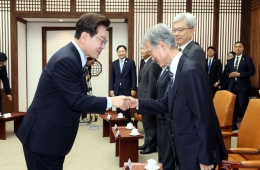
Minister of Employment and Labor Kim Younghoon delivers opening remarks during a parliamentary audit of the Ministry of Employment and Labor at the National Assembly on October 13, 2026. Photo by Yoon Dongju.
View original imageThe Ultra-Wide-Area Special Zones Act is designed to bring multiple local governments together into a single regional economic bloc to attract investment in advanced industries such as semiconductors and artificial intelligence (AI), and promote regional growth. Its key provisions include concentrating support in the special zones to expedite permits and approvals, provide electricity and water, expand transport networks, and offer financial, fiscal, and tax support. Easing labor regulations to support investment and research and development in advanced industries has emerged as a key point of contention.
The government has considered exempting high-income professionals and research and development (R&D) personnel who meet certain requirements from the 52-hour workweek, a proposal known as the "white-collar exemption," as well as expanding the flexible work-hour system for R&D personnel. Other proposals under discussion include extending the maximum period for employing fixed-term workers from the current two years to four years, and expanding the types of work for which dispatch workers may be used.
Business groups say that working hours and workforce deployment must be made more flexible to suit the nature of research and development and staffing needs if advanced industries are to remain competitive. Labor groups, meanwhile, are concerned that easing working-hour regulations could lead to longer hours and increased use of non-regular workers. Labor and management remain far apart over the eligibility and scope of special labor provisions, as well as measures to protect workers. To reconcile these differences, the government is holding focused social dialogue with the participation of labor and management and relevant government agencies. Since holding a vice-ministerial preparatory meeting in September, it has convened five meetings of a director-general-level working group.
The Ministry of Employment and Labor stressed that it would not set a deadline in advance for the social dialogue, and would develop a reasonable plan after sufficient deliberation and discussion. The goal is to strengthen the competitiveness of advanced industries such as semiconductors and AI while fostering a healthy and sustainable working environment. The ministry also plans to work closely with the National Assembly so the results of the social dialogue can be reflected in its review of the bills.
Hot Picks Today
 "Two Spend 500,000 Won in a Flash, Yet Wait Two Hours?" ... 'Dreamland' Shunned by Kids and Foreign Tourists
- The Era of Getting 200 Million Won After 30 Years Is Over... A Japanese Bank's "Perpetual Department Head" Who Just Clocked In Cries Out
- Spain Hit by Its Worst Tragedy... Lee Kangin, Moreno and Real Madrid Join Soccer World in Mourning
- They Said, “Make It Your Home for Life” - Then Suddenly Kicked 200 Passengers Off... What Happened to the Around-the-World Cruise?
- "130 Rice Bowls Sold Out in a Day"... 'Unfiltered Face' Adds 8 Million Won to Night Market Sales: China's Bungeunwoo
Even if the Democratic Party of Korea introduces a bill that includes special labor provisions, the specific scope and application of those provisions are expected to become points of contention in future discussions. The Ministry of Employment and Labor plans to develop a solution that takes into account both industrial competitiveness and worker protection through thorough discussions among labor, management, and the government.
© The Asia Business Daily. All rights reserved. Unauthorized AI training and use prohibited.