Aricell CEO's 4-Year Prison Sentence Finalized in 'Fire That Killed 23 Workers'
Charged with violating the Serious Accidents Punishment Act
Park Soonkwan, CEO of Aricell, was sentenced to four years in prison, a sentence that has now been finalized, after being indicted on charges of violating the Serious Accidents Punishment Act in connection with the Aricell fire that killed 23 people.

On the 25th, firefighters search the site of a fire at a primary battery manufacturing plant in Hwaseong, Gyeonggi Province. Photo by Kang Jinhyung, aymsdream@
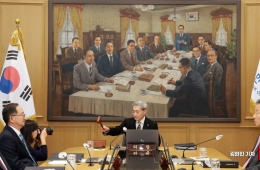
View original imageThe Supreme Court's First Division, with Justice Cheon Dae-yeop presiding, upheld the original ruling sentencing Park to four years in prison in his appeal trial on Tuesday, the 20th, on charges including violations of the Serious Accidents Punishment Act. Park's son, Park Jung-eon, Aricell's head of general operations, who was also indicted, received a final sentence of seven years in prison and a fine of 1 million won.
The Aricell fire occurred in June 2024, when lithium batteries exploded and caught fire at the company's plant in Hwaseong, Gyeonggi Province, killing 23 workers and injuring nine. Park was indicted on charges of failing to establish procedures to identify and address harmful and hazardous factors, as well as response manuals for workplace accidents.
The first trial sentenced both Park and his son to 15 years in prison. This was the harshest sentence imposed since the Serious Accidents Punishment Act took effect in 2022. The second trial, however, reduced Park's sentence to four years and his son's to seven years in prison.
The appeals court upheld the finding that Park was the person responsible for management, but acquitted him of some charges, including failing to install and maintain emergency exits. It also took into account the fact that he had reached settlements with the victims' families when determining the sentences.
The Supreme Court agreed with the lower court's findings on Tuesday and dismissed appeals filed by both Park's side and prosecutors. The court stated, "A person responsible for overall business operations is someone who, regardless of their formal position or title, actually represents the business and has the authority and responsibility to oversee its operations as a whole."
The court also found that the risk assessment procedures established by Aricell did not specifically account for characteristics of the lithium battery workplace, such as the risk of explosions and fires.
Hot Picks Today
 [Exclusive] "We Came for a KRW 140,000 Trip": Following Chinese Tourists in Korea Uncovers a 'Suspicious' Tour
- Despite "Insufficient Balance" Notices, They Board Anyway... Reports of Foreign Fare Evasion Mounting
- "I Killed My Mother": Daughter in Her 40s Reports Herself to Police; Police Make Emergency Arrest
- The 'Oppa' Boss Is Gone, the 'Senior' Boss Is Here: Starting Up to Make Ends Meet... New Businesses Down 1.5%
- "Photos of Kim Jong Un Released by North Korea Are a Deception"... Debate Over Death Rumors Continues
In this ruling, the Supreme Court for the first time set out the meaning of a person responsible for overall business operations and a person responsible for safety and health work under the Serious Accidents Punishment Act, as well as the standards for assigning liability.
© The Asia Business Daily. All rights reserved. Unauthorized AI training and use prohibited.