Wagner's "The Rhinegold" Reimagined Through Capitalist Desire; National Opera Company of Korea Opens Oct. 29
The National Opera Company of Korea to Stage "The Ring of the Nibelung" Over Four Years
Nibelheim Built from Trash; Valhalla Covered in Cash
Featuring Samuel Youn, Yang Junmo, Lee Sangmin, Im Sekyung, and others
Alberich, a Nibelung dwarf, steals the Rhinegold and forges a ring of absolute power. But Wotan, king of the gods, takes the ring from him, and Alberich curses whoever possesses it, saying they will meet their doom.
That is a one-line summary of Richard Wagner's opera "The Rhinegold." Both Alberich and Wotan are driven by gold and power. After the Rhinemaidens reject his advances, Alberich renounces love, steals the gold, and seizes power. Wotan has the giant brothers Fasolt and Fafner build Valhalla, then takes Alberich's ring to pay them for their work.

The National Opera Company of Korea is reinterpreting "The Rhinegold" as a cynical portrait of contemporary capitalist society. The opera will run from October 29 to November 1 at the Opera Theater of the Seoul Arts Center.
The underground world of Nibelheim, ruled by Alberich, is depicted not as a cave but as a modern metropolis where boxes, packing materials, and garbage multiply like a forest of skyscrapers. In Valhalla, the world of the gods, bundles of cash cover the stage, symbolizing the gods' pact with the giants and the price of their greed. Live cameras project the characters' expressions and movements onto a large screen in real time, acting as a magnifying glass that lets the audience take a close look at the naked face of their power and desire.
"The Rhinegold" is the first work in Wagner's monumental four-opera cycle "The Ring of the Nibelung," which he completed over 26 years based on Norse mythology and Germanic epic poetry. It is followed by "The Valkyrie," "Siegfried," and "Twilight of the Gods." The full cycle takes more than 16 hours to perform.
"The Ring of the Nibelung" is often compared to J.R.R. Tolkien's novel "The Lord of the Rings," also famous for its film adaptations, because both feature a ring of absolute power, a curse, and the greed surrounding it. Experts have interpreted Tolkien as having been influenced by the Ring of the Nibelung, but Tolkien strongly denied this.

With this production, the National Opera Company of Korea will launch a "Ring Cycle," staging all four parts of "The Ring of the Nibelung" over four years through 2029 and exploring the origins of love, power, greed, and curses.
A host of Korean and international Wagner specialists will appear in "The Rhinegold," which marks the start of this ambitious undertaking. Wotan, king of the gods, will be played by bass-baritone Oleksandr Pushniak and baritone Lee Sangmin. Bass-baritone Samuel Youn and baritone Yang Junmo will share the role of Alberich. The role of Freia, goddess of youth and beauty, will be performed by sopranos Daniela Kohler and Im Sekyung.
Wotan had initially promised to hand Freia over to the brothers Fasolt and Fafner as payment for building Valhalla. But the other gods object, knowing that without Freia they, too, would grow old and weak. Wotan then takes the gold and ring from Alberich to get Freia back. After a series of twists and turns, the ring passes to Fasolt and Fafner, but Alberich's curse comes true, and Fafner kills Fasolt in a tragic turn of events.
Mezzo-sopranos Kim Seonjeong and Yang Songmi will play Fricka, Wotan's wife. Tenors Jonathan Stoughton and Kim Yohan will appear as Loge, the god of fire, who joins Wotan in taking Alberich's gold and ring. Kang Doho, Lee Jaemyeong, Choi Beomseok, Lee Danbi, Ryu Jisang, and Kim Daeyoung will also take the stage.

The production will be directed by Lorenzo Fioroni, who received acclaim for his inventive imagination and keen sensibility in the National Opera Company of Korea's "The Love for Three Oranges" last year. Fioroni plans to use Wagner's mythology as a "magnifying glass" through which to examine modern society, portraying contemporary desires through images of real estate, loans, contracts, labor exploitation, and an obsession with youth. He will also break away from the weighty, solemn conventions of classical opera to bring out the wit and black comedy in Wagner's music. The relationships among the gods, centered on power, will follow the conventions of a "family drama," while the struggle over who takes and keeps the ring will draw on those of a "gangster drama."
Lothar Koenigs, who conducted the National Opera Company of Korea's "The Dead City" in 2024, will conduct the Korean National Symphony Orchestra.
Hot Picks Today
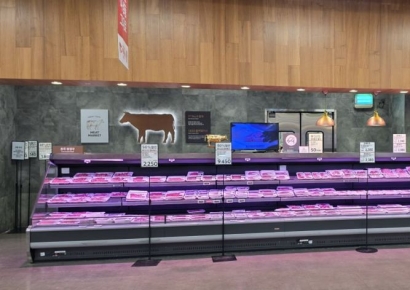 "Korean Beef for Dinner Tonight" - Drawn in by Half-Price Deals, but... "What Else Is There to Buy?" at 'Empty' Homeplus
- [Exclusive] "My paycheck fell short, and I couldn't get a card loan either" More people in their 40s and 50s turn to 'cash advances'; "debt-investing woes" put long-term delinquency among those in their 20s and 30s on red alert
- "It Just Flies, So Why Keep Blasting Air?"... Startup Says Tesla Is Still No. 2
- "Desperate to Impress Men"... Chinese Tennis Queen Sparks Controversy for Wearing a Dress
- "Come Live With Me on My Farm": Man Sells Everything and Travels 1,930 km, Trusting a Beautiful Woman
Park Hyejin, general director and artistic director of the National Opera Company of Korea, said, "The National Opera Company of Korea's undertaking of 'The Ring of the Nibelung' will be a historic event without precedent. As we will produce all four parts ourselves for the first time in the history of Korean opera and stage them over four years, we will bring Korean sensibilities to each work and present productions that audiences can fully relate to."
© The Asia Business Daily. All rights reserved. Unauthorized AI training and use prohibited.