Yongsan's Dongja-dong Jjokbang Village Designated as Public Housing District; 2,150 Homes to Be Supplied
Construction to begin in 2029, including 1,150 homes for sale
Completion and move-ins targeted for 2032
Project gets on track five years after development plan announced
The Ministry of Land, Infrastructure and Transport (MOLIT) said on October 20 that it had designated and publicly announced the area around the jjokbang village in Dongja-dong, Yongsan-gu, as a public housing district to improve the village’s poor living conditions and promote housing supply in the city center. The project, which had been stalled for five years since its development plan was announced in 2021, has now taken its first step toward implementation.
MOLIT plans to provide a total of 2,150 housing units in the project area: 1,000 public rental units and 1,150 homes for sale. Following subsequent procedures, including preparation of the district plan, compensation and relocation, construction is scheduled to begin in 2029, with completion and move-ins targeted for 2032.

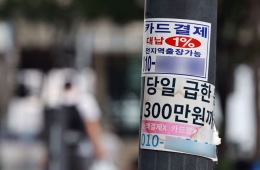
The project aims to improve living conditions in the jjokbang village in Dongja-dong, in front of Seoul Station, and increase the supply of quality housing in the city center. The village has long been considered an area in urgent need of better housing conditions, with aging buildings clustered together and a shortage of basic facilities. In 2021, MOLIT announced the Dongja-dong public housing project to develop the area as a public housing district, but the district was not designated for five years due to opposition from landowners.
Under the project, existing jjokbang residents will be given priority for public rental housing with a dedicated floor area of at least 21 square meters, with each unit equipped with cooking facilities, a bathroom, a toilet, and heating and cooling systems. Temporary housing will be provided so residents can live in stable conditions during construction, and support will be offered from relocation through resettlement.
Institutional reforms will also be pursued to encourage greater private-sector participation in the project and strengthen compensation for landowners and other property owners. First, private construction companies will be allowed to participate as joint project developers in public housing projects. To protect existing residents’ property rights, the rules will be revised to allow long-term holding special deductions and other benefits to apply when a household that holds only one right to purchase a home as in-kind compensation transfers that right. The status of an in-kind compensation recipient will also be transferable once. Starting next month, a scheme will also be introduced to allow residents who lack the means to pay their contributions to receive profit-sharing housing as in-kind compensation.
Hot Picks Today
 [Exclusive] "My paycheck fell short, and I couldn't get a card loan either" More people in their 40s and 50s turn to 'cash advances'; "debt-investing woes" put long-term delinquency among those in their 20s and 30s on red alert
- Three Free Meals a Day, Botox with a 1.69 Million Won Allowance... Japan Expands Benefits Instead of Raising Wages
- “I Thought It Was Just Inflammation”: 70 Men Have Died of Breast Cancer in This Country in 5 Years
- "Korean Beef for Dinner Tonight" - Drawn in by Half-Price Deals, but... "What Else Is There to Buy?" at 'Empty' Homeplus
Lee Jaepyeong, Director General for Housing Supply Policy at MOLIT, said, "With the district designation, the Dongja-dong project has entered a concrete implementation phase, making it important to proceed smoothly with the subsequent steps." He added, "We will support the stable resettlement of jjokbang residents and advance the project in cooperation with relevant agencies while fully gathering opinions from the residents’ consultative body."
© The Asia Business Daily. All rights reserved. Unauthorized AI training and use prohibited.