‘AI Cold War’ Heats Up... U.S. Phases Out DeepSeek, Japan Tightens Data Infrastructure Rules to Curb China
U.S. DHS: "Phase Out DeepSeek from Federal Government IT Systems"
Japan to Introduce Government Certification and Advance Notification System for Data Companies
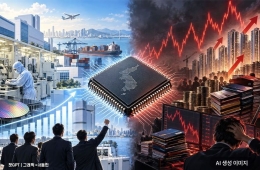
Efforts to curb Chinese technology companies in artificial intelligence (AI) and data infrastructure are gaining momentum. The U.S. federal government has decided to remove products from Chinese AI company DeepSeek, while Japan is pursuing a plan to effectively exclude Chinese-affiliated IT companies by introducing a national security certification system. As AI emerges as a key national security issue, what is being called a new "AI Cold War" appears to be intensifying.
According to Bloomberg News on October 19 local time, the U.S. Department of Homeland Security (DHS) published guidance on the Federal Register website directing federal agencies to remove DeepSeek products from their IT systems.

The measure applies not only to products developed directly by DeepSeek but also to third-party products and services that use DeepSeek AI models. Accordingly, the agencies concerned must remove all relevant products and services from their existing systems and stop using them. DHS is also reportedly planning to prohibit new procurement from DeepSeek.
DHS cited the possibility that sensitive information held by the U.S. government could be leaked through DeepSeek as grounds for its removal. The concern is that DeepSeek collects sensitive user data, including information from government agencies, and could provide it to the Chinese government. DHS also pointed out that "there may be malware and other security vulnerabilities." The U.S. Department of Commerce and the Navy had previously banned the use of DeepSeek on government devices, and some state governments, including Virginia, have taken similar measures.
Similar moves to tighten regulations are also being seen in Japan. According to the Nihon Keizai Shimbun (Nikkei) on October 20, Japan's Ministry of Internal Affairs and Communications and Ministry of Economy, Trade and Industry will introduce a national certification system from fiscal 2027 onward (April 2027 to March 2028) to assess the security of data centers and cloud services. The system is designed to encourage financial institutions, medical institutions, research institutes and other organizations handling sensitive personal information related to national security to contract with government-certified data center and cloud service providers. The government plans to determine whether to certify providers by examining their corporate information, risk management systems for preventing information leaks, and sources of their equipment.
Although using government-certified services will not be mandatory, companies handling sensitive personal information may find it difficult to choose uncertified services, given that they are subject to government oversight and supervision, Nikkei reported. "The certification system is expected to effectively exclude companies under the influence of China, Russia and other countries," the newspaper said.
The Japanese government is also pursuing the introduction of a prior notification system for companies that store and process sensitive personal information. To that end, it plans to submit a bill to revise the Economic Security Promotion Act to the regular session of the Diet next year. The bill is also expected to allow the government to issue orders or recommendations to suspend data storage if it determines that the practice poses a risk.
Hot Picks Today
 "Once Worth 4 Million Won a Day, Now Going for Chicken Money"... Chinese Robots' Humiliating Fall to 'Bargain-Bin' Prices in Just One Year
- "Who Says It's a Meal for Ordinary People? It Deserves 'Special Dish' Status Now"... The Era of 12,000-Won Bibimbap
- "I will open fire at a childcare center"... Australian man in his 20s arrested over AI chatbot conversation
- Daughter in Her 30s Ate Tteokbokki Alone... 34-kg Father Dies of Malnutrition
- "I Won't Take It Even If You Leave It to Me"... 9 Million Parents' Homes Sit Empty as 320,000 Japanese Renounce Inheritances
Nikkei also noted that China's National Intelligence Law requires cooperation with intelligence activities, while its National Defense Mobilization Law contains provisions on requisitioning private-sector resources. It added that "if data centers and cloud services under government influence become widespread, it could be difficult to prevent information leaks or service disruptions in an emergency."
© The Asia Business Daily. All rights reserved. Unauthorized AI training and use prohibited.