[U.S. Stocks] Tech Rally Lifts Nasdaq 1.1%... Stocks Finish Mixed
International oil prices also finish mixed
U.S. 10-year Treasury yield closes higher at 5.135%
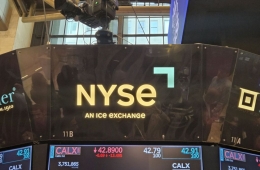
U.S. stocks finished mixed on October 19 (local time). The Nasdaq rose more than 1% as bargain hunters moved into semiconductor stocks. However, concerns over AI companies' investment costs and debt burdens weighed on major indexes.
The Dow Jones Industrial Average fell 36.38 points (0.07%) from the previous trading session to close at 51,966.03. The large-cap S&P 500 rose 31.29 points (0.41%) to 7,690.73, while the tech-heavy Nasdaq Composite jumped 290.85 points (1.11%) to 26,430.88.

Technology stocks, which had plunged last week, rebounded notably. Intel, whose rating was upgraded by JPMorgan, rose 2.36% from the previous session. AMD gained 1.76%, Nvidia rose 1.38%, and Micron Technology climbed 2.97%.
Despite the rebound in technology stocks, concerns over excessive investment in the AI industry and debt burdens persisted. CoreWeave fell 0.44% on the day after dropping more than 25% last week amid concerns over its massive debt burden.
CoreWeave's credit default swap (CDS) spread also climbed to a level reflecting the risk of default, heightening concerns in the bond market about the credit risk of AI companies.
Ron Albahari, LNW's chief investment officer (COI), said the recent movement in CoreWeave's credit spreads showed that the market's previous view of the AI industry—as being relatively less affected by rising interest rates—was changing.
"Investors will scrutinize much more closely whether companies can generate returns on capital sufficient to justify the debt they are taking on," he said.
Whether AI companies' revenue growth can justify the massive costs of infrastructure investment has also emerged as a key issue. Anthropic previously said its third-quarter revenue was $16.8 billion, up from $11.6 billion in the second quarter. However, CNBC reported that investors are questioning whether the returns are sufficient relative to the capital being spent to expand AI infrastructure.
International oil prices finished mixed as expectations of increased supply following an easing of sanctions on Russian oil were offset by concerns about supply disruptions stemming from conflicts in the Middle East.
West Texas Intermediate (WTI) crude for November delivery rose 2.22% from the previous session to settle at $103.66 a barrel on the New York Mercantile Exchange. In contrast, Brent crude for December delivery fell 0.28% to settle at $109.55 a barrel.
U.S. Treasury yields rose amid inflation concerns and the possibility of further interest rate hikes by the Federal Reserve (Fed). The yield on the 10-year U.S. Treasury note, a global benchmark for bond yields, closed at 5.135%, up 3.8 basis points from the previous trading session (1 basis point = 0.01 percentage point), The Wall Street Journal (WSJ) reported.
Gold prices fell as a stronger dollar and rising U.S. Treasury yields weighed on the market. Spot gold was down 0.5% from the previous trading session at $4,143.91 an ounce. Gold futures for December delivery also fell 0.4% to $4,163.30 an ounce.
Hot Picks Today
 "Korean Beef for Dinner Tonight" - Drawn in by Half-Price Deals, but... "What Else Is There to Buy?" at 'Empty' Homeplus
- Surpassed Even Perennial No. 1 Adani and Lee Jae-yong... 'This Man' Becomes Asia's Richest as His Fortune Soars Eightfold
- "I Should Enjoy It After Retirement": Prices Quadruple... Memberships Over 100 Million Won Popular, but Closures Mount
- "Don't Fall for It, Even If a Beautiful Woman Tries to Seduce You"... This Company Issues Special Orders to Employees
- "Come Live With Me on My Farm": Man Sells Everything and Travels 1,930 km, Trusting a Beautiful Woman
Meanwhile, market participants are focused on earnings reports due this week from major Big Tech companies, including Meta Platforms and Tesla. Whether increased investment in AI translates into actual revenue and profit growth is expected to shape the direction of technology stocks going forward.
© The Asia Business Daily. All rights reserved. Unauthorized AI training and use prohibited.