[2026 National Assembly Audit] Lee Chanjin: "We will examine CEO accountability for financial-sector hacking"... FSS reform plan to be submitted in November (comprehensive)
Full-scale inspections of security vulnerabilities and review of outsourcing to affiliates
"Ruling party and government discussing corporate governance reform plan"... Measures to address delays in inspections and sanctions
Lee Chanjin, governor of the Financial Supervisory Service (FSS), said he would examine whether financial company CEOs bear responsibility for managing internal controls in connection with a recent string of cyberattacks targeting the financial sector. The FSS will inspect financial companies' security practices and the propriety of outsourcing security work to affiliates, while also reviewing banks' practices for setting loan interest rates.

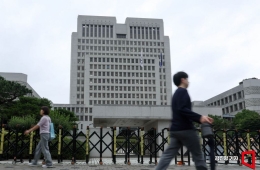
Financial Supervisory Service Governor Lee Chanjin answers lawmakers' questions during a parliamentary audit of the Financial Supervisory Service and other institutions at the National Assembly on Oct. 19, 2026. Photo by Yoon Dongju
View original imageAt a parliamentary audit of the FSS and other agencies by the National Assembly's Political Affairs Committee on the 19th, Lee said of cyberattacks on the financial sector, "This hacking incident will be the first case in which the issue of a CEO's responsibility for cybersecurity is addressed in relation to the duty to manage internal control standards." His remarks signaled that the FSS would review whether financial company CEOs had violated their duty to manage internal controls.
The FSS is conducting a full-scale inspection of security vulnerabilities at financial companies and plans to make its sample inspections as comprehensive as possible, approaching the scope of a full-scale inspection.
Lee said the FSS would gradually ease network-separation regulations to allow the use of artificial intelligence (AI) for security purposes. "It would be difficult to ease the regulations across the board," he said. "Our basic position is to minimize exposure to external networks and start with measures that adhere to the fundamentals."
Lee also announced inspections of financial companies that outsource security work to affiliates. Rep. Park Seonghyeok of the Democratic Party of Korea took issue with YeGarang Savings Bank, which recently suffered a major customer data leak in a cyberattack, outsourcing security work to an affiliate within the same Taekwang Group.
Asked about concerns that such outsourcing could violate the Fair Trade Act if used for intra-group transactions or as a means of facilitating a third-generation succession to management control, Lee said, "I agree. I will look into it carefully," adding, "If we find any problems, we will notify the Fair Trade Commission so that it can take action."
At the audit, lawmakers also questioned the financial company corporate governance reforms pursued by financial authorities since President Lee Jae-myung criticized the financial sector as a "corrupt inner circle" in December 2025.
"We conducted a full-scale inspection of all financial holding companies from the end of last year through early this year and compiled the results. The government's corporate governance reform proposal was drawn up based on those findings," Lee said. "A bill has now been drafted, and I understand the ruling party and the government are discussing it." He also said that, ahead of year-end bank CEO appointments, the FSS would review the entire selection process even before revisions to the Corporate Governance Act take effect, to determine whether efforts to improve corporate governance are producing tangible results.
Banks' loan interest rate-setting practices also came under scrutiny. Rep. Min Byeongdeok of the Democratic Party of Korea said that although some statutory expenses were excluded from the calculation of additional interest rates under an amendment to the Banking Act that took effect in July 2026, banks were offsetting the impact of the resulting rate reductions by scaling back preferential interest rates.
"We have observed such cases, but I understood that they reflected the sharp rise in market interest rates," Lee said. "If the point you raised is correct, I will look into it."
However, analysts in the financial sector say that global bond yields are rising amid higher oil prices and inflationary pressures stemming from the war in the Middle East. They also point to banks' reduced lending in response to the government's tighter management of household debt as another factor pushing up loan interest rates.
Lee also outlined plans to reform the FSS and address delays in completing inspections and disciplinary proceedings.
"Consultations with the Financial Services Commission on the FSS reform plan are nearly complete, and there are no significant differences of opinion," he said. "We expect to submit it in November 2026." Regarding the sharp increase in the FSS's average inspection processing time to 237 days as of June 2026, from around 110 days in 2021-2023, he cited structural problems, including staff shortages, and said the agency had begun an organization-wide effort to improve the situation.
Hot Picks Today
 Despite "Insufficient Balance" Notices, They Board Anyway... Reports of Foreign Fare Evasion Mounting
- "If It Helps My Child's Studies, It's Worth Every Penny"... U.S. Parents Open Their Wallets for $10,000 Tests
- [Exclusive] "We Came for a KRW 140,000 Trip": Following Chinese Tourists in Korea Uncovers a 'Suspicious' Tour
- "I'm paying to stay, and you want me to do the laundry and dishes too?" ... Airbnb bans excessive cleaning demands
- "Baek Jongwon Had Been Quiet, Then Hit It Big"... Waits in the 100s in U.S. Despite KRW 46,000 Pork Belly
The FSS will also pursue measures to help victims of illegal private lending and strengthen protections against internal IT incidents at financial companies. Regarding certificates it issues confirming the invalidity of antisocial lending contracts, Lee said, "Giving them normative force is one effective option," expressing agreement that their legal effect should be strengthened. He added that the FSS would consult with the Financial Services Commission on revisions to the Electronic Financial Transactions Act to strengthen the prevention and detection of, as well as management and oversight for, not only cyberattacks but also errors in internal systems.
© The Asia Business Daily. All rights reserved. Unauthorized AI training and use prohibited.