President Lee: "Vietnam to Apply VAT Refund Rules Retroactively"... Green Light for Korean Firms as Refund Delays Ease
Asked Vietnam to resolve issue during April state visit
Then-NTS Commissioner Lim Gwanghyun also urged cooperation in June
Vietnam issued nationwide guidance on retroactive application on September 15
"Tangible results of summit diplomacy"
The Vietnamese government has decided to apply relevant regulations retroactively to past transactions to resolve delays in value-added tax refunds for Korean companies operating in the country. With a path now open to recover at least KRW 40 billion in delayed refunds as of the end of last year, the move is expected to ease companies' cash-flow burdens.

President Lee Jaemyung speaks with reporters in the lobby of Chun Chugwan at Cheong Wa Dae, a space where journalists work, on the 19th. Oct. 19, 2026. Yonhap News Agency
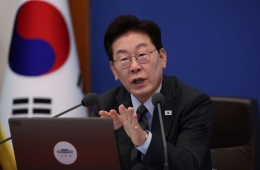
View original imageOn October 19, President Lee Jaemyung posted a message on X (formerly Twitter) titled "News from Vietnam," sharing the development. "Summit diplomacy is producing tangible results that resolve difficulties faced by our companies," he said.
On September 15, the Vietnamese government instructed tax authorities nationwide to apply the refund rules retroactively to transactions conducted before amendments to VAT-related regulations, provided certain requirements are met. Some Korean companies operating in Vietnam have struggled to manage their finances as VAT refunds were delayed for extended periods. In particular, unresolved refund issues involving transactions predating the regulatory amendments have kept tax-related uncertainty high for businesses.
"As the amount of delayed refunds identified in a survey last December alone totaled at least KRW 40 billion, I hope this measure will help ease the financial burden on our companies," President Lee said.
The measure is notable as the result of both the president's summit diplomacy and working-level consultations between the tax authorities of the two countries. During his state visit to Vietnam from April 21 to 24, President Lee raised the issue of tax refunds for Korean companies operating there and asked Vietnam to resolve it. Then, on June 25, Lim Kwang-hyun, who was the National Tax Service commissioner at the time and is now the presidential chief of staff, urged Mai Xuan Thanh, head of Vietnam's General Department of Taxation, to cooperate in expediting the refunds at the 25th Korea-Vietnam Commissioners of Taxation Meeting in Seoul.
Lim told his counterpart that Korean companies were experiencing business difficulties due to delays in VAT refunds and requested active attention and support from Vietnam's tax authorities. The two sides also discussed advance pricing agreement (APA) consultations and ways to ease the tax burden related to the global minimum tax.
After the president directly raised the issue, consultations were held at the National Tax Service, and about five months later, they took concrete form in the Vietnamese government's refund guidelines. The outcome also reflects the follow-up results of international tax cooperation pursued by Lim when he was National Tax Service commissioner, before he was appointed presidential chief of staff on October 14.
Vietnam is a key trading and investment partner of South Korea and a major overseas production base. According to the National Tax Service, trade between the two countries totaled US$94.5 billion last year, the third-largest amount after China and the United States. There are also 2,602 local subsidiaries of Korean companies operating in Vietnam. Resolving delayed tax refunds in a country with such strong economic ties is expected to help companies secure liquidity and improve the local business environment.
However, the measure does not mean that the entire KRW 40 billion in delayed refunds will be paid immediately. Whether a refund is granted, and in what amount, may vary depending on whether each company meets the requirements and on the procedures of local tax authorities.
"I sincerely thank the Vietnamese government for listening to the difficulties faced by our companies and taking steps to resolve them," President Lee said. "I will follow through to ensure that the results of summit diplomacy translate into tangible benefits for our people and businesses."
Hot Picks Today
 "Once Worth 4 Million Won a Day, Now Going for Chicken Money"... Chinese Robots' Humiliating Fall to 'Bargain-Bin' Prices in Just One Year
- 'I Thought I'd Make a Fortune on KOSDAQ'... Investors Still on Edge After Listing [VCs Now]
- [Practical Investing] Volatility in Semiconductor Stocks... Which Non-Semiconductor Sectors Are Worth Watching?
- It's Hard to Buy a Home, Yet "We Won't Take It Even If You Leave It to Us"... Why People Avoid Inheriting Their Parents' Homes
- "It Wasn't Jeju or Busan"... 'Santorini of Korea' Draws Crowds of Travelers in Their 20s and 30s Lately
President Lee also posted the same message in Vietnamese alongside the Korean version that day. The move is seen as an effort to express his gratitude directly to the Vietnamese government while highlighting the results of economic cooperation between the two countries.
© The Asia Business Daily. All rights reserved. Unauthorized AI training and use prohibited.