[2026 Parliamentary Audit] Support Budget Hits Record High, but Culture and Arts Promotion Fund Reserves Plunge 75% in 5 Years
167.2 billion won in 2020 -> 41.1 billion won in 2025... spending up 46%
Next year's basic arts grants expanded to 93.9 billion won... concerns over funding stability
Lee Beomheon: "Considering new funding sources, including anti-scalping surcharges and unclaimed copyright royalties"
Employment retention rate for young arts trainees at 16.3%... program effectiveness also under scrutiny
The reserves of the Culture and Arts Promotion Fund, which supports creative activities in the arts and culture, have fallen by 75% in five years. Although next year’s budget for grant programs in the basic arts is set to reach a record high, the fund lacks sufficient resources of its own and is becoming increasingly dependent on other funds and government accounts. At a parliamentary audit, lawmakers also raised concerns about the fund’s financial stability and the effectiveness of a job-support program for young artists.

At the National Assembly’s Culture, Sports and Tourism Committee audit of Arts Council Korea (ARKO) on Oct. 19, Assemblywoman Im Ohkyung of the Democratic Party of Korea pointed to the worsening finances of the Culture and Arts Promotion Fund and called for measures to secure stable funding.
According to data released by Im, the fund’s annual spending rose 46%, from 332.2 billion won in 2020 to 485 billion won in 2025. Over the same period, its reserves fell 75.4%, from 167.2 billion won to 41.1 billion won. Its accumulated reserves also declined from 115.339 billion won in 2021 to 41.162 billion won last year. The estimated reserves at the end of this year are expected to edge up to 49.014 billion won, but that would still be less than half the 2021 level.
The problem is a lack of stable sources of revenue of its own. Last year, the fund received a transfer of 110 billion won from the National Sports Promotion Fund. This year, it is expected to rely on other funds and government accounts for 82% of its total revenue. The fund’s operations are thus financed largely by resources transferred from outside, rather than by funding it secures on its own.
Funding for next year is set to increase instead. The 2027 budget for the Culture and Arts Promotion Fund’s grant programs in the basic arts, announced by Arts Council Korea on Oct. 8, is 93.9 billion won, about 33.7 billion won more than this year’s 60.3 billion won and a record high. The programs support creative activities across six fields, including literature, visual arts, multidisciplinary arts, performing arts and international exchange. As the scale of support grows, securing funding to sustain these programs has become a key challenge.
“With this structure, it is difficult to expand sustainable grant programs that meet the needs of working artists,” Im said. “The need to secure funding was raised even during the previous chair’s term, but adequate measures were not put in place.”
In response, Lee Beomheon, chair of Arts Council Korea, said, “The council is working on measures and discussing them with several lawmakers. We are considering ways to secure revenue from punitive surcharges imposed on ticket scalping and unclaimed copyright royalties as new sources of funding for the Culture and Arts Promotion Fund.” He also said the council would work with relevant agencies to develop solutions.
The government brought amendments to the Performance Act and the National Sports Promotion Act into effect on Aug. 28, allowing surcharges of up to 50 times the sale price to be imposed on the illegal resale of performance and sports tickets. Arts Council Korea is considering using revenue from surcharges collected under the system to fund the Culture and Arts Promotion Fund.
At the audit, the employment outcomes of the Cultural and Arts Training Assistant Support Program, which provides young artists with practical experience, also became a point of contention. The program provides funding for young people’s wages at arts organizations, museums and performance venues to give them hands-on work experience.
The program’s budget increased from 10.412 billion won in 2021 to 11.966 billion won this year, including a supplementary budget. The number of participants also rose about 2.5-fold, from 261 in 2021 to 640 as of September this year.
However, a follow-up survey conducted by Arts Council Korea of 441 participants in the program from 2021 to 2024 found that only 16.3% remained employed by the organizations where they had worked during the program. Lawmakers also pointed out that the rate of conversion to regular employment over the past five years was just 8.6%. The employment-retention rate refers to the proportion of participants who continued working for the same organization after completing the program. It is distinct from the overall employment rate, which also includes those who moved to other institutions or continued working in the arts and culture sector.
“Under this system, employment ends when support ends,” said Rep. Yoon Yonggeun of the People Power Party. “If the council pays subsidies to encourage conversion to regular employment but does not even track whether people remain employed afterward, how can it evaluate the program’s performance?”
Arts Council Korea said that the small scale of individual arts organizations and other factors limit its ability to raise the employment-retention rate. The council runs job training and networking programs for practitioners, but it does not appear to track as a separate performance measure whether the training leads to actual employment or participation in projects.
Lee said the council would consider support measures that allocate funding by region to strengthen assistance for arts organizations outside the Seoul metropolitan area.
Hot Picks Today
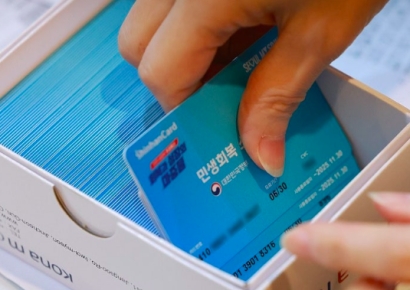 "300,000 Won Grant" Shelved at Chuseok to Go to All Residents After All... This City Says It Will Pay Before Lunar New Year
- "Didn't Save This Money to Leave to Our Kids?"... Retired Couples Spend $10,000 on a Single Trip
- "Make $10 Million by Flipping It Right After Delivery?"... The Market Drawing the World's Ultra-Rich in ‘This Market’
- Friend Who Went Abroad Goes "Silent"... 617 South Koreans Out of Contact, What's Going On?
- "Stockpile 9 Liters of Bottled Water and Three Days' Worth of Food"... UK on Edge as Nationwide Emergency Preparedness Alert Issued
The question of securing funding for the Culture and Arts Promotion Fund has been raised repeatedly in the past. At a work briefing in January this year by the Ministry of Culture, Sports and Tourism and its affiliated and public institutions, participants also discussed the need for institutional improvements and coordination with relevant agencies to ensure stable funding for the fund. At this year’s parliamentary audit, lawmakers again called for stable funding to match the expansion of grant budgets, as well as improvements to the system for monitoring program outcomes after support has been provided.
© The Asia Business Daily. All rights reserved. Unauthorized AI training and use prohibited.