[2026 National Assembly Audit] Lee Chanjin: "FSS Reform Plan to Be Submitted Next Month"
FSC consultations nearing completion
Strengthen the effect of certificates confirming the invalidity of illegal loan contracts
Improve management of financial firms' IT incidents
Lee Chanjin, governor of the Financial Supervisory Service (FSS), said the agency would submit its reform plan next month. He also said it was necessary to strengthen the effect of certificates confirming the invalidity of loan contracts to help victims of illegal private lending, and to revise the Electronic Financial Transactions Act to improve the management of internal IT incidents at financial companies.

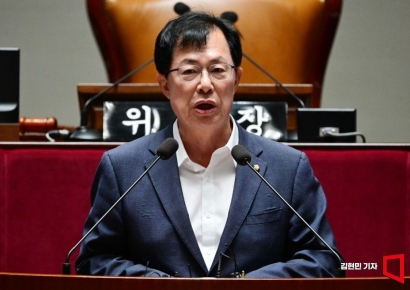
Financial Supervisory Service Governor Lee Chanjin moves to his seat after handing his oath statement to Yoo Dongsoo, chair of the Political Affairs Committee, following his witness oath at a parliamentary audit of the Financial Supervisory Service and other agencies at the National Assembly on Oct. 19, 2026. Photo by Yoon Dongju
View original imageAt the FSS’s parliamentary audit by the National Assembly Political Affairs Committee on October 19, Lee responded to Social Democratic Party lawmaker Han Changmin’s criticism of delays in announcing the reform plan. “Consultations with the Financial Services Commission are nearly complete, and there are no significant differences of opinion,” he said. “We expect to submit it in November.”
Han pointed out that the reform plan had not been announced by October, despite the Public Institutions Management Committee’s call for reform in January, when it deferred a decision on designating the FSS as a public institution. “The reform plan should already have been announced, and implementation should be underway,” he said, urging the agency to act promptly.
Han also raised concerns about delays in processing inspections and sanctions. According to Han, as of June this year, the FSS took an average of 237 days to process inspections, a sharp increase from around 110 days in 2021-2023. The number of cases reported to the Financial Services Commission for exceeding the standard processing period rose from five in 2021 to 366 last year.
Han called for improvements, saying that interim announcements of inspection results under former FSS Governor Lee Bok-hyun were one of the causes of delays and backlogs in case processing. Lee said that structural issues, including a shortage of personnel, were contributing to the delays. He added that the FSS had begun an agency-wide improvement effort so that those subject to inspections and the public could see the results.
In discussions on tackling illegal private lending, concerns were raised about the effectiveness of the system for confirming the invalidity of antisocial loan contracts. Democratic Party of Korea lawmaker Kang Junhyun said that while 853 contracts had been confirmed invalid, around 1,500 cases had been rejected. He said the FSS should closely examine cases in which victims were excluded from relief, including due to a lack of supporting evidence. Lee replied that the agency had been addressing the issue internally.
Kang said that certificates issued by the FSS confirming the invalidity of loan contracts amount only to administrative certification and have limited power to invalidate contracts, proposing that their legal effect be strengthened. Lee said, “I believe giving them binding force is one effective way to address this.”
Kang called for easing the funding costs of high-performing registered lenders and improving the term “loan business” so that vulnerable people would turn to policy-based financial services for low-income households or registered lenders instead of illegal private lenders. Lee agreed that the system needed improvement, saying, “I believe it needs to be institutionalized to at least the level of Japan.”
Hot Picks Today
 [Exclusive] Piling medicines into a basket and setting them on the counter: "Ready to check out?" ... Misuse concerns mount, but the government remains in the dark.
- "Jealous of Koreans" - Now a Must-Do on Every Trip... The Place Where Foreigners Spent KRW 229.8 Billion
- "'No! Dad, Run!'... Father Moved by 5-Year-Old Son Who Shielded Him from Ghost at Korean Folk Village"
- "I thought getting into a big company was the goal"... The 'position' only 1 in 121 employees reaches
- "Please Let Me Go Home"... Customers Trapped in Department Store Parking Lot for 5 Hours Vent Their Anger
Calls were also made to strengthen oversight of internal IT incidents at financial companies. Citing an internal system error at Toss Bank, Rebuilding Korea Party lawmaker Kim Hyungyeon said that measures to prevent and detect internal system errors were just as important as those addressing hacking. Lee said the FSS would consult with the Financial Services Commission to revise the Electronic Financial Transactions Act and strengthen the management of internal IT errors.
© The Asia Business Daily. All rights reserved. Unauthorized AI training and use prohibited.