[2026 Parliamentary Audit] "Conflicted Over Prosecutors' Office Abolition"... Park Cheolwoo Says "Sorry to the People" Over Abuse of Prosecutorial Power (Full Coverage)
Clash over prosecution reform at first audit of Public Prosecution Office
Ruling and opposition parties clash as Roh Moo-hyun's death is raised
1.4 trial benches per trial prosecutor
Controversy over prosecution plan leak and investigator's perso
"You said you feel conflicted, and I, too, cannot help feeling conflicted."
Park Cheolwoo, chief of the Seoul Central District Public Prosecution Office, gave that response on October 19 to People Power Party lawmaker Kwak Gyutaek, who asked how he felt about the abolition of the Prosecutors' Office during a parliamentary audit of prosecution offices in the Seoul metropolitan area held by the National Assembly's Legislation and Judiciary Committee. Park expressed regret over the loss of the prosecution's direct-investigation and supplementary-investigation functions. At the same time, he bowed his head in response to ruling-party criticism that the prosecution should reflect on how it exercised its powers in the past, saying, "I am sorry to the public."

Park Cheolwoo, chief of the Seoul Central District Prosecutors' Office, gives a work report during a parliamentary audit of the Seoul Metropolitan Prosecutors' Office (formerly the Seoul High Prosecutors' Office) and other offices, held by the National Assembly's Legislation and Judiciary Committee on the 19th. Yonhap News Agency
View original image"Conflicted by the loss of direct and supplementary investigations"... Apologizes for abuse of prosecutorial powers
The first parliamentary audit since the Prosecutors' Office was abolished and the Public Prosecution Office was launched on October 2 saw the ruling and opposition parties clash over the background and legitimacy of prosecution reform. In the first round of questioning, Kwak questioned why senior officials who had spent more than 20 years in the prosecution service were continuing to work at the Public Prosecution Office, which no longer has investigative powers. "The prosecution earned recognition for its role by investigating major corruption cases in the past," he said. "Now that its investigative capabilities have been entirely removed and it has become the Public Prosecution Office, I believe those who spent more than 20 years in the prosecution service should have stepped down."
Kwak then asked Park how he felt about the abolition of the Prosecutors' Office. Park replied, "Among the prosecution's many functions, directly rooting out major evils was also very important. I feel conflicted that the supplementary-investigation function, which allowed us to review investigations by primary investigative agencies such as the police, has also disappeared, and that the institution has been renamed the Public Prosecution Office." He added, "We still have an essential role to fulfill for the public," and said, "I will do my best in my duties under the new system."
By contrast, Cho Kuk Innovation Party lawmaker Park Eunjeong said that before expressing regret over the abolition of the Prosecutors' Office, the prosecution needed to reflect on how it had exercised its powers in the past. "Shouldn't you first reflect on why prosecution reform took place?" she asked Park, seeking his position.
Park acknowledged that "in recent years, there have been instances of prosecutorial powers being exercised without restraint, unfairly, or in ways that raised doubts about fairness." When Park Eunjeong asked again whether he was willing to issue a formal apology to the public, he replied, "I recognize that there were instances where prosecutorial powers were exercised without restraint or in ways that were unfair or lacked fairness, and I am sorry to the public."

A replacement sign is displayed at the main entrance of the Seoul Central District Public Prosecution Office in Seocho-gu, Seoul, on Oct. 2, 2026, as the Prosecution Service, which held both investigative and prosecutorial powers, closed after 78 years under Lee Jaemyung's prosecution reform, and the Public Prosecution Office and Serious Crimes Investigation Agency officially launched. Photo by Kang Jinhyung
View original imageFormer President Roh Moo-hyun's death cited in debate over abolition of Prosecutors' Office... Ruling and opposition parties clash
The ruling and opposition parties also clashed during the audit over the background to the abolition of the Prosecutors' Office, with the death of former President Roh Moo-hyun brought up. People Power Party lawmaker Kim Taegyu said the change from the Prosecutors' Office to the Public Prosecution Office was "intended to humiliate the prosecution" and claimed it "stemmed from the Democratic Party's long-standing desire for revenge against the prosecution following the death of former President Roh." He also said, "The Democratic Party once called itself a 'political pariah,' but after former President Roh's death, it shifted the blame to the prosecution."
National Assembly Legislation and Judiciary Committee Chair Seo Youngkyo rebutted Kim's remarks, sparking a heated exchange in the meeting room. Seo, who served as director of the Chunchugwan press center and press support secretary at the Blue House under the Roh Moo-hyun administration, said, "The Democratic Party never said anything like that about President Roh Moo-hyun." She added, "The term 'political pariah' was used by Ahn Heejung, a former governor, to reflect on his own circumstances at the time." Seo repeatedly criticized Kim's remarks as "false information," and opposition lawmakers responded, with voices raised for some time.
'One trial division, one trial prosecutor' still a long way off... Park Cheolwoo: "It will take several more months"
Staffing shortages in trial proceedings also came under scrutiny following the launch of the Public Prosecution Office. Park Eunjeong cited the Ministry of Justice's plan, announced last month, to assign "one trial prosecutor to each trial division," and asked about staffing at the Seoul Central District Public Prosecution Office. The ministry had previously said that, in conjunction with the launch of the Public Prosecution Office, it would reassign prosecutors from departments such as the Criminal Division to trial divisions to strengthen the prosecution of cases in court.
When Park Eunjeong asked, "Is it true that one prosecutor is handling two or three trial divisions?" Park replied, "At present, each trial prosecutor handles an average of about 1.4 trial divisions." Park explained that the number of cases and workload vary by trial division, while acknowledging the staffing shortage. "Maintaining prosecutions is naturally important, so we plan to add staff and provide support in the future," he said. "However, staffing is currently inadequate, so I think we will have to continue for several more months with each trial prosecutor handling 1.4 trial divisions."

Kim Hyangyeon, chief of the Seoul Western District Prosecutors' Office, answers lawmakers' questions during a parliamentary audit of the Seoul Metropolitan Prosecutors' Office (formerly the Seoul High Prosecutors' Office) and other agencies at the National Assembly's Legislation and Judiciary Committee on the 19th. Yonhap News.
View original imageProbe into leak of prosecution plan document and personnel assignment of investigator in North Korea funds case also disputed
The parties also clashed over how a prosecution plan document made public by former Justice Minister Han Dong-hoon was leaked. Democratic Party lawmaker Kim Hangyu criticized the Seoul Western District Public Prosecution Office, led by Kim Hyangyeon, saying it "checked whether the document had been leaked only with current employees, without questioning prosecutors who were working there when the document was prepared." Kim replied, "We questioned prosecutors and employees currently working here, but found no evidence of a leak." He added, "The Supreme Prosecutors' Office is responsible for investigating those who were working here at the time."
"Shouldn't you be asking the people who were there at the time?" Kim asked, pressing further. "Isn't everyone avoiding responsibility, with no one investigating?" Kim Hyangyeon replied, "We will fully cooperate with the Supreme Prosecutors' Office's fact-finding investigation and the police investigation."
The personnel assignment of an investigator involved in the investigation into the Ssangbangwool remittance to North Korea case also became a point of controversy. Democratic Party lawmaker Kim Donga said that an investigator accused of falsifying investigative records was handling personnel affairs in the General Affairs Division of the Suwon District Public Prosecution Office. Kim Bonghyeon, chief of the Suwon District Public Prosecution Office, acknowledged that the investigator was responsible for personnel affairs. However, he explained that the investigator was assigned to the role because personnel work is unpopular and few staff members have experience in it.
Hot Picks Today
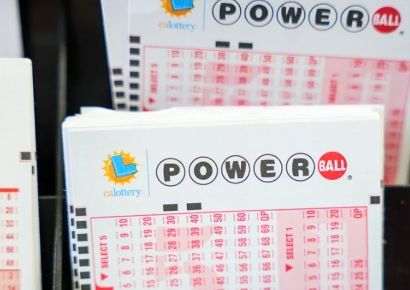 He Left It in the Car and Forgot... "I Nearly Collapsed with Joy": Man Wins $1.48 Million Lottery
- Goldman Sachs Cuts KOSPI Target by 25%... "Excessive Pessimism, Still Attractive"
- "'Nodding Off' on the Subway? Here's Why Koreans Are Getting Even Less Sleep"
- "Please Pay Me at Least 3 Million Won a Month": More Than Half of Young People Today Prioritize "Working Conditions" Over Company Size
- Beachgoer Finds 'Plastic' That Turns Out to Be Perfume Ingredient Worth More Than Twice as Much as Gold
Kim criticized the assignment, saying it was inappropriate for an investigator facing questions over how investigative records were prepared to handle personnel matters and performance evaluations. Committee Chair Seo also called for the office to review whether the assignment was appropriate and submit measures to address the issue.
© The Asia Business Daily. All rights reserved. Unauthorized AI training and use prohibited.