[2026 Parliamentary Audit] Government R&D Royalty Collection Rate at 21.6%; 2 in 3 Companies Paid Less Than 10% of Amount Due
It has emerged that the government has failed to properly collect royalties after transferring technologies developed with government R&D funding to companies. After commercialization, companies paid only about one-fifth of the royalties due, and more than six out of every 10 companies that made payments paid less than 10% of the amount owed.

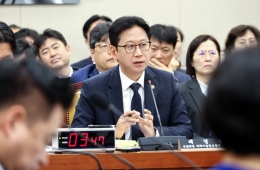
An analysis of data on government-collected royalties from national R&D projects, submitted by the Ministry of Science and ICT at the request of Rep. Kim Sunmin of the Rebuilding Korea Party, a member of the National Assembly’s Science, ICT, Broadcasting and Communications Committee, found that government grants related to technology commercialization totaled KRW 206.967 billion from 2022 through August this year.
Of that amount, KRW 23.69 billion was subject to royalty collection, but only KRW 5.111 billion was actually collected. The collection rate was 21.6%, while the amount collected was equivalent to 2.5% of the government grants.
Collection rates varied widely among the institutions managing the royalties. The Korea Industrial Technology Association had the lowest rate, at 3.9%, followed by the Institute for Information & Communications Technology Planning & Evaluation at 6%, the National Research Foundation of Korea at 13.8%, the Innopolis Foundation at 15%, and the Commercialization Promotion Agency for R&D Outcomes at 16.6%. The Korea Drug Development Fund had the highest rate, at 55.7%.
By company, 545 of the 818 firms (66.6%) paid less than 10% of the royalties owed. A total of 195 companies (23.8%) paid at least 10% but less than 50%, while 78 companies (9.5%) paid 50% or more.
In particular, four companies managed by the Korea Industrial Technology Association paid no royalties at all. The government grants awarded to these companies, which received technologies including an integrated AI tunnel-monitoring solution, ranged from KRW 149 million to KRW 360 million each, while the total amount subject to collection ranged from KRW 140 million to KRW 350 million.
The Ministry of Science and ICT explained that companies are expected to voluntarily report revenue generated by using transferred technologies, but that it had been unable to collect royalties because the companies had not filed reports.
Rep. Kim said, "Since royalty payments currently depend solely on voluntary reporting by companies, it appears difficult to ensure proper collection. It is deeply concerning that, if a considerable number of companies receiving government grants are unable to generate revenue from the technologies transferred to them, this could mean that technology transfers are not leading to tangible commercialization results."
Hot Picks Today
 "They Get a Good Night's Sleep and Earn Twice My Salary... Honestly, I'm So Jealous I Could Die": Civil Servant's Post Targeting Firefighters Sparks Outrage
- "My Wallet Is Closed"... Semiconductor-Led Growth in the 3% Range [Click e-Market]
- Man in His 60s Arrested for Dumping Body in Guro-gu, Man in His 80s for Ordering It (Updated)
- "Naked Again?" Controversial Actress Crosses a Line... Slammed for Sexualizing 'Child Characters'
- "You Mean Only Middle-Aged Men Got to Enjoy This?"... Where Japanese Women in Their 20s and 30s Are Flocking
Kim added, "Rather than evaluating programs solely on the basis of technology transfer figures, the government should examine why companies are unable to generate revenue from the technologies they receive and oversee the process from validating market potential to providing follow-up commercialization support, so that technologies developed with taxpayers' money lead to tangible results."
© The Asia Business Daily. All rights reserved. Unauthorized AI training and use prohibited.