Six-Month Rule for Research Misconduct Investigations in Name Only... 6 in 10 Cases Miss Deadline [2026 Parliamentary Audit]
49 of 83 Cases Exceeded the Investigation Deadline... Longest Took 911 Days
Preliminary Investigation Ongoing for 2 Years and 10 Months... Start and Completion Dates Not Tracked Properly in More Than Half of Cases
The time taken to investigate allegations of research misconduct has far exceeded the government’s guidelines. Six out of every 10 research misconduct cases failed to meet the six-month investigation deadline, and preliminary investigations in some cases have been ongoing for as long as two years and 10 months. Critics say the system, which is supposed to promptly determine whether research misconduct occurred and safeguard the credibility of research findings, is not functioning properly.
According to data submitted by the National Research Foundation of Korea to Assemblyman Kim Sunmin of the Rebuilding Korea Party, a member of the National Assembly’s Science, ICT, Broadcasting and Communications Committee, 49 of the 83 research misconduct cases managed since 2021 (59.0%) took more than six months to investigate. Only 30 cases (36.1%) were handled within six months, while reports were withdrawn in the remaining four cases. Twenty-seven cases took at least six months but less than a year, and 22 cases took a year or longer. The figures include cases that are still under investigation.

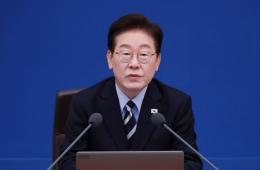
File photo for illustrative purposes. Kim Seonmin, a lawmaker from the Rebuilding Korea Party (center).
View original imageThe current “Guidelines for Securing Research Ethics” stipulate that, in principle, investigations must be completed within six months, from the start of a preliminary investigation through to the final determination. However, a case involving the “Development of a Mobile Application for Managing Breast Cancer Symptoms Based on Korean Medicine” took 911 days (about two years and six months) to reach a final determination. The investigation found that no research misconduct had occurred.
Delays at the preliminary investigation stage were even more serious. Under the guidelines, a preliminary investigation should begin within 30 days of receiving a report and be completed within 30 days of its start. But all 19 of the 22 cases currently under investigation, excluding three reinvestigations, remained unresolved at the preliminary investigation stage more than 60 days after the reports were received. In five of these cases, more than a year had passed since the reports were filed.
The oldest case concerns alleged improper attribution of authorship. It was received on November 29, 2023, and as of October 1, 2026, 1,037 days (about two years and 10 months) had passed, yet the preliminary investigation was still underway. Another case received in May 2024 had also remained at the preliminary investigation stage for 854 days.
It also emerged that even basic information needed to monitor investigation timelines had not been properly collected. Of the 83 cases, the start date or completion date of the preliminary investigation could not be confirmed in 47 cases (56.6%). In 34 cases (40.9%), neither date could be confirmed. Critics say this makes it difficult to determine how long each stage of an investigation takes, identify the causes of delays, or call for cases to be handled promptly.
Hot Picks Today
 "Let's Hit It Big in Korea"... Foreigners Flock to 'This Place' [Weekend Money]
- "A Real Estate Market Unlike Any We've Seen Is Coming"; Non-Homeowners Could Be Blindsided
- “What Now for Samsung and SK hynix?” ... Could News from China Rattle the KOSPI? Shareholders Anxious
- "I Had Just Lain Down to Sleep..." Woman in Her 30s Sets Fire to Songpa Villa Parking Lot, Destroying 3 Cars
- "Jealous of Koreans" - Now a Must-Do on Every Trip... The Place Where Foreigners Spent KRW 229.8 Billion
“Ensuring that research misconduct investigations are rigorous and failing to reach a conclusion for years are two entirely different issues,” Assemblyman Kim said. “If the six-month investigation rule is in place but more than half of the cases exceed it, the rule has effectively become meaningless.” He added, “We must strictly manage deadlines at each stage, from the preliminary investigation to the final determination, and develop measures to substantially shorten investigation times, such as having a specialized agency directly review the progress and reasons for delays in long-running cases.”
© The Asia Business Daily. All rights reserved. Unauthorized AI training and use prohibited.