Brunson's Remarks: "Personal Views or the U.S. Government's Position?"
"Controversy Over Remark That 'The Republic of Korea Begins at the Southern Fence'"
Ministry of National Defense: "Personal View"; UNC: "Separate from Sovereignty"

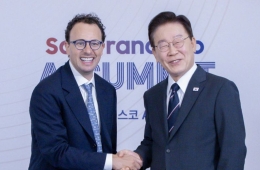
U.S. Forces Korea Commander Gen. Xavier Brunson speaks at a seminar hosted by the Gold Institute for International Strategy, a U.S. think tank, in Washington, D.C., on the 14th (local time). Yonhap News Agency
View original imageControversy has arisen over whether remarks by U.S. Forces Korea Commander Gen. Xavier Brunson were his personal views or reflected the U.S. government's position.
Brunson made the remarks at a seminar hosted by the U.S. think tank Gold Institute for International Strategy in Washington, D.C., on October 14 (local time). "From the United Nations Command's perspective, the Republic of Korea begins at the southern fence," he said. Brunson also serves as commander of the United Nations Command and the ROK-U.S. Combined Forces Command. His remarks were thus directly at odds with the definition of the Republic of Korea's territory set out in the Constitution.
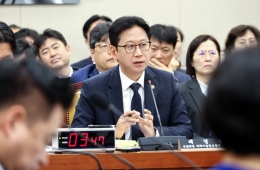
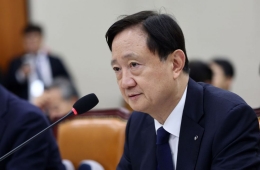
The South Korean government has pushed back. The Ministry of National Defense called the remarks "the personal views of the United Nations commander" and said, "The Ministry's position on the Republic of Korea's territorial sovereignty is firm." The United Nations Command also sought to defuse the controversy. On the same day, it said Brunson had been explaining "the responsibilities assigned to the United Nations commander under the Armistice Agreement within the Demilitarized Zone (DMZ) and the Joint Security Area (JSA)," adding that they were "military and administrative in nature and separate from the sovereignty of the Republic of Korea."
Some observers say the remarks may reflect continuing differences between South Korean and U.S. military authorities over whether the conditions for the transfer of wartime operational control have been met. Brunson has publicly expressed reservations about the transfer, which the Lee Jaemyung administration is pursuing during its term. Citing North Korea's advances in nuclear and missile capabilities and changes in the regional environment, he has said that "the conditions have changed." The date of the Security Consultative Meeting (SCM), which had been scheduled for next month, is also being postponed.
Hot Picks Today
 Sold for 3.8 Billion Won, Now Down 700 Million... "I'll Sell" as Eunma Listings Surge 3.7-Fold
- "Koreans Spend 1 Million Won Each and Come Back"... 'They Said They Were Going for Value for Money,' but Open Their Wallets Wide in Japan
- [Earnings Call] SK hynix's Kwak Nojeong: "Solidigm IPO Unlikely to Deliver Expected Benefits"
- "Wow, Have Middle-Aged Men Had This All to Themselves?"... Women in Their 20s and 30s Find Comfort in a Standing Drink
- "I Have 9 Billion Won, but I Still Can't Quit"... The Unexpected Worry of a Major-Company Employee in His 40s Who Hit It Big with Investments
Some also speculate that the remarks reflected the United Nations Command's dissatisfaction over authority to approve access to the DMZ. The Democratic Party of Korea previously introduced bills that would give the South Korean government authority to approve access to the DMZ for nonmilitary purposes. Unification Minister Chung Dong-young has also defended the proposals on the grounds that they concern "territorial sovereignty." At a press briefing in January, the United Nations Command objected that the bills "can never be reconciled with" the Armistice Agreement. On October 14 (local time), Brunson also emphasized the United Nations Command's authority to manage matters under the Armistice Agreement, saying he was responsible for enforcing it to protect the people of South Korea.
© The Asia Business Daily. All rights reserved. Unauthorized AI training and use prohibited.