Government: "Housing Starts This Year to Fall Somewhat Short of Target... Close Monitoring of Construction Progress" (Comprehensive)
Set initial target of 268,000 housing starts
"81% to 88% expected by year-end"
Digital housing supply dashboard to launch within the year
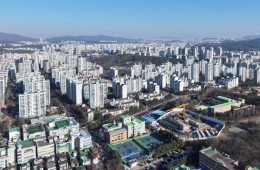
The government estimates that it may fall short of its target of 268,000 housing units in the Seoul metropolitan area this year by nearly 20%. It has achieved most of its public-sector target, but some private-sector redevelopment projects have not progressed smoothly. The government plans to actively manage construction schedules at individual project sites and encourage them to begin construction on the remaining units without delay.
On October 16, the government held its first regular housing supply briefing and reported on recent progress. In its mid- to long-term plans, including the September 7 measures announced last year, the government initially pledged to supply 1.5 million housing units in the Seoul metropolitan area by 2030. The target for this year is 268,000 units. Of these, the government estimates that between 218,000 and 235,000 units could begin construction by the end of the year, equivalent to 81% to 88% of the original target.

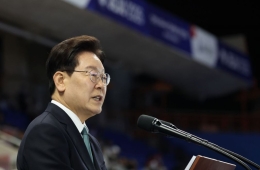
Kim Yi-tak, First Vice Minister of Land, Infrastructure and Transport, outlines the progress of housing supply initiatives and future supply plans at the first regular housing supply briefing, held at the Government Complex Seoul in Jongno-gu, Seoul, on the 16th. Yonhap News Agency
View original imageAbout 99,000 units had begun construction by the second week of October, or approximately 37% of the total target. By sector, the achievement rate was 26% for public housing and about 31% for newly built homes acquired for public supply. Public housing sites accounted for about 73,000 units, mainly in the third-phase new towns of Goyang Changneung, Incheon Gyeyang, Hanam Gyosan, Namyangju Wangsuk 2 and Bucheon Daejang. Other sites, including Suwon Dangsu and Bucheon Yeokgok, accounted for about 6,900 units. Construction had begun on about 13,000 newly built homes acquired for public supply, including 3,600 in Seoul, 7,000 in Gyeonggi Province and 2,700 in Incheon.
Private-sector redevelopment and reconstruction projects had achieved about 23.6% of their target. In Seoul, this amounted to about 11,000 units in areas including Heukseok District 11, Junggye Bon-dong and Sillim District 2. About 54.7% of units classified as “other”—including privately built homes on public housing sites, urban development projects and local housing cooperatives—had begun construction. Most of the 43,000 units in the “other” category were in Gyeonggi Province or Incheon.
By a simple calculation, with about two and a half months left in the year, construction would need to begin on about 130,000 units for the government to reach even the 80% range of its target. Given that fewer than 10,000 units have begun construction per month on average so far this year, even the revised target is challenging. Kim Itak, First Vice Minister of Land, Infrastructure and Transport, said, "Because we set an ambitious target for this year, construction starts have been concentrated toward year-end. We are working to spread them more evenly throughout the year."

The government identified slower-than-expected progress on private-sector reconstruction and redevelopment projects in Gyeonggi Province and Incheon as the main reason it may miss its original target. It also said some projects that require legislative amendments have been delayed because discussions in the National Assembly have taken longer than expected.
Jeong Woojin, head of the Ministry of Land, Infrastructure and Transport's Housing Supply Promotion Headquarters, said, "The public sector is expected to achieve most of its original target. Among private-sector redevelopment and reconstruction projects, we expect to achieve a target of around 31,000 units in Seoul, but some projects in Gyeonggi Province and Incheon have been dropped because of low profitability."
The planned number of units for which tenant recruitment will be announced in the fourth quarter of this year is about 15,000. Public sales of about 10,000 units are set to begin in the third-phase new towns of Goyang Changneung, Bucheon Daejang and Namyangju Wangsuk, as well as in Godeok Gangil, Pyeongtaek Godeok (second phase) and Gwanggyo (second phase). The government aims to announce recruitment for more than 5,000 public rental units in total, including in Gwacheon Knowledge Information Town, Guri Galmae Station Area and Bupyeong, Incheon. Through the third quarter of this year, about 14,800 units had been supplied for public sale and about 14,700 as public rentals.
The government will also pursue short-term supply to stabilize the jeonse and monthly rental markets, including by starting occupancy at the first third-phase new town in Incheon Gyeyang this December. It said publicly supported housing units scheduled for occupancy in the Seoul metropolitan area from the fourth quarter of this year through the end of next year will total about 100,000. A policy allowing group loans at redevelopment project sites for relocation costs and final payments to be excluded from household debt controls is currently scheduled to remain in place through this year. The government will conduct further reviews before deciding whether to extend it into next year, with a decision expected at the end of this year or early next year.

Meanwhile, the government plans to hold regular briefings twice a month and create a "Digital Housing Supply Dashboard" so the public can easily access information on housing supply progress. The initiative aims to improve public awareness of housing supply, as information has so far been provided sporadically, limiting access to some extent. The dashboard will use the Ministry of Land, Infrastructure and Transport's website to provide supply plans and results, policy updates, and sales and rental information. Detailed project information will also be presented on a map. The government plans to build a dashboard by the end of this year and operate it on a trial basis, before linking and integrating all housing supply-related information.
Hot Picks Today
!["It's Only October, and They're Already Buying?" Sales Soar 18-Fold... Flying Off Shelves at Convenience Stores [How We Shop Today]](https://cwcontent.asiae.co.kr/asiaresize/93/2026101415091360669_1791958153.jpg) "It's Only October, and They're Already Buying?" Sales Soar 18-Fold... Flying Off Shelves at Convenience Stores [How We Shop Today]
"It's Only October, and They're Already Buying?" Sales Soar 18-Fold... Flying Off Shelves at Convenience Stores [How We Shop Today]
- "King crab is 3,000 won per 500 grams; just eating it makes the trip worthwhile"... Chinese flock to North Korea on 'fake business trips'
- "If You Don't Apply, My KRW 1.7 Million Will Be Gone"... Unclaimed National Pension Refunds Vanish After 'This Deadline'
- Woman in Her 70s Assaults Sister in Her 80s: “She Had an Affair with My Husband”
- "Why on earth come to Korea and do this?" ... Chinese Man in Hanfu Says He'll Promote Chinese Culture at Gyeongbokgung
Kim Yongsu, Second Vice Minister of the Office for Government Policy Coordination, said, "The Office for Government Policy Coordination and the Ministry of Land, Infrastructure and Transport plan to brief the public twice a month on the implementation of housing supply measures and key achievements. The Integrated Housing Supply Support Center, which will combine the problem-solving centers at the Ministry of Land, Infrastructure and Transport and the financial authorities, is expected to launch soon and resolve difficulties on the ground more quickly."

Kim Yongsoo, Second Vice Minister of the Office for Government Policy Coordination, briefs reporters on the implementation of housing supply measures and key achievements by the Office for Government Policy Coordination and the Ministry of Land, Infrastructure and Transport at the first regular housing supply briefing at the Government Complex Seoul in Jongno-gu, Seoul, on the 16th. Yonhap News Agency
View original image© The Asia Business Daily. All rights reserved. Unauthorized AI training and use prohibited.


!["Please Take Them Off!" They Made It All the Way to the Bed... Then "80% of Fecal Bacteria" Struck [Deep Scroll]](https://cwcontent.asiae.co.kr/asiaresize/307/2026101610053063338_1792112730.png)