Seoul Prosecution Office Finalizes Duties for Serious Crime Prosecution Division, Strengthens Trial and Litigation Functions
Prosecutors in Serious Crime Prosecution Division Down from 37 to 28
The Seoul Central District Prosecutors' Office said on Oct. 16 that it had finalized the division of duties for the Serious Crime Prosecution Division and other units.

Seoul Central District Prosecutors' Office in Seocho-dong, Seoul. Yonhap News Agency
View original imageThe Serious Crime Prosecution Division works with investigative agencies at every stage, from determining whether there are grounds to suspect a serious crime to handling warrants, requesting supplementary investigations, and maintaining prosecutions. Its name was changed from the former Serious Crime Investigation Division as part of an organizational restructuring.
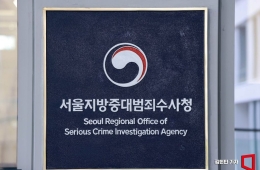
The Seoul Prosecution Office has specified the duties of Serious Crime Prosecution Divisions 1 through 6. The plan is to work closely with each unit of the Seoul Regional Serious Crime Investigation Agency and maintain the capacity to respond to serious crimes.
Serious Crime Prosecution Divisions 1 through 6 at the Seoul Prosecution Office will work with Serious Crime Sections 1 through 3, Criminal Section 1, and the Security Section at the Seoul Regional Serious Crime Investigation Agency.
However, the number of prosecutors actually working in units related to the Serious Crime Prosecution Division fell by 9, or 24.3%, from 37 to 28. The decrease reflects prosecutors moving to the Serious Crime Investigation Agency and being reassigned to units such as the Non-referral Review Division and the Trial and Litigation Division.
The Public Security Investigation Division, which investigated cases involving counterespionage and terrorism, elections, and serious industrial accidents, was also downsized and reorganized from three divisions into Public and Criminal Divisions 1 and 2.
Considering the need to handle serious industrial accident cases promptly and the importance of responding to safety accidents, the Seoul Prosecution Office decided that all Public and Criminal divisions would share responsibility for serious industrial accident cases previously handled exclusively by Public Security Investigation Division 3. However, the liaison channel for cooperation with special judicial police officers from the Ministry of Employment and Labor was consolidated under Public and Criminal Division 2.
The names of the units were also changed. The unit formerly dedicated to serious industrial accidents was renamed "Industrial Safety" to emphasize safety. The counterespionage unit was renamed "National Security," reflecting the expansion of the espionage offense from targeting an "enemy state" to targeting a "foreign country or an equivalent organization."
Public and Criminal Division 1 is responsible for national security, elections, and political party funds, while Division 2 handles labor issues and cases involving groups, among others.
However, given that the statute of limitations for election-law violations related to the June 3 local elections expires on Dec. 3, Public and Criminal Division 2 will also handle election cases.
Responsibility for serious civil disasters and crimes causing multiple victims among ordinary citizens was reorganized into a system in which designated units in four criminal divisions -- Criminal Division 2, Criminal Divisions 4 and 5, and Criminal Division 8 -- take the lead.
Hot Picks Today
 "Let's Hit It Big in Korea"... Foreigners Flock to 'This Place' [Weekend Money]
- “What Now for Samsung and SK hynix?” ... Could News from China Rattle the KOSPI? Shareholders Anxious
- "I Had Just Lain Down to Sleep..." Woman in Her 30s Sets Fire to Songpa Villa Parking Lot, Destroying 3 Cars
- Gyeonggi Provincial Office of Education Holds "Character-Building Meal with Families" કાર્યક્રમ
- 'Little BoA,' They Said... Apology Over Unpaid Wages Fails to Quell Fury: "Do They Have Money to Debut Their Daughter?"
Trial and litigation functions were also strengthened. In particular, the number of trial prosecutors specializing in a range of fields, including criminal, public, international, and IT matters, was increased. The work of dedicated public-interest representatives, previously handled by the Planning Office, was also transferred to Trial and Litigation Division 3.
© The Asia Business Daily. All rights reserved. Unauthorized AI training and use prohibited.