"Forget the Bitcoin Halving-Cycle Rule"... Major Regulatory and Technological Tailwinds Set to Arrive in Q4 [Crypto Radar]
Bitcoin Becomes a Beneficiary of "Debasement"
Tokenization Moves Into the Institutional Mainstream
Ethereum's Tech Overhaul and Payment Network Expansion
An analysis suggests that Bitcoin could gain strong upward momentum this year even without relying on the established “four-year halving cycle” theory. The outlook is that, alongside a decline in the value of money (debasement) driven by surging U.S. government debt, institutional and technological tailwinds in the fourth quarter will push the market higher.

According to NH Investment & Securities on October 20, Bitcoin has shown short-term volatility amid recent interest rate increases, but is expected to have passed its low point in the four-year cycle. In particular, even if the past four-year halving pattern does not hold, Bitcoin could benefit significantly if the debasement theme gains further prominence.
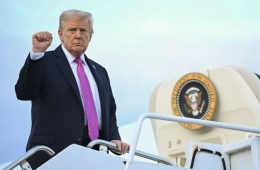
U.S. government debt has topped $40 trillion, making it a macroeconomic risk for markets and a powerful source of momentum for the digital asset market. U.S. President Donald Trump's pledge to pay $5,000 per person if Republicans win the midterm elections is heightening market concerns about debasement. Meanwhile, even the belief that artificial intelligence (AI)-driven gross domestic product (GDP) growth could lower the government debt-to-GDP ratio is being shaken by calls to moderate the pace of AI development.
Bitcoin has historically followed a pattern of three years of gains followed by one year of losses, as mining rewards are cut in half approximately every four years. However, the market's fundamentals are changing. According to Shinhan Securities, the approval of spot exchange-traded funds (ETFs) and the sharp increase in publicly listed companies adding Bitcoin to their balance sheets have strengthened the influence of institutional flows. The combined holdings of U.S. spot exchange-traded products (ETPs) and companies holding at least 1,000 Bitcoin now account for about 12% of the total circulating supply. As a result, institutional capital inflows and outflows, along with the scale of selling by long-term holders, have become key drivers of prices, rather than simply the reduction in newly mined Bitcoin.

Alongside these changes in supply and demand, events scheduled for the fourth quarter are expected to improve the fundamentals of the broader digital asset market and boost interest in it. In particular, the Depository Trust & Clearing Corporation (DTCC) is expected to officially launch its tokenization service soon. With numerous global financial firms participating in the DTCC's tokenization service, real-world asset (RWA) tokenization is expected to become a central market theme.
The launch of tokenized securities platforms using the U.S. Securities and Exchange Commission's (SEC) regulatory sandbox could soon become a reality. A joint venture between global cryptocurrency exchange OKX and Intercontinental Exchange (ICE), the parent company of the New York Stock Exchange (NYSE), called OKXICE, has submitted an application. Other major platforms are expected to follow suit.
Efforts to establish a regulatory framework for the sector are also gaining pace. The Commodity Futures Trading Commission (CFTC) is actively working to strengthen market oversight, including drafting rules for “CTX,” a federal supervisory framework, and “CAM,” a dedicated market, for businesses that offer margin and leveraged trading services. The market sees these efforts as a positive development that will reduce uncertainty.
In terms of trading infrastructure, decentralized exchanges (DEXs) such as Uniswap are aligning with regulatory standards by introducing “pools exclusively for eligible wallets” that have completed know-your-customer (KYC) checks. This is helping establish a structure in which securities firms and fintech applications (apps) can efficiently access on-chain liquidity. The advancement of this trading infrastructure and the growing participation of regulated financial firms are seen as key foundations for transforming the digital asset market from one reliant on short-term speculative capital into a genuine distribution network for financial assets.
Ethereum, the leading altcoin, is also undergoing a major technological overhaul that is expected to support the market. Ethereum's Glamsterdam upgrade is expected to significantly improve network transaction speeds and scalability. As the ecosystems for stablecoins and real-world asset tokenization gain momentum, the upgrade is expected to provide a timely technological foundation by reducing network congestion and improving efficiency.
Hot Picks Today
 "Two Spend 500,000 Won in a Flash, Yet Wait Two Hours?" ... 'Dreamland' Shunned by Kids and Foreign Tourists
- The Era of Getting 200 Million Won After 30 Years Is Over... A Japanese Bank's "Perpetual Department Head" Who Just Clocked In Cries Out
- Spain Hit by Its Worst Tragedy... Lee Kangin, Moreno and Real Madrid Join Soccer World in Mourning
- They Said, “Make It Your Home for Life” - Then Suddenly Kicked 200 Passengers Off... What Happened to the Around-the-World Cruise?
- "130 Rice Bowls Sold Out in a Day"... 'Unfiltered Face' Adds 8 Million Won to Night Market Sales: China's Bungeunwoo

Park Seongje, a researcher at Shinhan Securities, said, “As concerns grow over the U.S. fiscal burden and the long-term value of money, investors are increasingly looking at gold and Bitcoin together.” He added, “The strength of future gains will depend on interest rates, oil prices, the policy environment, and institutional capital inflows.”
© The Asia Business Daily. All rights reserved. Unauthorized AI training and use prohibited.