'Bribery' Former Lawmaker Yoon Kwanseok Gets Suspended Prison Term in Appeal
First-trial acquittal overturned
Former Democratic Party of Korea lawmaker Yoon Kwanseok, who was indicted on bribery charges, was sentenced to prison, suspended, in an appeals court.

The Seoul High Court's Criminal Division 6-2, comprising Presiding Judge Park Jeongje and High Court Judges Min Dalgi and Kim Jongwoo, sentenced Yoon on the 16th to one year in prison, suspended for two years, and fined him 20 million won. The court also ordered him to pay about 14 million won in additional confiscation.
At the first trial, the court acquitted Yoon, saying the evidence submitted by prosecutors alone was insufficient to conclude that he had received money or other benefits in exchange for favors related to his duties as a lawmaker, beyond their personal relationship, or that he knew the benefits were bribes given in return for favors.
By contrast, the appeals court found most of the charges proven, including that Yoon received money and entertainment worth more than 20 million won from June 2017 to March 2023 from the head of a manufacturing company, identified by the surname Song, in exchange for helping with requests such as amendments to laws.
The court first found that Yoon received 14 million won worth of benefits from Song and had him make political donations totaling 8.5 million won to lawmakers who belonged to the Democratic Party at the time. The court said, "The defendant claims that this was natural interaction based on a personal relationship, but even when the parties are personally acquainted, the provision of money and entertainment can constitute bribery once a specific pending issue and its connection to official duties have been clearly established."
The court added, "Song asked the defendant, while playing golf with him, to amend the Housing Act and address specific business issues, and paid the fees on his behalf when the defendant was explicitly aware of these requests."
The court also said, "The defendant acted on Song's requests by, among other things, questioning the proposed amendments to the Housing Act during a parliamentary audit," and concluded that "there was a quid pro quo relationship between the provision of money and entertainment and the requests."
Hot Picks Today
 "Why Is the Amount in My Account So Low?"... Why Pension Savings Subscribers Were Surprised
- "After Sleeping Well with Strangers"... Who Is the 24-Year-Old Woman Who Won 19 Million Won?
- "SK hynix to Hit 4.7 Million Won, Samsung 670,000 Won"... Why Nomura's Bold Forecast justifies it
- "Even Underwear Has to Be Cut Up with Scissors"... China Hit by Rise of "Trash Hunters" in an "If You're Slow, You're Out" Scramble
- "NPS loses 240 trillion won, 1990s-born get zero pension"... What's behind rumors spreading after the KOSPI plunge?
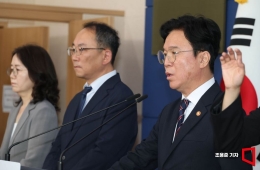
Immediately after the ruling, Yoon told reporters, "This case began as political persecution by the Yoon Suk Yeol prosecution, and involved an unlawful separate investigation," and said he would appeal.
© The Asia Business Daily. All rights reserved. Unauthorized AI training and use prohibited.