[Kim Heeyoon's Book Corner] From Nuclear Subs to HBM4... Why Must Korea's "Shield" Be Silicon?
Jeong Jaeyong's Geopolitics and the Silicon Shield
From the U.S.-China tech war to North Korea's nuclear weapons and the Strait of Hormuz... reading global fractures through "K-semiconductors"
From performance-based pay to regional investment, issues for the "silicon shield"... the bright and dark sides of semiconductors as national security
You open a book about semiconductors and find the Strait of Hormuz and nuclear submarines. It takes you through the Russia-Ukraine war, North Korea's nuclear missiles, U.S. Forces Korea, and wartime operational control before finally arriving at Samsung Electronics and SK hynix. Jeong Jaeyong's Geopolitics and the Silicon Shield is a slightly unusual book from the outset. Rather than bringing in world affairs to explain semiconductors, it argues that Korea needs semiconductors because the world has become so dangerous.

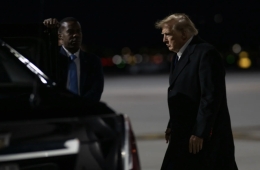
The book surveys U.S.-China strategic competition and the Taiwan Strait, Trump's style of great-power politics, the U.S.-Iran and Russia-Ukraine wars, and North Korea's nuclear weapons, before bringing K-semiconductors to the fore in Chapter 7. That is also why the author calls Samsung Electronics and SK hynix a "silicon shield."
The argument is that a country with a technological edge and a strategic position in the supply chain does more than make a lot of money: it becomes a country that great powers cannot easily ignore. The book lays out a three-pillar strategy: "limited alignment with the United States, selective hedging with China, and internal balancing through a technological edge."
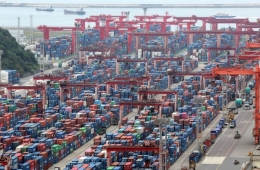
As it happens, just as the book comes out, SK hynix is bringing to the negotiating table both the issue of securing approval to install U.S.-made equipment at its factory in Dalian, China, and investment in a new NAND factory in the United States. The location of a single factory has become a diplomatic card between the United States and China. In September, Korea's semiconductor exports reached $60.3 billion, surpassing $60 billion for the first time. This is why "silicon shield" is more than just rhetoric in a book title.
The book becomes more interesting when it turns the shield inward, not just toward external enemies. The author describes Samsung Electronics' performance bonuses and strikes as "cracks in the silicon shield," and the distribution of semiconductor profits as a "distribution trap." In the debate over the Honam cluster, the author weighs electricity, water, and talent, arguing that "economic, not political, logic" should take precedence.
Here, the argument's strengths and weaknesses emerge at the same time. Elevating semiconductors to an issue of national survival allows us to view technology investment and supply chains in a much broader context. Conversely, if the national-security lens becomes too powerful, issues such as workers' share of performance-based compensation and regional balance could risk being seen only as things that weaken the shield. Reality has already grown more complex than the book's argument. SK has said it will move quickly on its investment in Gwangju, while making it conditional on the supply of electricity and water.
Jeong Jaeyong is a journalist who covered international affairs for 32 years and a researcher with a doctorate in the Korea-U.S. alliance. This book is therefore less an introduction to semiconductors than an essay collection in which a journalist tries to bring together the wars, alliances, China, North Korea, and technology he has observed over many years into a single national strategy. The book's answer is clear: make the shield thicker.
The question left for readers is a little different. Once semiconductors become a national shield, how much are we prepared to sacrifice for them?
Hot Picks Today
 "Everyone else is retiring"... People who say they'll work until 74: What's going on? [Pension Asset Polarization] 1
- "Maybe I'll just go to Japan," they'll say... Why are foreign visitors to Korea "flooding with complaints"? [2026 National Assembly Audit]
- He Left It in the Car and Forgot... "I Nearly Collapsed with Joy": Man Wins $1.48 Million Lottery
- "Don't Trust This Woman": Documentary on 'Investment Scammer' Earns KRW 22 Billion in One Week
- "This Costs 66.3 Billion Won?"... The Story Behind the "Most Expensive Ever" Bra, Made Without a Single Piece of Fabric
Geopolitics and the Silicon Shield | Jeong Jaeyong | Bareun Books
© The Asia Business Daily. All rights reserved. Unauthorized AI training and use prohibited.