[2026 Parliamentary Audit] Oh Minseok, Seoul Central District Court Chief Judge: "NEC Warrant Decisions Follow the Law and Principles"
Repeated Rejection of Warrants Related to the National Election Commission Criticized at Parliamentary Audit
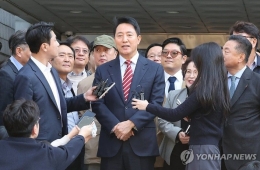
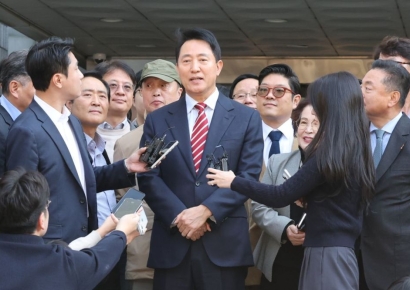
Oh Minseok, chief judge of the Seoul Central District Court, said on October 16, "My understanding is that judges in charge of warrants carefully review case records to establish the facts and apply the law, determine whether the criminal allegations are substantiated and whether a search and seizure is necessary, and then decide whether to issue a warrant."

Oh Minseok, chief judge of the Seoul Central District Court, answers questions from members of the National Assembly's Legislation and Judiciary Committee during an audit of the Seoul High Court, Seoul Central District Court and other courts at the National Assembly on the 16th. Yonhap News Agency
View original imageDuring a parliamentary audit by the National Assembly Legislation and Judiciary Committee that day, Oh said that whether the chief judge or senior presiding judge of the same court serves as an election commissioner has no bearing on warrant decisions. He was responding to criticism that search and seizure warrant requests related to the National Election Commission had been rejected one after another.
Kim Min-jeon of the People Power Party said that day, "Aren't too many warrant requests related to the ballot paper shortage case being rejected?" She added, "The public wonders whether the investigation into the National Election Commission is being hampered because the courts are protecting it by refusing to issue search and seizure warrants. Is this because judges also serve as chairpersons of election commissions? Is there a conflict of interest?"
Park Eun-jung of the Rebuilding Korea Party also said, "Questions of criminal liability are arising one after another for election commission chairpersons who hold concurrent positions as judges, yet the Seoul Central District Court is rejecting the warrant requests. That seems problematic." Oh replied, "Judges assigned to handle warrants process search and seizure warrant requests in accordance with the law and principles. The chief judge has absolutely no involvement."
Hot Picks Today
 Tearful Oh Sehoon Acquitted on Appeal: "Thanks to Those Who Believed in My Innocence" (Update)
- "The Transfer Failed, but 'Ding-Dong,' Money Came In"... KRW 32.5 Billion Financial Incident at Toss Bank
- "People with money have already moved," they say... 1,700-ton underground vault full as the wealthy flock to this country
- "Matcha Has Run Out": Why Japan Can't Celebrate Its Global Popularity
- 'Hangover Legend' Returns After 11 Years... Lee Sunmin Hyung's 'Captain Q' Sells Out
On October 14, the Seoul Central District Court rejected search and seizure warrant requests filed by the special counsel team investigating the National Election Commission against the National Election Commission and others. The warrants reportedly cited alleged losses of state funds and the preparation of false official documents. By convention, one Supreme Court justice serves as chairperson of the National Election Commission, while some non-standing commissioners and regional election commission chairpersons are senior judges. The court cited as grounds for rejecting the requests that "the basic facts have been established, and the suspects appear to differ in their legal assessments" and that "there appears to be a considerable likelihood that the warrants would seriously disrupt the National Election Commission's normal operations." The special counsel team said there had been recent cases in which courts rejected some search and seizure warrant requests for reasons that were difficult to understand, and announced it would file the requests again.
© The Asia Business Daily. All rights reserved. Unauthorized AI training and use prohibited.