[Editorial] Reforming Weekly Apartment Price Statistics: Accuracy and Expertise Should Be the Standard

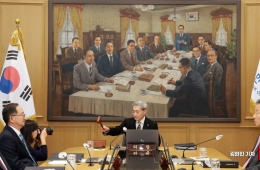
Lee Heonwook, president of the Korea Real Estate Board, delivers opening remarks during a parliamentary audit of the board and other organizations at the National Assembly on the 15th. Photo by Yoon Dongju.
View original imageAt an audit by the National Assembly's Land, Infrastructure and Transport Committee on Oct. 15, ruling and opposition lawmakers questioned whether the Korea Real Estate Board's weekly apartment price statistics reflect actual market conditions. They pointed out that the sample is small, covering 33,500 households nationwide, and that because the statistics are compiled weekly, prices may be calculated based on asking prices or comparable complexes when there are no actual transactions. This could allow the surveyors' subjective judgment to influence the figures.
In response, the Ministry of Land, Infrastructure and Transport said, "While many experts believe that weekly statistics should be adjusted due to their limitations, surveys found that the public and licensed real estate agents want the statistics to be published." The ministry plans to gather additional feedback before announcing a reform plan.
This issue has been raised repeatedly and was also discussed at last year's parliamentary audit. At the time, the ministry said it was considering options such as maintaining the weekly survey of apartment price trends while suspending publication or adjusting the survey frequency. It subsequently commissioned the Korea Research Institute for Human Settlements to conduct related research, but no specific direction for reform has yet been finalized. It feels as though policy decisions are taking too long.
The government should sufficiently gather and reflect a range of public opinions when making policy decisions, but it does not necessarily have to follow public demands exactly. That is because what the public wants is not necessarily the best course of action from the perspective of the country as a whole.
It is only natural that the general public wants more timely market information. However, the key criterion for reform should not be limited to reflecting public preference; it should be how accurately the statistics reflect actual market conditions.
Hot Picks Today
 [Exclusive] "We Came for a KRW 140,000 Trip": Following Chinese Tourists in Korea Uncovers a 'Suspicious' Tour
- Despite "Insufficient Balance" Notices, They Board Anyway... Reports of Foreign Fare Evasion Mounting
- "I Killed My Mother": Daughter in Her 40s Reports Herself to Police; Police Make Emergency Arrest
- The 'Oppa' Boss Is Gone, the 'Senior' Boss Is Here: Starting Up to Make Ends Meet... New Businesses Down 1.5%
- "Photos of Kim Jong Un Released by North Korea Are a Deception"... Debate Over Death Rumors Continues
In a market with few transactions, if a weekly index influenced by surveyors' judgments is reported with its week-to-week fluctuations, it could fuel expectations and asking prices, creating a cycle in which those asking prices are then reflected in the statistics. The government should release the findings of the study it commissioned from the Korea Research Institute for Human Settlements and assess whether the publication frequency is appropriate. Whether to maintain weekly statistics should be decided based on experts' methodological judgment, not public preference. Internationally, there are very few examples of statistics being published weekly as they are in Korea; monthly or quarterly publication is the norm.
© The Asia Business Daily. All rights reserved. Unauthorized AI training and use prohibited.