Hanwha Solutions Pursues a "Two-Track" Strategy in Solar and Wire & Cable Materials to Drive Future Growth
Expanding from solar manufacturing into power supply and management
Strengthening energy security by building a domestic supply chain
Creating a virtuous growth cycle by linking new PPA and VPP businesses
Hanwha Solutions is seeking to secure future growth engines by strengthening the competitiveness of its solar business and expanding its power infrastructure materials business. In solar, the company plans to reinforce its domestic production base and expand new businesses such as power purchase agreements (PPAs) and virtual power plants (VPPs). In wire and cable materials, it aims to accelerate its push into global markets, focusing on high-value-added materials for extra-high-voltage, submarine, and high-voltage direct current (HVDC) cables.

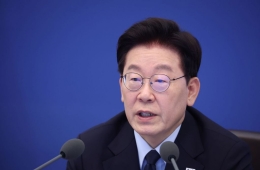
Yoo Jaeyeol, head of Hanwha Qcells' Korea Business Division, explains the company's solar energy business strategy at the "Solution Academy" for reporters covering the company at Hanwha Building in Jung-gu, Seoul, on the 15th. Photo by Jang Bokyeong.
View original imageHanwha Solutions unveiled this business strategy on the 15th at the "Solution Academy," held for reporters covering the company at Hanwha Building in Jung-gu, Seoul. Hanwha Qcells, the Qcells division of Hanwha Solutions, is focused on strengthening energy security by building a domestic solar supply chain. The company plans to maintain its domestic manufacturing base for solar cells and modules while expanding its PPA and VPP businesses to secure new revenue streams.
A PPA is a business arrangement that connects renewable energy producers with companies that need electricity and supplies them with power over an extended period. A VPP integrates solar power facilities and other distributed energy resources across multiple locations and manages them as if they were a single power plant, helping improve the stability of electricity supply.
Hanwha Qcells plans to use its network of power producers, built through supplying solar modules in Korea, and its proprietary operations platform to strengthen the competitiveness of both businesses. Its goal is to establish a business structure that extends from supplying solar modules to operating power plants and selling electricity.
"The network built through module sales and the power plants themselves become resources for our PPA and VPP businesses," said Yoo Jaeyeol, head of Hanwha Qcells' Korea business division. "As we secure grid stability and the market expands, we can enter a virtuous cycle in which demand for domestically produced cells and modules also increases."
Hanwha Qcells believes that introducing a domestic production tax credit will be a key measure for maintaining the supply chain and securing energy security as Chinese products gain a stronger foothold in the market. The company says it is particularly important to maintain domestic manufacturing capacity and build competitiveness in next-generation technologies, given the high technological intensity of solar cell production.
To that end, Hanwha Qcells operates a pilot production line for perovskite tandem cells at its Jincheon plant in North Chungcheong Province. It has achieved a certified efficiency of 28% for large-area cells and aims to begin mass production of cells and modules by the end of 2028.
"A production tax credit is needed not to boost the profitability of individual companies, but to support the national economy and energy security," Yoo said. "Combining domestic manufacturing capabilities with new PPA and VPP businesses can help build a domestic supply chain and secure energy security."
Alongside its solar business, Hanwha Solutions is also developing its wire and cable materials business as a future growth engine. Global electricity demand is surging amid the expansion of AI data centers, industrial electrification, and the growing adoption of renewable energy, and the market for materials used in extra-high-voltage, submarine, and HVDC cables is expected to grow rapidly.
Hanwha Solutions' Wire & Cable (W&C) division said on the same day that it plans to strengthen its push into global markets, focusing on insulation and semiconductive materials for extra-high-voltage, submarine, and HVDC cables.

Hanwha Solutions has completed technical validation of a package of cross-linked polyethylene (XLPE) insulation and semiconductive materials for 500-kV-class high-voltage alternating current (HVAC) cables, working separately with Qingdao Hanhe, a Chinese manufacturer of extra-high-voltage cables, and TBEA. The photo shows a model of the HVAC materials package that successfully passed 500-kV technical validation. Photo: Hanwha Solutions
View original imageThe company is also moving quickly to strengthen its technological competitiveness in materials for extra-high-voltage cables. On the 16th, Hanwha Solutions announced that it had completed technical validation of a package of cross-linked polyethylene (XLPE) insulation and semiconductive materials for 500-kV-class high-voltage alternating current (HVAC) transmission cables, working separately with Chinese extra-high-voltage cable manufacturers Qingdao Hanhe and TBEA.
The tests were conducted by TICW, a certification body affiliated with the Shanghai Electric Cable Research Institute (SECRI) in China. The process evaluated insulation performance and long-term reliability under extra-high-voltage transmission conditions. Following its validation at the 400-kV level, Hanwha Solutions has now established the technical reliability of its extra-high-voltage insulation materials at the 500-kV level as well. The company is also pursuing certification from KEMA, an internationally recognized certification body.
Stronger technological competitiveness is also translating into higher sales. Hanwha Solutions' global sales of XLPE for super extra-high-voltage (SEHV) cables are expected to nearly double this year compared with last year. In particular, sales of extra-high-voltage materials in China, including products rated for 325 kV, are expected to increase about threefold from last year.
The outlook for the global market is also positive. According to market research firm CRU, demand for high- and extra-high-voltage cables is projected to grow at an average annual rate of 11.9% from 2025 to 2030. Growth in Northeast and Southeast Asia excluding China, including South Korea, is expected to average about 20% annually.
Hanwha Solutions plans to respond to this market expansion by increasing the share of high-value-added wire and cable materials in its portfolio. It aims to increase the share of strategic high-value-added products to at least four times its 2025 level by 2031.
Development of next-generation technologies is also underway. Hanwha Solutions is developing materials for 90-degree-rated HVDC cables, which can operate at higher temperatures than existing products, and is conducting the certification process with customers. It has also commercialized cable sheathing materials made with 50% recycled feedstock and is developing technology to recycle insulation materials from used cables.
The company has also expanded its footholds to pursue overseas markets. Last year, Hanwha Solutions established a local subsidiary, Hanwha Cable Solutions, in Milan, Italy, and is stepping up technical support and sales activities targeting European cable manufacturers and power infrastructure operators.
Hot Picks Today
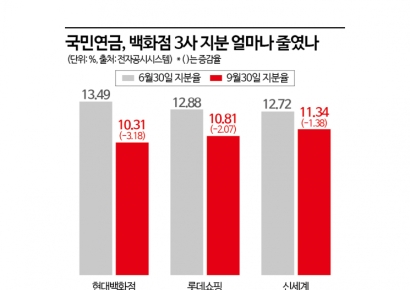 'Big Investor' NPS Has Already Cut Its Losses... Sold Department Store Stocks in Q3 Despite Strong Earnings Outlook
- "Female Teachers Must Wear Skirts in Class"... Outrage Erupts Over Principal's Demand: What's Happening in North Korea?
- [Breaking] Police Refer Four, Including Former Assemblyman Yoo Seungmin, to Prosecution Over 'Daughter's Alleged Appointment as Professor'
- Three Samsung Products, Including Galaxy S26 Ultra, Named to TIME's "2026 Best Inventions" list
- "The leggings are all see-through. It's so embarrassing to look at," complaints prompt Lululemon to fire development staff.
"With the spread of AI, electrification, and renewable energy, generating sufficient electricity and reliably delivering it where it is needed have become important challenges," said Carlo Scarlata, head of Hanwha Solutions' W&C division. "We will establish ourselves as a trusted partner for next-generation power infrastructure and develop our high-value-added wire and cable materials business into a new growth engine for Hanwha Solutions."
© The Asia Business Daily. All rights reserved. Unauthorized AI training and use prohibited.