Government: "Recovery Led by Exports and Investment Continues"... Middle East-Driven High Oil Prices, Employment Pressures Weigh on Growth
October Issue of Recent Economic Trends (Green Book)
"Price Pressures and Livelihood Burdens Persist"
The government said the economic recovery is continuing, led by exports and investment. However, it assessed that pressures on people's livelihoods, including external uncertainty stemming from the Middle East war and weak employment, remain.
In the October issue of its "Recent Economic Trends" report (the Green Book), released on October 16, the Ministry of Finance and Economy said, "A solid economic recovery is continuing, with exports rising sharply, investment posting healthy growth, and consumption improving gradually." However, it said pressures on people's livelihoods persist amid growing uncertainty stemming from the Middle East war, including upward pressure on prices due to high oil prices and difficult employment conditions for vulnerable groups and sectors.
Recent indicators of economic activity presented a mixed picture. In August, industrial production across all sectors fell 1.3% from the previous month. Construction and services output rose 1.9% and 0.5%, respectively, but overall production was pulled down by a 4.8% decline in mining and manufacturing output. Industrial production across all sectors increased 1.9% from a year earlier. The weakness in mining and manufacturing was affected by a decline in automobile production. In August, mining and manufacturing output also fell 2.2% year on year. Automobile production declined 24.8% from the previous month and 29.4% from a year earlier.

According to the “May 2026 Export and Import Trends” report released by the Ministry of Trade, Industry and Energy on the 1st, exports totaled $87.75 billion last month, up 53.2% year over year. This was the highest figure ever recorded for May, and monthly exports have exceeded $80 billion for three consecutive months since March. The photo shows containers piled high at the Sinseondae and Gamman terminals at Busan Port that day. Yonhap News Agency
View original imageConsumption and facility investment also retreated. Retail sales fell 1.8% from the previous month in August and 0.3% year on year. Facility investment declined 9.5% from the previous month, but rose 16.1% from a year earlier. Domestic card spending approvals in September increased 2.3% year on year, but growth slowed from 4.9% in August. Domestic sales of Korean-made passenger cars fell 19.0%, remaining weak after a 28.3% decline in August. By contrast, the Consumer Sentiment Index rose 2.1 points from the previous month to 106.6.
Exports have become a key driver of the economic recovery. In September, exports rose 83.5% year on year, buoyed by strong performances in semiconductors, computers, and cosmetics. Average daily exports also increased 104.9% from a year earlier to $5.63 billion.
Employment and prices showed different trends. The number of employed people in September was up 113,000 from a year earlier. Growth slowed compared with the increase of 184,000 in August. The unemployment rate was 2.0%, down 0.1 percentage points from the same month a year earlier. Consumer price inflation eased to 2.9% in September from 3.1% in August. The index excluding food and energy rose 2.8%, while the index excluding agricultural products and petroleum products increased 2.7%.
In financial markets, rising international oil prices amid tensions in the Middle East, stronger expectations of U.S. interest rate hikes, and rising interest rates in major economies pushed up Treasury bond yields. The yield on three-year government bonds stood at an annualized 4.01% at the end of the month, up 0.17 percentage points from the previous month. The government assessed that "the global economy is continuing to grow moderately, but uncertainty surrounding the Middle East war and U.S. tariff measures persists."
Hot Picks Today
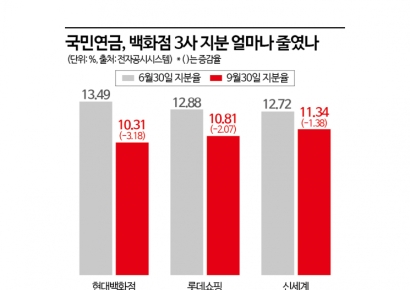 'Big Investor' NPS Has Already Cut Its Losses... Sold Department Store Stocks in Q3 Despite Strong Earnings Outlook
- "Female Teachers Must Wear Skirts in Class"... Outrage Erupts Over Principal's Demand: What's Happening in North Korea?
- [Breaking] Police Refer Four, Including Former Assemblyman Yoo Seungmin, to Prosecution Over 'Daughter's Alleged Appointment as Professor'
- Three Samsung Products, Including Galaxy S26 Ultra, Named to TIME's "2026 Best Inventions" list
- "The leggings are all see-through. It's so embarrassing to look at," complaints prompt Lululemon to fire development staff.
In the housing market, both home sale and rental prices rose in August. Home sale prices increased 0.32% from the previous month, a slower pace than the 0.35% rise in July. Rental prices also rose 0.35%, easing from the 0.38% increase in July. In August, the cyclical component of the coincident index rose 0.5 points from the previous month, while that of the leading index fell 0.1 points. The government said, "We will strengthen supply and demand management for key items to minimize the impact of the Middle East war, while also pursuing policy efforts to stabilize people's livelihoods and ease polarization so that the benefits of growth can spread throughout the economy."
© The Asia Business Daily. All rights reserved. Unauthorized AI training and use prohibited.