"An Attention-Seeking Shark?"... Ecologist Choi Jaecheon on Why Bukangi Really Came
Choi Jaecheon points to rising water temperatures and prey movement as reasons behind the shark's appearance
Sea temperature rise around Korea twice the global average
Recalling the experience with "Jedol," Choi Jaecheon warns against excessive intervention
Choi Jaecheon, a chair professor in the Department of EcoScience at Ewha Womans University, suggested that instead of simply going to see Bukangi, the black shark staying in a waterway at Busan's North Port, people should consider from the perspective of climate change why the shark came this far.

Choi Jaecheon, a distinguished professor in the Division of EcoScience at Ewha Womans University, spoke about the “Bukangi” issue. YouTube.
View original imageIn a video posted on October 14 to his YouTube channel, "Choi Jaecheon's Amazon," Professor Choi asked, "Why did Bukangi come all the way here?" He cited rising water temperatures and the movement of prey as reasons the shark appeared. He explained that when changes in water temperature cause schools of fish to move, sharks that feed on them follow. Black sharks are known to prefer waters with temperatures of 18 to 26 degrees Celsius and to travel long distances in response to changes in water temperature.
Water temperatures rising twice as fast as global average... "Not attention-seeking, but survival behavior"

A scene from a shark rescue operation using a large net at North Port Waterfront Park in Dong-gu, Busan, on the 2nd. The shark is known as Bukangi. Yonhap News Agency.
View original imageIn fact, seas around Korea are warming faster than the global average. According to the National Institute of Fisheries Science's 2026 Climate Change Report, the annual average sea surface temperature in Korean waters rose by about 1.60 degrees Celsius from 1968 to 2025, more than twice the global average increase of 0.76 degrees over the same period. In the first half of this year, the average sea surface temperature in Korean waters was 17.17 degrees Celsius, the highest since records began.
Professor Choi cited water temperature and food availability in the waterway as reasons Bukangi has not left. He also questioned the practice of calling the shark an "attention-seeking shark" because it swims along the edge of the waterway. His point was that interpreting its approach to people as behavior meant to attract attention could cause people to overlook why the shark is moving that way.
He also shared his thoughts on the possibility that Bukangi stayed there to give birth. Professor Choi noted that black sharks give birth to pups measuring 70 centimeters to 1 meter in length and that they have a tendency to prey on members of their own species. He speculated that if Bukangi had already given birth, the pups may have left their mother and hidden in the waterway or made their way out to sea.
Choi Jaecheon warns against fleeting attention... "Please watch quietly"
On the question of driving Bukangi out artificially, he recalled the experience of releasing Jedol, a Indo-Pacific bottlenose dolphin. He said that when Jedol was returned from Seoul Grand Park to the waters off Jeju in July 2013, he was repeatedly criticized for sending an animal protected in a facility into the rough sea and asked who would be responsible if anything went wrong.
Referring to the Civil Act, which treats animals as property, Professor Choi criticized the tendency to invoke an excessive duty of care only when incidents like this occur. Under the current Civil Act, wild animals are classified as ownerless property. He said that if people respect Bukangi as a living being and a member of nature, they should monitor even its behavior of returning to the waterway before deciding how much to intervene.
He said he expected Bukangi to find its own way if its environment changed. However, he expressed concern about its repeatedly circling the same area and possible abnormalities in its physical and mental condition. He added that it could be in danger if it could not find an exit when the water temperature suddenly dropped.

Many citizens and tourists gather to see a shark, nicknamed Bukangi, swimming in a canal at North Port Waterfront Park in Dong-gu, Busan, on the 4th. Yonhap News Agency.
View original imageReferring to Busan City's appointment of Bukangi as an honorary ambassador, he also warned against paying attention only briefly whenever an incident occurs. He said that if several black sharks appear in the waterway in the future, people will feel the severity of climate change rather than simply finding it fascinating. He urged visitors to watch quietly. Professor Choi said, "Even if you go to see the shark, I think it would be best to cooperate by keeping somewhat quiet so that the little one can enjoy its life without being disturbed."
Hot Picks Today
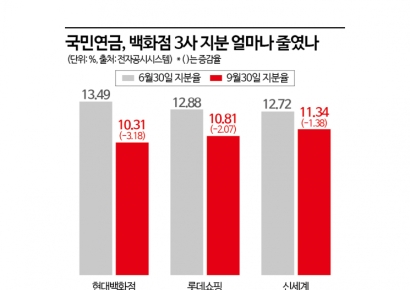 'Big Investor' NPS Has Already Cut Its Losses... Sold Department Store Stocks in Q3 Despite Strong Earnings Outlook
- "Female Teachers Must Wear Skirts in Class"... Outrage Erupts Over Principal's Demand: What's Happening in North Korea?
- [Breaking] Police Refer Four, Including Former Assemblyman Yoo Seungmin, to Prosecution Over 'Daughter's Alleged Appointment as Professor'
- Three Samsung Products, Including Galaxy S26 Ultra, Named to TIME's "2026 Best Inventions" list
- "The leggings are all see-through. It's so embarrassing to look at," complaints prompt Lululemon to fire development staff.
Bukangi was first spotted on September 18 in an artificial waterway at North Port Waterfront Park. On October 6, the National Institute of Fisheries Science identified Bukangi as a female black shark approximately 3 meters long. Black sharks are classified as Endangered on the International Union for Conservation of Nature (IUCN) Red List. The cumulative number of visitors who came to see Bukangi surpassed 800,000 in early October. Busan City appointed Bukangi an honorary ambassador on September 29 and tried to guide it out to sea twice, on that day and on October 2, but both attempts failed. The city is considering ways to improve its approach.
© The Asia Business Daily. All rights reserved. Unauthorized AI training and use prohibited.