Samsung Electronics and SK hynix shares at financial crisis levels... What could reverse investor sentiment? [Weekend Money]
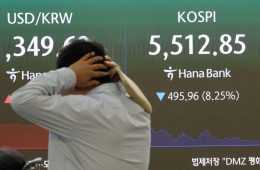
Samsung Electronics and SK hynix shares have recently fallen sharply, but analysts say the decline reflects price distortions caused by weakened investor sentiment and a lack of buying support, rather than damage to the companies' fundamentals. With earnings forecasts instead being revised upward, some see the current plunge as an opportunity to increase exposure at a historically low valuation.
![Samsung Electronics and SK hynix shares at financial crisis levels... What could reverse investor sentiment? [Weekend Money]](http://www.asiae.co.kr/news/img_view.htm?img=2026101608460263023_1792107962.png)
In a report, Kim Dongwon, an analyst at KB Securities, said, "The current market has entered an undervalued range comparable to levels seen during the financial crisis." He assessed that "the recent sharp declines in Samsung Electronics and SK hynix shares are an excessive correction driven by a lack of buying support in the Korean stock market and weakened investor sentiment, rather than damage to fundamentals."
Since the start of October, the declines in the Korean stock market and its leading semiconductor stocks have been particularly steep compared with overseas markets. In October, the Korean market plunged 18.8%, compared with declines of 2.0% in Taiwan and 3.5% in Japan. Samsung Electronics, down 21.8%, and SK hynix, down 28.9%, also underwent much sharper corrections than TSMC, which fell 1.6%.
As a result, the KOSPI's price-to-earnings ratio (P/E), based on finalized earnings for the second quarter of 2026, fell to around 8 times. This is close to historical lows seen during the 2003 credit card bond crisis, the 2008 global financial crisis, and the COVID-19 pandemic in 2020.
Kim said, "Concerns about an economic downturn and declining earnings have been excessively priced into share prices." He added, "This can be interpreted as a process of forming a second bottom for a 'W-shaped' rebound, following the low reached on July 29."
In contrast to the sharp decline in share prices, the outlook for fundamentals from the global semiconductor supply chain and market research firms remains positive. TSMC stressed that demand for artificial intelligence (AI) semiconductors remains strong and that there are no signs of slowing demand. ASML said that its customers' medium- to long-term demand forecasts have continued to rise, and that it would be difficult to meet all demand in 2027 and 2028. TrendForce, a market research firm, also forecast that DRAM prices would rise by double digits in the fourth quarter of this year, exceeding existing market expectations.
Based on projected 2027 earnings, the P/E ratios for Samsung Electronics and SK hynix are just 3.1 times and 2.6 times, respectively, putting them in extremely undervalued territory. Kim said, "Current valuations already price in a substantial likelihood of future earnings declines. However, actual earnings forecasts are instead trending upward, supported by a prolonged memory supply shortage and rising prices."
Key catalysts for a future share-price rerating include the third-quarter earnings conference calls scheduled for late October: SK hynix on October 28 and Samsung Electronics on October 29.
Hot Picks Today
 "I Ate It Often Because It Tasted Good"... This Eating Habit Linked to 40% Higher Odds of Asymptomatic Cerebrovascular Damage
- "She's 7..." President Lee Left Speechless, Posthumously Awards Medal to Firefighter Killed in the Line of Duty
- “Dad Just Gave It to Us as a Gift”... Scratched a Lottery Ticket at a Family Gathering and Hit a 1 Billion Won Jackpot
- "We've gone this far to save on lunch"... Where office workers are flocking instead of restaurants
- "Can They Really Be This Sweet?"... The Story Behind Convenience Store Honey Sweet Potatoes [Foodie X-Files]
Kim emphasized, "Shareholder return policies, which are expected to take concrete shape during the conference calls, could be an important turning point in narrowing the extreme gap between share prices and corporate value and reversing investor sentiment." He added, "This is an asymmetric investment opportunity, with greater upside from valuation normalization than risk of further declines. Now is the right time to consider increasing exposure by taking advantage of short-term volatility."
© The Asia Business Daily. All rights reserved. Unauthorized AI training and use prohibited.


!["Please, Just Take Them Off" - They Made It All the Way to Bed... Then Fecal Bacteria Struck [Deep Scroll]](https://cwcontent.asiae.co.kr/asiaresize/307/2026101610053063338_1792112730.png)