"Calligraphy by a Pro-Japanese Collaborator" Turns Out to Be in Director Yoo Hong-jun's Collection... Likely to Be a Key Issue at Oct. 19 Audit
Removed after being mistakenly displayed as calligraphy by independence activist Park Won-geun
Later revealed to have been recommended by Director Yoo Hong-jun and to be from his personal collection
It has been confirmed that the work the National Museum of Korea introduced as calligraphy by an independence activist, but later removed after determining it was a piece by a pro-Japanese collaborator, was part of National Museum of Korea Director Yoo Hong-jun's personal collection.
According to documents submitted by the National Museum of Korea in response to an inquiry from Rep. Jung Yeon-wook of the People Power Party, a member of the National Assembly's Culture, Sports and Tourism Committee, the museum said the work's owner was "Director Yoo," adding that it had "borrowed the work on the director's recommendation."
The work in question is a piece of calligraphy titled "Ilbansigukeun" (meaning "Even a bowl of rice is a grace bestowed by the nation"), which the National Museum of Korea introduced as the calligraphy of Park Won-geun (1912-1950), an independence activist from Boeun, North Chungcheong Province, at its special exhibition "Our Table," which opened in July. The phrase is known to have been spoken by Buddhist monk-general Yeonggyu during the Japanese invasions of Korea in 1592.

Yoo Hongjun, director of the National Museum of Korea, apologized for displaying a calligraphy work by Park Wongeun at a special lecture, “Taste vs. Taste,” held in connection with the special exhibition “Our Table” at the museum’s auditorium in Yongsan-gu, Seoul, on the 10th of last month. An investigation found that the work, introduced as the writing of patriotic independence activist Park Wongeun, was actually by another person of the same name known as a pro-Japanese collaborator. It was removed from the exhibition. Yonhap News
View original imageThe museum identified the work as calligraphy by independence activist Park Won-geun based on the signature "Han-in Park Won-geun" at the end of the piece and the account given by its owner. After the work went on display, images were also released showing descendants of Park paying their respects to the calligraphy at the museum.
However, just over a month after the exhibition opened, questions were raised about whether the work was actually by Park Jung-yang (1874-1959), a pro-Japanese collaborator and anti-national traitor, rather than independence activist Park Won-geun. The museum removed the work in early August and began a reexamination, confirming that it was calligraphy by Park Jung-yang.
Park Jung-yang once used the name Park Won-geun. During the Japanese colonial period, he served as a member of the Central Council, governor of Hwanghae Province, governor of North Chungcheong Province, and an imperial appointee to the House of Peers in the Japanese Imperial Diet. He is also known to have been involved in suppressing the March 1 Movement in 1919.
Director Yoo previously issued an official apology over the display of the calligraphy by a pro-Japanese collaborator at a special lecture held on September 10 in the auditorium of the National Museum of Korea in Yongsan-gu, Seoul. At the time, Yoo said, "I deeply regret that an error involving a calligraphy work displayed in 'Our Table' caused confusion among the public," adding, "The museum's failure to correctly interpret the artifact's meaning reflects a lack of capability and was a mistake."
Hot Picks Today
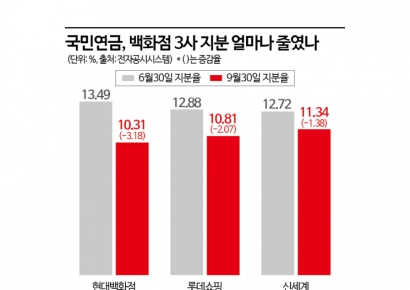 'Big Investor' NPS Has Already Cut Its Losses... Sold Department Store Stocks in Q3 Despite Strong Earnings Outlook
- "There's a Drink Like This?"... Chinese Beverage With "Korean" in Its Name Rakes in 85 Million Won in Monthly Sales
- "Bump," Then "My Phone's Broken"... Man in His 20s Arrested for Scamming 22 Million Won in Repair Costs
- "I Put in 10 Million Won, but Only 2 Million Won Is Left" ... 77% Plunge Leaves Retail Investors in Samsung Electronics and SK hynix Leveraged ETFs Crying Out
- "The leggings are all see-through. It's so embarrassing to look at," complaints prompt Lululemon to fire development staff.
However, Director Yoo did not disclose at the time that the controversial calligraphy was part of his personal collection. The revelation that the work belonged to Yoo is expected to intensify controversy over the appropriateness of the process for selecting and verifying exhibition items. The National Museum of Korea is scheduled to face a National Assembly audit by the Culture, Sports and Tourism Committee on October 19.
© The Asia Business Daily. All rights reserved. Unauthorized AI training and use prohibited.