[Wall Street] Huang Jensen's Comments Help AI Stocks Pare Losses... All Three Indexes Close Higher
Bargain buying late in the session
10-year Treasury yield down 10.2 bps
On Oct. 15 (local time), the three major U.S. stock indexes fell during the session amid concerns about the sustainability of artificial intelligence (AI) investment and inflation data that exceeded expectations. However, they all closed higher as buying picked up late in the session. Remarks by Nvidia CEO Jensen Huang helped restore investor sentiment toward AI-related stocks, while a decline in U.S. Treasury yields also eased pressure on the market.
The Dow Jones Industrial Average closed at 52,177.69, up 556.21 points (1.08%) from the previous trading session. The large-cap S&P 500 rose 25.12 points (0.33%) to 7,744.06, while the tech-heavy Nasdaq Composite gained 20.15 points (0.08%) to finish at 26,713.02.

All three major indexes turned higher as buying flowed into the market late in the session. Huang's remarks and falling U.S. Treasury yields helped ease selling in technology stocks.
Huang said Nvidia would not need to step in to bail out CoreWeave over its financial situation. CoreWeave shares rose 5.94% from the previous session. The rebound came after the stock plunged 15.5% the day before amid concerns about excessive borrowing and deteriorating financial health. Micron also recovered from an intraday decline to close up 1.8%.
However, Seagate fell 3.19%, Western Digital dropped 2.10%, and SK hynix ADR declined 0.98%. The selling was attributed to concerns about an oversupply of memory chips and intensifying competition from Chinese companies.
Bloomberg reported that investor sentiment had weakened amid lingering concerns about a memory chip glut, which had triggered a sharp drop in South Korea's KOSPI, as well as remarks by Tesla CEO Elon Musk about China's expansion of memory production.
Falling U.S. Treasury yields also eased pressure on the market. The yield on 10-year U.S. Treasury bonds fell 10.2 basis points (1 basis point = 0.01 percentage point) from the previous session to 5.086%, its lowest level in three weeks. The decline was attributed to buying of U.S. Treasuries, a safe-haven asset, as anxiety over AI stocks grew.
Alex Shahidi, co-chief investment officer (CIO) at Evoke, a unit of May Capital Management, said, "When Treasury yields reach 5%, investors start comparing making a big bet on AI with investing in Treasuries." He added, "The question is not whether to exit AI investments altogether, but how much to concentrate in them."
Inflation data, however, remained a concern. The producer price index (PPI) rose 1.3% from the previous month and 6.3% from a year earlier in September, according to the U.S. Department of Labor. Both the monthly and annual increases were the largest since 2022.
Hot Picks Today
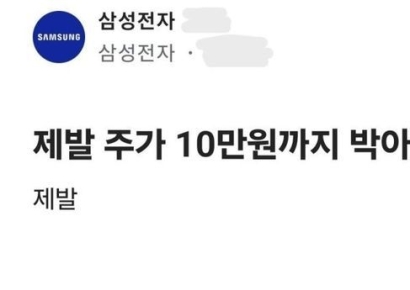 "Samsung Electronics, Please Fall to 100,000 Won"... Investors Fume Over Anonymous Post Welcoming Stock Decline
- "Female Teachers Must Wear Skirts in Class"... Outrage Erupts Over Principal's Demand: What's Happening in North Korea?
- "Makeup and Housework Keep Me Busier": Takaichi's "3-4 Hours" Remark Stirs Japanese Politics
- "I Put in 10 Million Won, but Only 2 Million Won Is Left" ... 77% Plunge Leaves Retail Investors in Samsung Electronics and SK hynix Leveraged ETFs Crying Out
- "The leggings are all see-through. It's so embarrassing to look at," complaints prompt Lululemon to fire development staff.
Following the consumer price index (CPI) report released the previous day, further confirmation of inflationary pressure fueled concerns that the Federal Reserve (Fed) could raise interest rates again by the end of the year.
© The Asia Business Daily. All rights reserved. Unauthorized AI training and use prohibited.