Joint Guarantee Statute Extensions Under Scrutiny; KAMCO, Korea Credit Guarantee Fund to Improve Management
2026 National Policy Committee Audit
Criticism over state-owned land sales and poor management of "enemy property"
Public institutions to improve demand-checking system
Criticism over DIP financing skew toward refinancing
Korea Housing Finance
At a parliamentary audit, concerns were raised that public institutions were repeatedly extending the statute of limitations while collecting receivables acquired in the past, preventing joint and several guarantors from making a fresh start. The Korea Asset Management Corporation (KAMCO) said it would improve its management of joint and several guarantees, while the Korea Credit Guarantee Fund said it would consider abolishing joint and several guarantees related to second chances and business re-starts that it has operated to date. KAMCO and the Korea Housing Finance Corporation also agreed to seek improvements in response to concerns about poor management of state-owned property and the concentration of refinancing loans among funds for companies undergoing rehabilitation.

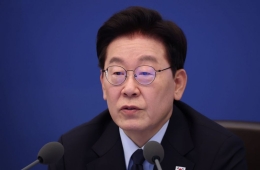
Cho Jung-hoon of the People Power Party told Jeong Jeong-hoon, president of KAMCO, during an audit by the National Assembly’s Political Affairs Committee at the Busan International Finance Center on October 15, “You are filing lawsuits before the statute of limitations expires, thereby keeping joint and several guarantee debts in force.”
Even if the issuance of new joint and several guarantees is suspended, debts arising from past guarantee contracts do not automatically disappear. If a creditor takes legal action, such as filing a lawsuit, before the limitation period expires, the right to claim repayment can remain in force for an extended period.
Joint and several guarantees provided by corporate representatives on corporate loan receivables were also a point of contention. Jeong explained that KAMCO had acquired and was managing receivables with joint and several guarantees previously issued by institutions such as the Korea Credit Guarantee Fund, and that KAMCO was not newly requiring such guarantees. He said KAMCO was pursuing more proactive improvements in its management of joint and several guarantors than in its management of ordinary debtors.
Kang Seung-jun, chairman of the Korea Credit Guarantee Fund, said joint and several guarantees had been completely abolished for new guarantees, but remained on some guarantees issued before the system was improved in April 2018. He added, “We will consider abolishing them in these cases as well.”
The structure in which private companies buy state-owned land sold by KAMCO and then resell it to public institutions at a higher price also came under scrutiny. Jeon Hyun-hee of the Democratic Party of Korea said KAMCO had sold state-owned land in Oryu-dong, Guro-gu, Seoul, appraised at 18.2 billion won, for 9.2 billion won, after which the private company that bought it signed a contract with Korea Land and Housing Corporation (LH) just seven months later to resell the land portion for 12.8 billion won. She said public institutions’ demand to purchase the land should be checked before state-owned land is sold.
Jeong responded that KAMCO would improve its demand-checking system so public institutions could first assess the potential uses of land, addressing cases in which state-owned property had not been appropriately managed.
Poor management of “enemy property”—property owned by Japanese nationals during the Japanese colonial period that was vested in the state after liberation—was also raised. According to Kim Yong-man of the Democratic Party of Korea, surveys of vested property covered only 17% in 2022 and 20% in 2023. Over the past five years, charges for unauthorized occupation totaled just 12 million won, while collections amounted to only 2.5 million won.
Criticism was directed at DIP financing, which supports companies undergoing rehabilitation, over concerns that the funds were being used mainly to repay loans from existing financial institutions rather than to operate businesses. Kim Jae-seop of the People Power Party said refinancing funds were growing faster than working capital needed to purchase raw materials and pay wages. The concern was that, rather than supporting companies’ recovery, the financing could end up helping existing financial institutions recover their claims while leaving the public sector to bear the risk.
Jeong explained that refinancing high-interest loans could reduce companies’ interest burdens. He added that KAMCO would take a more proactive approach to providing working capital to help companies recover and would maintain a balance between refinancing funds and working capital.
Hot Picks Today
 "I Invested KRW 10 Million, Only KRW 2 Million Is Left" ... 77% Plunge Sends Retail Investors Who Piled Into Samsung Electronics and SK hynix Leveraged ETFs Crying Out
- "There's a Drink Like This?"... Chinese Beverage With "Korean" in Its Name Rakes in 85 Million Won in Monthly Sales
- "Samsung Electronics at 70,000 won, SK hynix at 200,000 won"... Why the gloomy outlook despite 'record-breaking earnings'?
- "As Japan Ages, It May Even Run Short of Crematoriums"... Tokyo to Build Public Crematoriums Across Central Tokyo
- "No Need to Hire a Model"... The 25-Year-Old Woman Who Entered Social Media with a Face That Cost Just 1,500 Won [AI Content: The Bright and Dark Sides] 1
Concerns were raised about the declining share of Bogeumjari loans supplied outside the Seoul metropolitan area by the Korea Housing Finance Corporation. Assemblyman Park Dae-chul said the share of loan amounts going to regions outside the capital area had fallen from 56.1% in 2024 to 53.7% last year and 46.5% from January to August this year. Kim Kyung-hwan, president of the Korea Housing Finance Corporation, said it planned to apply a preferential interest rate of 0.4 percentage points for regional borrowers under the Youth Future Bogeumjari Loan.
© The Asia Business Daily. All rights reserved. Unauthorized AI training and use prohibited.