"It's Clearly Working Hours": Officer Who Went to the Gym 222 Times Sued After Demotion, but Ultimately...
Left Work Without Authorization to Work Out
Police Officer Who Sued Loses on Appeal
Appellate Court: "Misconduct of Leaving Worksite... Damaged Public Trust"
A police officer who was demoted after visiting a gym more than 200 times while on duty sued to have the disciplinary action overturned. The officer won at trial but lost on appeal.

According to Yonhap News Agency on October 15, the Administrative Division 5 of the Busan High Court, presided over by Judge Choi Hwan, overturned a lower court ruling in favor of Officer A in a lawsuit against the Busan Metropolitan Police Agency commissioner seeking to overturn the demotion, and dismissed the officer's claim.
Officer A, who was promoted to senior inspector in November 2022 and worked as a team leader and in other roles at a police station in Busan, was found during an internal investigation to have left the workplace without authorization 222 times between January 2023 and April 2024, visiting a gym for personal workouts on weekdays between 9 and 11 a.m.
During the same period, A was also found to have applied for a total of 12 hours of overtime on four occasions and received 166,000 won in overtime pay.
The Busan Metropolitan Police Agency consequently demoted A.
A filed a lawsuit, arguing that obtaining the gym's entry records and closed-circuit television (CCTV) footage without consent during the internal investigation violated the Personal Information Protection Act.
The trial court ruled that materials obtained by police without A's consent or a court warrant had been unlawfully collected and therefore could not be used as grounds for disciplinary action. It also overturned the demotion, ruling that A's statements made on the basis of those materials could not be used as evidence.
However, the appellate court ruled that it was difficult to conclude that the police had violated the Personal Information Protection Act by obtaining materials from the gym and using them in the disciplinary proceedings. It explained that even evidence collected unlawfully is not automatically inadmissible in administrative litigation.
The court said, "The information concerns the movements and activities of a police officer while at a gym during working hours, and, given the officer's status as a public official, it cannot be considered highly deserving of protection." It added, "By contrast, the public interest in using the information as grounds for discipline to help maintain discipline among police officers is not insignificant." The court also took into account that the gym had voluntarily cooperated in providing the materials and that it would have been difficult to verify specific details of A's visits by other means.
Hot Picks Today
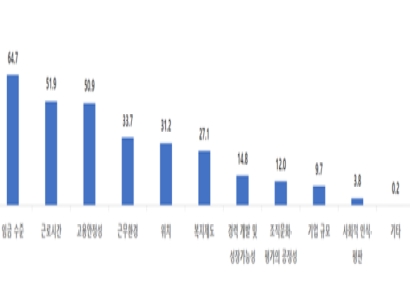 "Please Pay Me at Least 3 Million Won a Month": More Than Half of Young People Today Prioritize "Working Conditions" Over Company Size
- Selling Like Crazy Every Year... 30-Year-Old Hetbahn Takes on a New Challenge: Tastes Better Than "Mom's Home Cooking" [On-Site Report]
- "Is This Really Possible?" The World Is Watching... Could My Car Become a "Mobile ESS"? [Energy Odyssey] 15
- "Hey, Lady, Teach Your Kids to Behave!" ... 300,000 Won in Cash and a Bodily Injury Claim Demanded Over Child's Door Ding
- "Don't Trust This Woman": Documentary on 'Investment Scammer' Earns KRW 22 Billion in One Week
On the severity of the disciplinary action, the court ruled, "The misconduct of leaving the workplace on numerous occasions was witnessed by members of the public, resulting in damage to public trust in the police organization." It added that "the demotion cannot be said to have exceeded or abused the discretion over disciplinary action, as it was not manifestly unreasonable by social standards."
© The Asia Business Daily. All rights reserved. Unauthorized AI training and use prohibited.