Professor-Founded Biotech Ventures at University Hospitals Line Up for IPOs... Could They Bring a Tailwind to the Industry?
ADEL Files Securities Registration Statement and Begins Public Offering
Medicalip and Yipcell Also Prepare for Listings
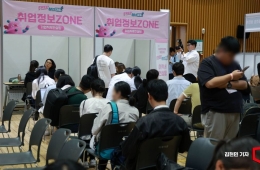
Biotechnology and healthcare companies founded by university hospital professors are moving one after another toward listings on the KOSDAQ. These companies have achieved technology transfer deals and attracted investment with technologies developed through clinical practice and research. After share prices of professor-founded companies that went public last year performed strongly, attention is turning to whether their successors will bring fresh momentum to the biotech investment market.
According to the hospital industry on October 16, professor-founded companies established during the startup boom at hospitals in the mid-to-late 2010s are entering the listing process one after another. A report titled “Analysis of Physician-Founded Startups,” published by the Korea Health Industry Development Institute in March 2026, found that 17 of the 263 companies founded by doctors or with doctors serving as executives were listed on KOSDAQ. Doctor-founded startups surged after 2015, backed by policy support such as the development of research-driven hospitals and the Tech Incubator Program for Startup (TIPS), a private investment-led technology startup support program. Companies founded during this period are now approaching the capital markets, highlighting their technology transfer deals and investment attraction achievements.

One of the professor-founded companies attracting the most attention in the IPO market at the end of this year is ADEL. Founded in 2016 by Yoon Seungyong, a professor at Asan Medical Center, the company is developing treatments for degenerative brain diseases. It filed a securities registration statement on October 12 and began the IPO process.
In December 2025, ADEL licensed its Alzheimer’s disease drug candidate ADEL-Y01 to Sanofi for a total of $1.04 billion, including an $80 million upfront payment (approximately KRW 1.4 trillion). ADEL-Y01 is an antibody that binds only to acetylated tau, the form of tau protein that aggregates and is a key pathological feature of Alzheimer’s disease. Because it leaves normal tau untouched, it is considered a candidate that could overcome the repeated clinical trial failures of first-generation tau antibodies.
With ADEL’s IPO underway, the IPO race among professor-founded companies is also gaining momentum. Medicalip, the first in-hospital venture at Seoul National University Hospital, plans to make another attempt at a KOSDAQ listing in the first half of 2027. Founded in 2015 by Park Sangjun, a professor at Seoul National University Hospital, the medical artificial intelligence (AI) company uses AI to analyze medical images such as computed tomography (CT) scans and render organs and blood vessels in 3D. It is drawing attention as a tool for “opportunistic screening” that automatically quantifies muscle and fat mass from existing CT scans to predict disease risk. The company applied for a preliminary listing review in 2022 but withdrew its application voluntarily.
Yipcell, which is targeting the KRW 14 trillion osteoarthritis treatment market, also aims to go public next year. Founded in 2017 by Joo Jihyun, a professor at Seoul St. Mary’s Hospital, Yipcell is currently raising KRW 15 billion in Series B funding. Its lead pipeline candidate, Mucon, is a treatment made by aggregating cartilage cells derived from induced pluripotent stem cells (iPSCs) into small bead-like forms and injecting them into the knee joint. Unlike existing treatments that only relieve pain, Mucon directly fills in damaged cartilage. Its potential as a disease-modifying osteoarthritis drug (DMOAD), a type of fundamental treatment for which no product has yet been approved, is attracting attention. In the first three patients, the area of cartilage defects showed a reduction over the course of a year.
Professor-founded companies have recently performed well in the IPO market. AimedBio, founded in 2018 by Nam Dohyun, a professor at Samsung Medical Center, listed on KOSDAQ in December 2025, and its share price at one point rose by more than 500% from its offering price.
A key strength of companies founded by university hospital professors is target validation. They identify unmet needs directly in clinical settings and validate targets using patient data from their hospitals. The ability to quickly conduct early-stage clinical trials at their affiliated hospitals is another advantage.
Hot Picks Today
 'Big Investor' NPS Has Already Cut Its Losses... Sold Department Store Stocks in Q3 Despite Strong Earnings Outlook
- "There's a Drink Like This?"... Chinese Beverage With "Korean" in Its Name Rakes in 85 Million Won in Monthly Sales
- "Female Teachers Must Wear Skirts in Class"... Outrage Erupts Over Principal's Demand: What's Happening in North Korea?
- "I Put in 10 Million Won, but Only 2 Million Won Is Left" ... 77% Plunge Leaves Retail Investors in Samsung Electronics and SK hynix Leveraged ETFs Crying Out
- "The leggings are all see-through. It's so embarrassing to look at," complaints prompt Lululemon to fire development staff.
One weakness is that active professors also serve as company executives. “When an executive is responsible for clinical practice, research and management at the same time, the company may lag behind those led by professional managers in the speed of commercialization,” a hospital industry official said. In a report published in March 2026, the Korea Health Industry Development Institute also noted that “many run their companies after clinical hours or on weekends while maintaining their regular clinical schedules, which can lead to an excessive workload.”
© The Asia Business Daily. All rights reserved. Unauthorized AI training and use prohibited.