"Makeup and Housework Keep Me Busier": Takaichi's "3-4 Hours" Remark Stirs Japanese Politics
Cites women's and household burdens amid controversy over reduced Diet attendance
Cabinet approval holds at 63% despite personnel turmoil
Governing ability tested over handling of the Diet session
Japan’s first female prime minister, Sanae Takaichi, has sparked controversy by saying that she spends three to four more hours a day than male prime ministers on makeup and household chores, amid criticism that she spends less time attending the Diet than any of her predecessors. With a cabinet minister considered a close ally resigning just 28 days after taking office over various allegations, Takaichi’s ability to govern and her leadership in personnel matters are also being put to the test. On October 15, Yonhap News Agency, citing the Asahi Shimbun and Kyodo News, reported that Takaichi had sparked controversy the previous day at the House of Representatives Budget Committee by mentioning makeup and housework in response to a question about the burden of the prime minister’s attendance at the Diet.

Japanese Prime Minister Sanae Takaichi, Japan's first female prime minister. Reuters-Yonhap News
View original imageIn response to the question, Takaichi described her daily routine, saying, "When I get home, I have to remove my makeup, and in the morning I have to bathe, prepare meals, clean up afterward, and put on makeup," adding, "I may be spending about three to four hours more than a male prime minister." She also said she reads and reviews work-related documents late into the night, describing the difficulty of balancing the duties of prime minister with daily life.
The remarks came amid continued opposition criticism that Takaichi spends less time attending the Diet than previous prime ministers. The ruling coalition, currently made up of the Liberal Democratic Party and the Japan Innovation Party, is seeking to reduce the prime minister’s time attending the Diet, citing the need to make its operations more efficient. The opposition, however, has raised concerns that reducing the prime minister’s attendance could weaken the Diet’s oversight and scrutiny of the executive branch.
Fumitake Fujita, co-leader of the Japan Innovation Party, said at the Budget Committee on October 14, "The current situation, in which the prime minister is tied up in the Diet for long hours, is not typical by international standards and is out of step with the times," emphasizing the need for institutional reform. Takaichi also said, "The Diet’s operations are a matter for the Diet to decide," but added, "I hope the ruling and opposition parties and the public will consider together how to create an environment in which the prime minister can carry out a range of duties."

Japanese Prime Minister Sanae Takaichi has sparked controversy after mentioning makeup and housework in response to a question about the burden of the prime minister’s appearances before the Diet at the House of Representatives Budget Committee the previous day. Reuters-Yonhap News
View original imageSome in political circles have continued to debate whether it was appropriate to frame makeup and housework as differences between men and women while explaining the prime minister’s workload. Some have interpreted her remarks as highlighting women’s real burden of domestic work, while others have criticized her for potentially reinforcing traditional gender roles despite being a woman prime minister. In particular, because she linked time spent attending the Diet with domestic labor, critics may also argue that her personal lifestyle should be distinguished from the public responsibilities of the country’s highest leader.
This is not the first time controversy has arisen over Takaichi’s long working hours and household responsibilities. In July, she posted on social media that after returning home on weekdays she was kept busy with laundry, washing dishes, and cleaning, and that she also ironed and sewed on days off. At the time, she said she slept only zero to three hours, prompting concerns about her health. Some responded that her account showed the reality faced by women politicians who must shoulder both work and household duties, but it also drew criticism of attitudes that normalize excessive workloads or treat domestic responsibilities as an individual problem.

Agriculture, Forestry and Fisheries Minister Kazuo Yana submitted his resignation on the 14th after remarks about road budget cuts and allegations of violating the Public Offices Election Act during the election campaign came to light. He had taken office just 28 days earlier in last month's Cabinet reshuffle. EPA-Yonhap News
View original imageThe political burden has grown further as a key figure in Takaichi’s administration has resigned in disgrace. Agriculture, Forestry and Fisheries Minister Kazuo Yana submitted his resignation on October 14 after remarks about road budget cuts and allegations of violating the Public Offices Election Act during the election campaign came to light. He had taken office just 28 days earlier in last month’s Cabinet reshuffle. Yana ultimately decided to resign, saying he should not further burden Diet deliberations or agricultural, forestry, and fisheries administration.
Accepting his resignation, Takaichi said, "I could not overlook the continued situation in which he was unable to focus on agricultural, forestry, and fisheries administration," adding, "I take seriously my responsibility for appointing him, given that the situation has led to a minister’s resignation." On October 15, Takaichi appointed Arata Takebe, a Liberal Democratic Party lawmaker who previously served as parliamentary vice-minister of agriculture, forestry and fisheries, to succeed Yana, who resigned. She described Takebe as someone who could immediately make a contribution, including in handling Diet affairs.
Hot Picks Today
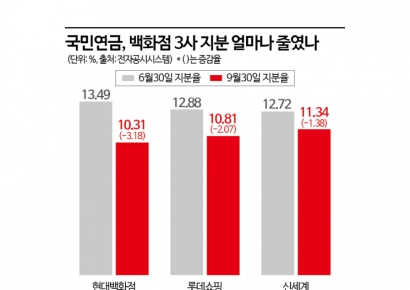 'Big Investor' NPS Has Already Cut Its Losses... Sold Department Store Stocks in Q3 Despite Strong Earnings Outlook
- "There's a Drink Like This?"... Chinese Beverage With "Korean" in Its Name Rakes in 85 Million Won in Monthly Sales
- "Bump," Then "My Phone's Broken"... Man in His 20s Arrested for Scamming 22 Million Won in Repair Costs
- "I Put in 10 Million Won, but Only 2 Million Won Is Left" ... 77% Plunge Leaves Retail Investors in Samsung Electronics and SK hynix Leveraged ETFs Crying Out
- "The leggings are all see-through. It's so embarrassing to look at," complaints prompt Lululemon to fire development staff.
Meanwhile, a public opinion poll conducted by Japan’s JNN on October 3 and 4 found that support for Takaichi’s Cabinet stood at 63.0%, up 0.5 percentage points from the previous month. Its approval rating therefore remains relatively high. However, if disputes over the prime minister’s attendance at the Diet and turmoil over cabinet appointments drag on, they could weigh on the passage of key policies and budget deliberations. For Takaichi, who must demonstrate tangible results in governing beyond the symbolism of being Japan’s first female prime minister, the current Diet session ahead of the first anniversary of her taking office is expected to be an important test of her political leadership.
© The Asia Business Daily. All rights reserved. Unauthorized AI training and use prohibited.