"Started Without Even a Pen"... 'Hoon-sik Hyung' Bids Farewell to Blue House
His work extended beyond South Korea, taking him overseas as a special envoy
He is expected to consider his next steps for the time being
President Lee presents Kang with a plaque in recognition of his service
"I sincerely thank everyone who supported us until a government launched without a transition committee and a Blue House that started without even a pen could dream of a 'Korea Like No Other.' I leave with the belief that the Lee Jae-myung administration will surely succeed."
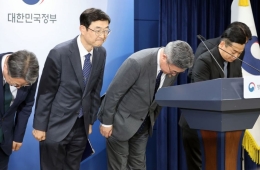
Kang Hoon-sik, who served as presidential chief of staff from the launch of the Lee Jae-myung administration, delivered his farewell on the 14th as the appointment of Lim Kwang-hyun as the new chief of staff was announced. It was 499 days after he gave up his seat as a three-term lawmaker and joined the Blue House, pledging to build a successful government. He helped lead the normalization of state affairs amid the turmoil of martial law and impeachment and worked on the front lines of economic diplomacy, but is stepping down 23 days after offering his resignation amid controversy over personnel vetting.

Presidential Chief of Staff Kang Hoonsik introduces Lim Kwanghyun, newly appointed commissioner of the National Tax Service, at a press briefing room at Cheong Wa Dae on Oct. 14, 2026. Yonhap News Agency
View original imageKang's time at the Blue House began on June 4 last year, when President Lee took office. After serving three consecutive terms representing Asan-eul, South Chungcheong Province, he gave up his parliamentary seat and was appointed as the first presidential chief of staff born in the 1970s. His first task in a government launched without even a presidential transition committee was to assemble the president's staff and establish a system for governing.
His activities extended beyond the Blue House to the United States, the Middle East and Europe. During South Korea-U.S. tariff negotiations in August last year, he helped advance the talks by establishing a communications channel with White House Chief of Staff Susie Wiles. As the president's special envoy for strategic economic cooperation, he also traveled to Canada, Poland and the United Arab Emirates (UAE) to negotiate. He drew attention for building such a close relationship with Khaldoon, head of Abu Dhabi's Department of Executive Affairs and a powerful figure in the UAE, that they called each other "hyeong" and "dongsaeng," familiar terms for an older and younger brother. This year, as the fallout from the U.S.-Iran war disrupted energy supplies, he visited the Middle East and Central Asia twice in March and April to negotiate additional imports of crude oil and naphtha.
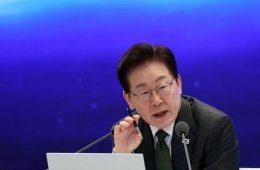
President Lee had great confidence in Kang. In particular, amid controversy over requests for favors in personnel appointments, Lee helped ease the political pressure on Kang by personally using the widely discussed nickname "Hoon-sik hyung" at an official event. On the 14th, Lee also wrote on X (formerly Twitter), "You played a major role in stabilizing the government of popular sovereignty, which began on barren ground, and normalizing state affairs at an early stage."
Hot Picks Today
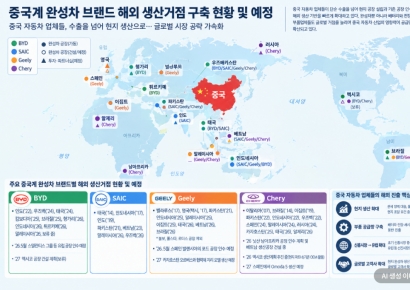 "At This Rate, South Korea Could Be Left with Nowhere to Stand"... Chinese Cars Break Through Tariff Barriers and Spread Worldwide [China Shock, K Industry on the Brink | Automobiles] (3)
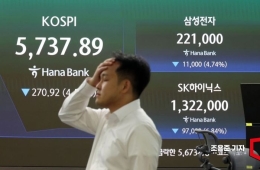
- Doubts Over "Can AI Make Money?" and Rising U.S. Inflation... KOSPI Plunges 7% on "Black Thursday"
- "Shall We Grab a Drink?" KRW 30,000 a Round... Young Adults: "Prices Make My Hands Shake; I Can't Drink Out"
- "A Family of Four Could Pay an Extra 160,000 Won"... Thailand Weighs Reviving Departure Tax After 35 Years
- "No Need to Hire a Model"... The 25-Year-Old Woman Who Entered Social Media with a Face That Cost Just 1,500 Won [AI Content: The Bright and Dark Sides] 1
Kang will return to private life after co-chairing a closed-door meeting on current affairs with incoming Chief of Staff Lim on the morning of the 15th. Toward the end of the meeting, President Lee visited Kang and presented him with a plaque in recognition of his service. Although he could again be mentioned as a possible candidate for Seoul mayor or prime minister, he is expected to refrain from public activities for the time being and flesh out his plans for the future.
© The Asia Business Daily. All rights reserved. Unauthorized AI training and use prohibited.