[Parliamentary Audit Spotlight] Cho Baesook grills NPS over 'Fund Management Committee composition'
Rebalancing delay becomes a point of contention
Scrutiny over whether the Fund Management Committee acted independently
Elicits response: "Government representation is too high"
The National Assembly Health and Welfare Committee’s parliamentary audit on Oct. 14 focused on the National Pension Service’s decision to delay rebalancing the share of domestic stocks in its investment portfolio. In particular, Cho Baesook of the People Power Party pressed the issue of whether the Fund Management Committee had independently decided to postpone rebalancing and whether the government had intervened.
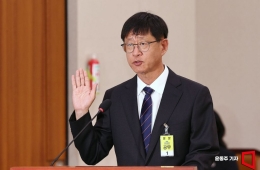
At the start of her questioning, Cho said, “The chairman of the National Pension Service, Kim Seong-ju, said he was not influenced by the government and that postponing rebalancing was an independent decision by the Fund Management Committee. But will the public believe that?” She added, “I clearly believe President Lee Jae-myung had influence.”
When she pressed him, asking, “At the time the rebalancing was postponed, wasn’t there almost unanimous agreement, with no one raising objections?” Kim replied, “There were some concerns, but they were not opposing views.”

People Power Party lawmaker Cho Bae-sook speaks with The Asia Business Daily at the National Assembly Members' Office Building in Yeouido, Seoul, last August. Photo by Kang Jinhyung
View original imageCho argued that the Fund Management Committee is structurally limited and cannot help being swayed by the administration in power. “The Minister of Health and Welfare chairs the committee, and its members include five vice ministers and labor union representatives. Is it really structured to be independent of the government?” she asked. “I question whether it is sufficiently assured of the expertise needed to make independent decisions.”
She questioned the expertise and independence of the fund’s management compared with major pension funds overseas. “Japan’s Employees’ Pension has a board of governors and nine expert committee members from the financial industry, business and academia,” Cho said. “Canada’s pension plan also has an investment board and is managed by experts.” She added, “In the case of Norway’s sovereign wealth fund, management is entrusted to the central bank.”
Hot Picks Today
 A "Rich Family's Daughter" Is "Effortlessly Polished" Today, "Glamorous" Tomorrow... Department Store-Core Has 20- and 30-Somethings Going Wild [Why&Next]
- 24-Year-Old Wins Sleep Contest, Takes Home 19 Million Won After Sleeping Soundly Alongside Strangers
- Despite "Insufficient Balance" Notices, They Board Anyway... Reports of Foreign Fare Evasion Mounting
- "Even Underwear Has to Be Cut Up with Scissors"... China Hit by Rise of "Trash Hunters" in an "If You're Slow, You're Out" Scramble
- "Photos of Kim Jong Un Released by North Korea Are a Deception"... Debate Over Death Rumors Continues
“When the Fund Management Committee discusses major decisions, such as rebalancing or increasing the target allocation to domestic stocks, it cannot help but tend to follow the government’s position,” Cho said. She elicited the following response from Kim: “The government may not like me saying this, but I think the proportion of committee members representing the government is too high. My view is that the representation of beneficiaries should be expanded.”
© The Asia Business Daily. All rights reserved. Unauthorized AI training and use prohibited.