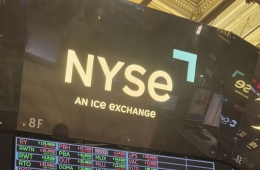
[New York Stocks] CPI Pressure Weighs on Stocks, Markets Close Lower... Nasdaq Falls 1.9%
September CPI rose 3.7% year over year
Core CPI also exceeded expectations
Inflation pressures raise the likelihood of tighter policy
After the U.S. Consumer Price Index (CPI) for September came in above expectations, concerns about inflation intensified, and all three major New York stock indexes closed lower on Oct. 14 (local time).
The Dow Jones Industrial Average closed at 51,621.48, down 48.62 points (0.09%) from the previous trading session. The S&P 500, which is weighted toward large-cap stocks, fell 86.51 points (1.11%) to 7,718.94, while the Nasdaq Composite, which is weighted toward technology stocks, dropped 511.51 points (1.88%) to 26,692.86.

The September CPI released that day rose 0.6% from the previous month and 3.7% from a year earlier. The monthly increase was in line with market expectations, but the year-over-year increase exceeded the 3.6% forecast by economists surveyed by Dow Jones. Core CPI, which excludes food and energy, also rose 0.3% month over month and 2.6% year over year, exceeding market forecasts of 0.2% and 2.5%, respectively.
Philip Blancato, chief market strategist at Osaic, told CNBC, "This report has brought the possibility of a December interest rate decision by the Federal Reserve (Fed) back into focus." He forecast that core inflation could reach 3% next year, driven by rising oil prices.
Rising oil and gasoline prices are also adding to inflationary pressures. According to the American Automobile Association (AAA), the average price of gasoline was $4.33 per gallon, up from about $3.08 a year earlier.
U.S. President Donald Trump announced last week that he would temporarily ease restrictions on Russian diesel exports, but market analysts do not expect the move to have a significant effect on lowering fuel costs for truckers and farmers.
On the New York Mercantile Exchange, West Texas Intermediate (WTI) crude for November delivery settled at $95.09 a barrel, up 1.01% from the previous session. On the ICE Futures Exchange, Brent crude for December delivery settled at $106.06 a barrel, up 0.35%.
Alongside inflation concerns, unease about financing for investment in the artificial intelligence (AI) industry also weighed on technology stocks. In particular, concerns grew that technology companies outside the "Magnificent Seven" were taking on excessive debt to expand their AI businesses. Shares of data center company CoreWeave plunged 15.46%, while Oracle fell 8.83%.
Semiconductor stocks also continued to weaken. Micron Technology fell 4.08%, while AMD and SanDisk dropped 5.73% and 5.33%, respectively. Intel also declined 4.56%.
Bank stocks also performed poorly. Bank of America shares fell 4.76% after the bank reported third-quarter revenue below market expectations and, in a separate development, was hit with more than $1.2 billion in penalties from federal authorities for failing to report more than $5 billion in suspicious transactions. Morgan Stanley, whose quarterly earnings beat market expectations, also saw its shares fall 2.75%.
Hot Picks Today
 "Even New York Taxi Drivers Are Talking About the KOSPI; South Korean Market to Top 9,000 Again Within a Year"... 'Wall Street's Stock-Picking Ace' Names His Picks
- [2026 Parliamentary Audit] 1 Million-Won Tents, 500,000-Won Fishing Rods... Controversy Over Use of "Vacation Subsidies"
- “Made 2 Billion Won in One Year in Prison,” PPP Lawmaker Retorts: “If You’re Jealous, Go There Yourself”
- “Washing Dishes and Folding Clothes 200 Times a Day”... China’s “Robot Trainers” Earn Up to 1.2 Million Won a Month
- "Shall We Grab a Drink?" KRW 30,000 a Round... Young Adults: "Prices Make My Hands Shake; I Can't Drink Out"
Meanwhile, according to CME FedWatch, interest rate futures markets are pricing in about a 35% chance that the Fed will raise its benchmark interest rate at the Federal Open Market Committee (FOMC) meeting scheduled for this month.
© The Asia Business Daily. All rights reserved. Unauthorized AI training and use prohibited.