Netflix's South Korean Revenue Tops 1 Trillion Won... Pays 81% to U.S. Headquarters
Domestic operating profit was just 20.3 billion won last year
"Production companies need compensation tied to a title's success"
Netflix generated more than 1 trillion won in revenue in the Korean market for the first time last year, but paid 81% of that amount to its U.S. headquarters, leaving its Korean subsidiary with an operating profit of just 20.3 billion won.

An analysis of Netflix Services Korea's audit report by Rep. Han Jun-ho of the Democratic Party of Korea, a member of the National Assembly's Science, ICT, Broadcasting and Communications Committee, found that Netflix's Korean revenue reached 1.0542 trillion won last year, surpassing 1 trillion won for the first time. This was about 1.7 times its 2021 revenue of 631.7 billion won, an increase over four years.
However, 853.9 billion won, or 81% of its revenue, was paid to its U.S. headquarters for subscription membership purchases and other items. As a result, the Korean subsidiary posted an operating profit of 20.3 billion won and an operating margin of just 1.9%. This has prompted calls for revenue sharing commensurate with the success of K-content, as imbalances in Korea's media ecosystem deepen.
Domestic over-the-top (OTT) service providers continued to post losses. Last year, TVING and Wavve recorded operating losses of 69.8 billion won and 12.2 billion won, respectively. There was also a wide gap in paid subscription rates. According to the Broadcasting Media Communications Commission's "2025 Survey on Broadcasting Media Usage Behavior," Netflix's paid subscription rate was 46.7%, far ahead of TVING, which ranked second at 13.0%.
Rep. Han pointed out that platforms often secure the intellectual property (IP) rights to Netflix original content, and that Korean production companies have little opportunity to earn additional profits even when a title becomes a hit.
Hot Picks Today
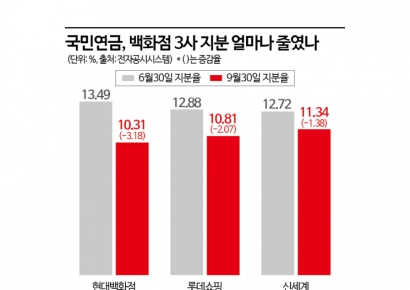 'Big Investor' NPS Has Already Cut Its Losses... Sold Department Store Stocks in Q3 Despite Strong Earnings Outlook
- "There's a Drink Like This?"... Chinese Beverage With "Korean" in Its Name Rakes in 85 Million Won in Monthly Sales
- "Samsung Electronics at 70,000 won, SK hynix at 200,000 won"... Why the gloomy outlook despite 'record-breaking earnings'?
- MLCC, the Next ETF Theme? ... A String of Launches Is in the Works
- "The leggings are all see-through. It's so embarrassing to look at," complaints prompt Lululemon to fire development staff.
"K-content is what made Netflix the No. 1 platform in Korea, yet the production companies that create it receive margins of only 3% to 10% of production costs," Rep. Han said. "The platform must assume responsibilities commensurate with its influence, including providing additional compensation based on a title's success."
© The Asia Business Daily. All rights reserved. Unauthorized AI training and use prohibited.