'Independent Investigations': Labor Inspector Expansion Fails to Quell Concerns... Expertise Debate Fuels Clash over Restoring Prosecutorial Direction
Concerns over growth in non-specialist labor inspectors
Limits to expertise from short-term training
Potential delays in remedies for workers’ rights violations
With the dissolution of the prosecutor-directed labor inspector system, which had remained in place for 73 years since the Labor Standards Act was enacted in 1953, more than 5,100 labor inspectors nationwide have begun conducting investigations independently. However, concerns have been raised that while their investigative powers have expanded, they lack sufficient expertise. The government has begun establishing a dedicated training institution, and a bill has even been introduced in the National Assembly to restore prosecutors' authority to direct investigations in advance.
According to government ministries on October 14, the Ministry of Employment and Labor has decided to remodel and use office space at the Government Complex Sejong to open a tentatively named "Labor Investigation Training Center" as soon as possible. It will use the 4.3 billion won budget allocated for next year to establish the training institution to open the center first, while also considering plans to construct a new building with dedicated training facilities over the medium to long term.
The Ministry of Employment and Labor is accelerating the establishment of the training institution because labor inspectors are now required to make independent decisions on a wider range of matters during investigations. The revised Criminal Procedure Act took effect on October 2, abolishing prosecutors' authority to direct investigations in advance by special judicial police officers. As a result, 5,131 labor inspectors nationwide will handle cases after obtaining internal approval from their respective regional labor offices, without first reporting to prosecutors when they become aware of a crime or begin a compulsory investigation.

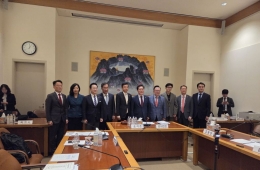
Employment and Labor Minister Kim Younghoon takes the witness oath during a parliamentary audit of the Ministry of Employment and Labor at the National Assembly on Oct. 13, 2026. Photo by Yoon Dongju.
View original imageThe problem is that concerns over the growth of a non-specialist workforce are mounting further as the government plans to transfer oversight of businesses with fewer than 30 employees to local governments in all 17 metropolitan cities and provinces (local government labor inspectors) starting at the end of the year. Fewer than 1% of current labor inspectors are lawyers or certified labor attorneys with specialized labor expertise. Legal and industry circles warn that the loss of the judicial safeguard of preliminary legal review could lead to both delays and excessive investigations. If initial investigations lack legal rigor, large-scale "requests for supplementary investigations" after cases are forwarded to prosecutors could leave workers waiting indefinitely for remedies to rights violations, including unpaid wages. Some also worry that, combined with an internal emphasis on performance targets, this could lead to unjustified indictments or excessive investigations targeting small businesses.
The government plans to increase the number of labor inspectors to around 8,000 by 2028 and strengthen their investigative capabilities. The Ministry of Employment and Labor began an eight-week training course for new inspectors this week, but the prevailing view is that short-term training alone is insufficient for them to master the Criminal Procedure Act and complex labor case law. Park Jisun, a professor at Korea University's School of Law, said, "It would be a significant burden for labor inspectors to fill the gap in the prosecution's supplementary investigation function through short-term training alone," adding, "Amendments to the law have also weakened the means available to workers to ease their anxiety about the investigation process."
Hot Picks Today
 "Scary, It Feels All Too Real" Supermarket Fridges, Convenience Stores and Karaoke Chains Hacked... 'AI Hacking' Spreads Into Everyday Life Worldwide (Comprehensive)
- "Ppalli-ppalli Korea, No Wonder It Stings": Plunges from No. 1 to 22nd, Falls Behind Vietnam and Thailand
- Kim Minseok: "A considerable number of Shincheonji members joined... We'll clarify and sort out as much as possible"
- "It's Growing Pains for Now" The "Real Peak Season" Arrives in Q4... "Don't Worry" Despite Stock Volatility [This Week's Stocks to Watch]
- 220 cm-Tall 26-Year-Old Woman Dies Less Than a Year After Giving Birth... Deadly Complications Hidden Behind 'Gigantism'
As concerns about the system mounted, the National Assembly moved swiftly to put the brakes on the legislation. Kim Wisang, a lawmaker from the People Power Party, introduced a bill on October 1 to partially amend the Criminal Procedure Act (Article 245-10), which would restore prosecutors' authority to direct investigations in advance by special judicial police officers. He cited wide disparities in legal judgment and the ability to comply with due process among general administrative civil servants, who have not received formal criminal law training. "Special judicial police officers investigate crimes in specialized administrative fields such as labor," Kim said. "We must restore prosecutors' authority to direct investigations in advance to ensure professional investigations, legal oversight and fairness."
© The Asia Business Daily. All rights reserved. Unauthorized AI training and use prohibited.