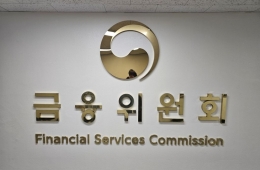
Banks Fear "Inefficiency" as FSC Moves to Sejong, Watch FSS Relocation Closely
FSC's move to Sejong confirmed for second half of next year
Banks weigh responses to longer travel times and work schedule adjustments
FSS relocation could also raise concerns over higher supervisory contribution fees
With the Financial Services Commission's (FSC) relocation to Sejong now confirmed, banks are weighing how to respond. They are concerned that longer travel times for in-person consultations with financial authorities could reduce work efficiency. Banks are also closely watching the plan for relocating public institutions outside the Seoul metropolitan area, due to be announced in the fourth quarter of this year, as a move by the Financial Supervisory Service (FSS) could increase their costs through higher supervisory contribution fees.

According to the banking industry on October 14, banks have been considering various responses since the FSC announced its relocation to Sejong the previous day, including adjusting work schedules, securing workspaces in the city, and redeploying staff. The government has decided to move the FSC to Sejong in the second half of next year.
Banks are most concerned about a decline in work efficiency. They have held consultations with financial authorities on a regular basis. In addition to regular meetings attended by staff responsible for lending and deposits, information security staff have also been attending meetings with the authorities more frequently since recent hacking incidents in the financial sector. Major commercial banks say that, because their headquarters are concentrated in Seoul and the surrounding metropolitan area, a move by the FSC to Sejong could add around two to three hours to travel times.
An official at Bank A said, "Even during an emergency like the previous martial law, several urgent meetings were held. It is true that having the FSC move to Sejong would make travel less convenient," adding, "To comply with the 52-hour workweek, the employees concerned would have to adjust their work schedules." Some expect the number of video conferences to increase, but these are likely to have limitations, as in-person consultations are often necessary, including for security reasons.
Another option under discussion is setting up a separate workspace in Sejong. Employees traveling there to visit the FSC would need a place to work before and after meetings. However, banks are more likely to use existing branches than lease new offices. An official at Bank B said, "Employees can't keep working in places like cafes every time without a proper workspace," adding, "Leasing a new office would mean additional costs, so we will probably set up an office at an existing branch in Sejong."
Banks are also watching to see whether the FSS will relocate outside the Seoul metropolitan area. If it does, more fundamental measures, such as redeploying staff, may be needed. An official at Bank C said, "It will depend on the situation, but if both institutions move, we may have to send staff to be based there," adding, "Another possibility is to assign staff to spend two to three days in Seoul and two to three days in Sejong." The government plans to announce its plan for relocating public institutions outside the Seoul metropolitan area in the fourth quarter of this year, and is reviewing the FSS's relocation separately.
There are particular concerns that an FSS relocation could also increase financial companies' costs. A substantial portion of the FSS budget is funded by supervisory contribution fees paid by financial companies. The FSS's budget this year is KRW 479 billion, of which KRW 353.5 billion comes from supervisory contribution fees collected from the financial sector. That represents about 74% of the total budget, with banks shouldering more than KRW 100 billion of the amount.
If the FSS leaves the Seoul metropolitan area, where the headquarters of financial companies and institutions subject to inspection are concentrated, operating costs for on-site supervision, including inspectors' travel expenses, could rise. There are expectations that pressure to increase supervisory contribution fees could grow further if relocation costs are added. However, whether the fees are actually raised will be determined through the FSS budget and the process for calculating the contributions.
Hot Picks Today
 "Even New York Taxi Drivers Are Talking About the KOSPI; South Korean Market to Top 9,000 Again Within a Year"... 'Wall Street's Stock-Picking Ace' Names His Picks
- Gimbap Is a Huge Hit in the U.S.... Yet Disappearing from Menus in Korea
- China's 1.4 Billion Population a Statistical Manipulation? Study Says Actual Figure May Be in the 1.2 Billion Range
- “Suspending Activities Due to Pregnancy,” Then a Comeback Announcement That Seemed to Mock Fans... Controversy Over Chinese Idol, Here's Why
- 220 cm-Tall 26-Year-Old Woman Dies Less Than a Year After Giving Birth... Deadly Complications Hidden Behind 'Gigantism'
An official at Bank D said, "The amount of the contributions is a matter for the FSC and the FSS to coordinate after gathering the industry's views," adding, "If the FSS relocates, the amount of the contributions will increase, with relocation costs and higher inspection travel expenses cited as reasons."
© The Asia Business Daily. All rights reserved. Unauthorized AI training and use prohibited.