1,560 Trillion Won for 'Productive Finance'... Samjong KPMG: "Must Build a Private Investment Ecosystem"
Expand funding for innovative industries such as AI and semiconductors
Establish long-term, outcome-based evaluation and risk-sharing frameworks
As the government prepares to provide 1,560 trillion won in productive finance over the next five years, an analysis says it must go beyond simply expanding the supply of policy funds and build an investment ecosystem that attracts a sustained inflow of long-term private capital. The report finds that the role of policymakers and the development of capabilities within financial institutions are crucial to establishing productive finance as a financial system that boosts productivity and growth potential in the Korean economy.
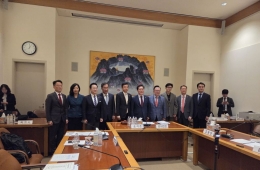
On October 14, Samjong KPMG published a report titled "Changing the Flow of Capital: The Status and Challenges of Productive Finance," analyzing the current state of efforts to promote productive finance in Korea and cases from overseas, and outlining key challenges for financial institutions and policymakers.

The five-year productive finance support plan announced by the Financial Services Commission in September totals 1,560 trillion won, comprising 932 trillion won in policy finance and 628 trillion won in private finance. Major financial holding companies, securities firms, and insurers are establishing dedicated teams and revising key performance indicators (KPIs) to embed productive finance in their business strategies. The government also plans to increase investment and lending to advanced strategic industries, including artificial intelligence (AI), semiconductors, secondary batteries, vaccines, and display panels, through the 200 trillion won National Growth Fund, which will be established over five years.
The report notes that Korea must redirect capital flows away from existing assets such as real estate and toward future innovative industries to secure the country's growth potential, as low birth rates and an aging population reduce labor input and lower potential growth. However, it warns that if government-led funding becomes overly concentrated in certain industries, it could crowd out private investment, lead to an excessive concentration of capital, trigger excessive or duplicative investment, and distort corporate valuations.
Productive finance involves long investment recovery periods and considerable business uncertainty. The report therefore says that, rather than focusing on the amount of funding provided, a long-term performance management system should be established to reflect tangible economic outcomes, including productivity gains, job creation, and technological innovation.
The report also recommends establishing a risk-sharing framework so that financial institutions do not bear the credit risk of innovative companies with insufficient collateral on their own, and developing specialized underwriting capabilities to assess technology, business models, and growth prospects comprehensively. It adds that financial institutions should diversify their financial instruments, including through equity investments and venture funds, and make reasonable improvements to KPIs focused on short-term performance and to their accountability frameworks.

Building a Self-Sustaining Financial Ecosystem Through Productive Finance. Samjong KPMG
View original imageMajor economies overseas are also focused on attracting long-term private capital. Japan is encouraging household savings to flow into investments through the Nippon Individual Savings Account (NISA) and corporate governance reforms, while U.S. financial institutions provide funding to strategic industries on a commercial basis. In the United Kingdom, pension funds and sovereign wealth funds provide long-term growth capital, with the financial industry itself leading productive finance. The report says it is essential to use policy finance as seed capital and design a transition to a private-sector-led system once the market has taken shape.
Hot Picks Today
 Takes Off Belt, Assaults Employee... Cosmetics Company Executive in His 50s Causes Disturbance at Imported-Car Dealership
- "I Like the High Dividends" "This Is a Better Bet Than Samsung Electronics and SK hynix": What Foreign Investors Bought While Selling 14.7 Trillion Won
- Women Who Say "A Husband's Annual Salary of 100 Million Won Is a Given"... Matchmaking CEO: "They Talk About It Like It's Nothing"
- Despite High Rates, Dining Out and Leisure Spending Holds Up... "Household Impact to Emerge Very Gradually" [Click eStock]
- "I'll Give You 53.4 Billion Won to Keep Quiet"... Influencer Reveals Secret Deal; Musk Denies It
Kim Min-gyu, Vice President and Financial Industry Leader at Samjong KPMG, said, "Ultimately, Korea's model of productive finance must evolve from government-led funding into a self-sustaining financial ecosystem centered on the private sector." He added, "Financial institutions must develop the expertise to precisely assess the growth potential of innovative companies, and policy finance and private capital must be combined effectively."
© The Asia Business Daily. All rights reserved. Unauthorized AI training and use prohibited.