Financial Services Commission's Move to Sejong Shifts F4's Center of Gravity... Will the Ministry of Economy and Finance Gain More Sway Over Economic Policy?
Financial Services Commission and FIU to Move to Sejong in Second Half of Next Year
Stronger Policy Coordination Expected Among Economic Ministries
Closer Coordination Across Macroeconomic, Financial, and Real Estate Policies
Observations are emerging that the center of gravity in economic policy coordination could shift further toward the Ministry of Economy and Finance following the Financial Services Commission's relocation to Sejong. With major economic ministries already concentrated in Sejong and the head of financial policy also moving there, analysts say the Ministry of Economy and Finance's role in overseeing and coordinating economic policy could be further strengthened.
Under the "Second Plan for the Relocation of Central Administrative Agencies," announced by the government on October 13, the Financial Services Commission is set to move to privately leased premises in Sejong in the second half of next year. The Korea Financial Intelligence Unit (FIU), which is part of the Financial Services Commission, is also included in the relocation. The principle is that all central government ministries will move to Sejong, while affiliated agencies that provide services directly to the public will be excluded. Major economic and administrative ministries, including the Ministry of Economy and Finance, the Ministry of Planning and Budget, the Ministry of Land, Infrastructure and Transport, and the Ministry of the Interior and Safety, are already based in Sejong.

The Financial Services Commission's key responsibilities, including managing household debt, stabilizing financial markets, corporate restructuring, and policy financing, are closely intertwined with macroeconomic and fiscal policy. Financial support for housing supply is also linked to real estate policy, so the commission's relocation is expected to make inter-ministerial policy consultations and coordination easier. This would also strengthen the conditions for the Ministry of Economy and Finance to lead cooperation among relevant ministries as the control tower for economic policy as a whole.
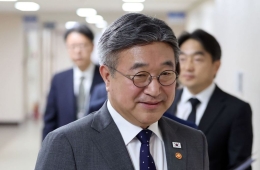
Since taking office, Deputy Prime Minister and Minister of Economy and Finance Lee Hyung-il has repeatedly emphasized the ministry's role in overseeing and coordinating economic policy. At his first meeting with senior officials shortly after taking office, Deputy Prime Minister Lee called for stronger collaboration within the ministry so that its core responsibilities and the deputy prime minister's role in overseeing economic policy could work together seamlessly. He also stressed that the Ministry of Economy and Finance should take an active lead as the economic team's control tower in addressing polarization. In a report to the National Assembly's Finance and Economy Planning Committee during its parliamentary audit on October 6, he also stated that the ministry would strengthen its policy implementation capacity as the agency responsible for overseeing and coordinating economic policy.
There are also moves to expand the role of "F4" meetings attended by the heads of economic and financial authorities. On October 2, Deputy Prime Minister Lee chaired a market situation review meeting at the Korea Federation of Banks building in Seoul for the first time since taking office. Hong Jiseon, Minister of Land, Infrastructure and Transport, also attended, joining the F4, which comprises the deputy prime minister for economic affairs, the governor of the Bank of Korea, the chair of the Financial Services Commission, and the governor of the Financial Supervisory Service. Deputy Prime Minister Lee said he envisioned developing the meeting into a forum for comprehensive reviews of the macroeconomy, finance, foreign exchange, and real estate markets.

The Financial Services Commission's relocation is also expected to change the operating conditions for F4 meetings. The deputy prime minister for economic affairs, who has been based in Sejong, and the chair of the Financial Services Commission, who has been based in Seoul, will work in the same region starting next year, potentially making ongoing consultations on economic and financial policy easier. The Ministry of Economy and Finance's coordinating role in linking financial policy with macroeconomic and fiscal policy is also likely to become more important.
Hot Picks Today
 "Expensive, Smelly and Scary"... What's Happened to the "Honeymooners' Paradise" Tourists Have Abandoned?
- "I Want to Eat Like Koreans..." Foreigners Who Once Opened Ramen Packs Now Keep Gochujang in Their Pantries
- Women Who Say "A Husband's Annual Salary of 100 Million Won Is a Given"... Matchmaking CEO: "They Talk About It Like It's Nothing"
- "I'd Buy a Home Rather Than Spend 16 Million Won on Guests' Meals"... People in Their 20s and 30s Ditch Wedding Halls and Funeral Viewing Rooms
- "They Said Today Was the Cheapest..." "Let's Get Wedding Jewelry!" Why Did the Luxury Brand Crowds Flocked To Cut Prices by 1.08 Million Won?
However, since much of the financial market and the operational base of major financial authorities will remain in Seoul, a physical relocation alone will not automatically accelerate policy responses. The challenge will be to strengthen inter-ministerial policy coordination centered in Sejong while maintaining communication channels with Seoul's financial market. An official from the Ministry of Economy and Finance said, "Bringing the ministries closer together physically through the Financial Services Commission's relocation could create synergies in policy consultations and coordination."
© The Asia Business Daily. All rights reserved. Unauthorized AI training and use prohibited.