"Less Power, Faster AI Computing"... Challenge to Develop Next-Generation Semiconductors
Samsung, SK hynix and others join "K-Moonshot" semiconductor technology development effort
Developing ultra-fine and stacked semiconductors to reduce memory bottlenecks and power consumption
The more data artificial intelligence (AI) processes, the more power semiconductors consume. Even efforts to increase computing speeds are hampered by the transfer of data between memory and processing units. To overcome these limitations, the government has joined forces with industry players, including Samsung Electronics and SK hynix, to develop next-generation semiconductor foundational technologies.
On October 14, the Ministry of Science and ICT launched the steering and technical committees for the semiconductor sector under K-Moonshot and discussed directions for developing next-generation semiconductor technologies. About 20 experts from industry, including Samsung Electronics, SK hynix and Jusung Engineering, as well as universities and research institutions, are participating in the two committees.

K-Moonshot is a research and development program that combines AI and science and technology to address national challenges. The semiconductor sector, one of its 12 missions, aims to secure “memory-centric computing” technology. Rather than focusing solely on improving the performance of processing units, as in the past, the initiative aims to reduce bottlenecks and power consumption caused by data transfers between memory and processing units, enabling more AI computations to be performed with the same amount of power.
As the applications of AI expand beyond generative AI to on-device AI, which runs on devices such as smartphones, and physical AI, including robotics, semiconductor power efficiency has become a key challenge. This is because as the volume of AI computations grows, so does the time and power required to read and write data in memory.
The government plans to develop ultra-fine semiconductors that push the limits of semiconductor miniaturization, as well as next-generation stacked semiconductor technologies represented by high-bandwidth memory (HBM). It will also pursue demonstration research that goes beyond improving the performance of individual semiconductors by integrating devices, processes, memory and packaging, and validating the performance and power efficiency of entire systems.
The steering committee, chaired by semiconductor program director Kim Jiyoung, will review and coordinate the basic plan and key initiatives for the research and development program. A separate technical committee will develop technology roadmaps, plan specific projects, and oversee research progress and targets. At the meeting on October 14, participants discussed priorities for developing core technologies, milestone targets, ways to link the program with existing semiconductor research and development projects, and integrated demonstration plans that reflect industry demand.
Hot Picks Today
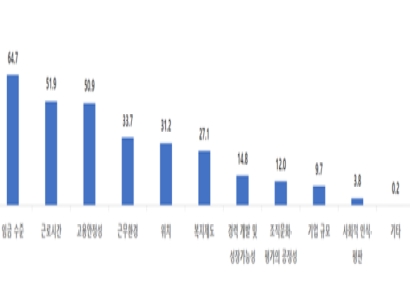 "Please Pay Me at Least 3 Million Won a Month": More Than Half of Young People Today Prioritize "Working Conditions" Over Company Size
- Selling Like Crazy Every Year... 30-Year-Old Hetbahn Takes on a New Challenge: Tastes Better Than "Mom's Home Cooking" [On-Site Report]
- "Americans Would Be Amazed If They Came": Wide-Eyed at a Sight They've Never Seen Before... Foreigners Also Fall for K-Baseball [K-Holic]
- "Hey, Lady, Teach Your Kids to Behave!" ... 300,000 Won in Cash and a Bodily Injury Claim Demanded Over Child's Door Ding
- Beachgoer Finds 'Plastic' That Turns Out to Be Perfume Ingredient Worth More Than Twice as Much as Gold
Kim Seongsu, head of the R&D Policy Office at the Ministry of Science and ICT, said, “In the AI era, national semiconductor competitiveness will depend on the ability to drive innovation in the performance and power efficiency of entire systems by organically connecting semiconductor devices, memory, and integration and packaging technologies, rather than focusing solely on improving the performance of individual semiconductors. We will bring together the capabilities of industry, academia and research institutions to secure core foundational technologies for future semiconductors and ensure that research outcomes translate into greater competitiveness in the real-world industrial sector.”
© The Asia Business Daily. All rights reserved. Unauthorized AI training and use prohibited.